
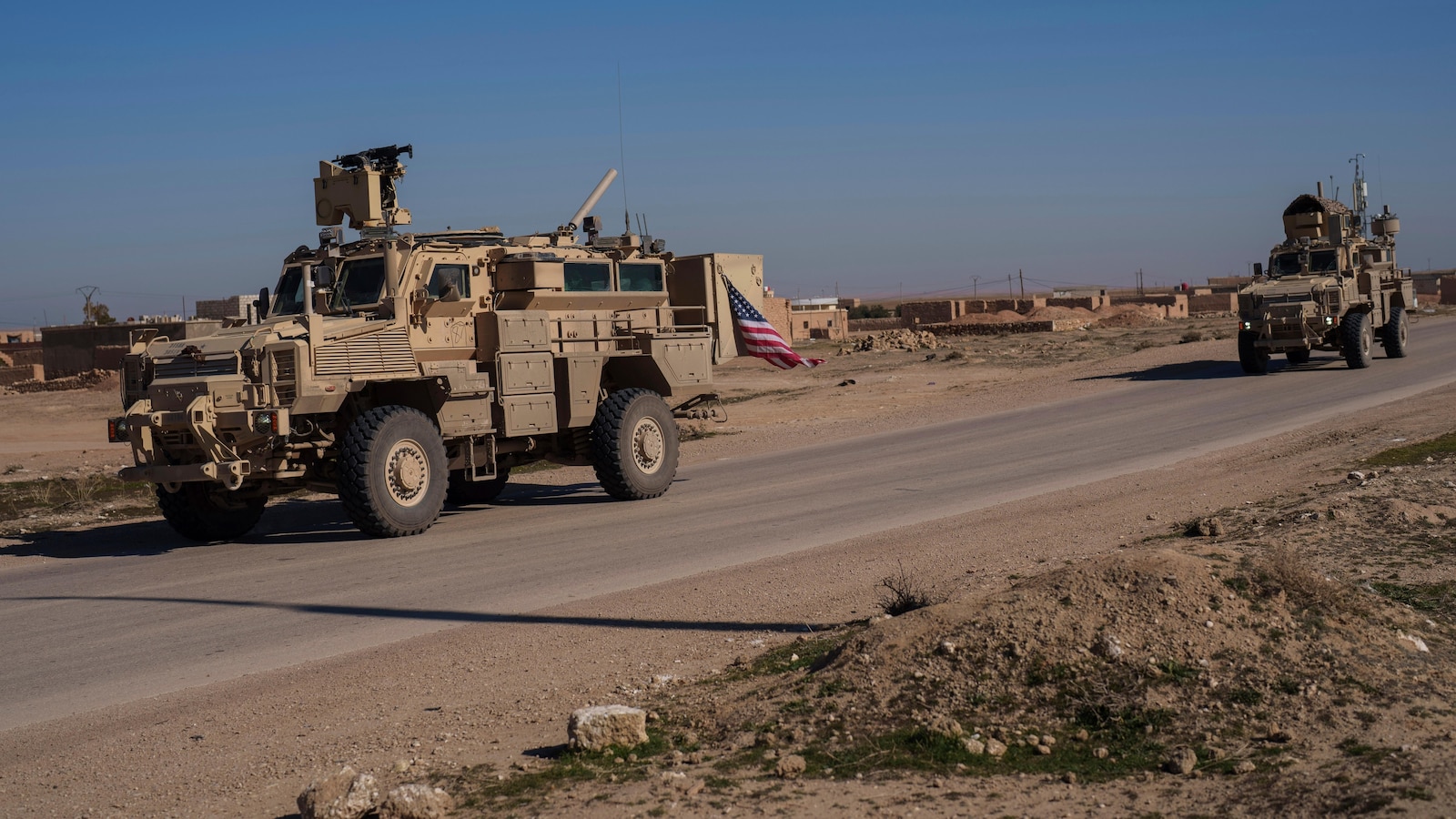
The tragic loss of two U.S. service members and an American civilian in a recent Islamic State (IS) attack in Syria has once again thrust the enduring presence of American forces in the country into the spotlight. This incident marks the first fatalities in Syria since the ouster of President Bashar Assad a year ago, sparking renewed public and political debate over the decade-long U.S. military commitment.
A Decade of Intervention: The Evolving US Mission
The United States first deployed troops to Syria over ten years ago, initially to counter the burgeoning threat of the Islamic State group, which had seized vast territories across Iraq and Syria and terrorized populations. While officially focused on defeating IS, the U.S. presence has also served a broader strategic purpose: to impede the flow of Iranian and Iran-backed fighters and weaponry into Syria from neighboring Iraq, thereby limiting Tehran's regional influence.
The journey to direct U.S. involvement began in 2011 with mass protests against the Assad government, which escalated into a brutal civil war. Initially hesitant to get entangled in another prolonged Middle Eastern conflict post-Iraq and Afghanistan, Washington provided support to rebel factions but avoided direct intervention. This posture shifted dramatically with the rise of IS in 2014, prompting the Obama administration to launch an air campaign, followed by the deployment of U.S. ground troops in 2015. These forces primarily partnered with the Kurdish-led Syrian Democratic Forces (SDF) in the country's northeast. By 2019, IS had lost its territorial caliphate, but its sleeper cells continue to pose a significant threat.
Troop Deployment and Strategic Locations
Currently, approximately 900 U.S. troops are stationed in Syria, a number that has fluctuated over the years. Their primary deployments are in the Kurdish-controlled northeast and at the crucial al-Tanf base in the southeastern desert, strategically positioned near the borders with Iraq and Jordan. These locations are vital for sustained counter-terrorism efforts and regional stability.
Evolving Political Landscape: From Hostility to Coordination?
Historically, Washington had no diplomatic ties with Damascus, and U.S. military operations were independent of the Syrian army. However, Assad's removal in December 2024 ushered in a new era. Relations have notably warmed between the Trump administration and Syria's interim President Ahmad al-Sharaa, the former leader of Hayat Tahrir al-Sham, a group once listed as a terrorist organization by Washington.
A significant diplomatic breakthrough occurred in November when al-Sharaa became the first Syrian president to visit Washington since 1946. During this landmark visit, Syria announced its entry into the global coalition against the Islamic State, joining 89 other nations in a united front. While this signals a move toward greater coordination, the Syrian security forces have yet to officially join Operation Inherent Resolve, the U.S.-led mission that continues to primarily collaborate with the SDF in northeast Syria.
Navigating Complex Alliances and Geopolitical Challenges
The U.S. presence in Syria has been fraught with complex geopolitical challenges. Former President Trump's attempts to withdraw all forces during his first term faced strong opposition from the Pentagon, which warned against abandoning Kurdish allies and exposing them to potential Turkish offensives. Turkey views the SDF as an extension of the Kurdistan Workers’ Party (PKK), a designated terrorist organization.
Troop numbers briefly surged to over 2,000 following the October 7, 2023, Hamas attack in Israel, as Iranian-backed militants intensified targeting of American interests in the region. Although numbers have since returned to around 900, President Trump has indicated no immediate plans for a complete withdrawal.
The Unfinished Mission: A Continued Commitment
Following the recent fatal attack, U.S. envoy to Syria, Tom Barrack, reaffirmed America’s unwavering commitment via a post on X. He stated that a “limited number of U.S. forces remain deployed in Syria solely to finish the job of defeating ISIS once and for all.” Barrack emphasized that this presence empowers local Syrian partners, preventing another large-scale, costly U.S. war in the Middle East. The message is clear: the mission will persist until ISIS is “utterly destroyed.”
This ongoing commitment underscores the intricate balance of counter-terrorism, regional stability, and geopolitical maneuvering that defines the U.S. military's enduring role in Syria.