BBC Apologizes to Donald Trump for Edited January 6th Speech, Refuses $1 Billion Compensation Demand
Nov 14, 2025
 United Kingdom
Media & Politics
United Kingdom
Media & Politics
United Kingdom
Media & Politics
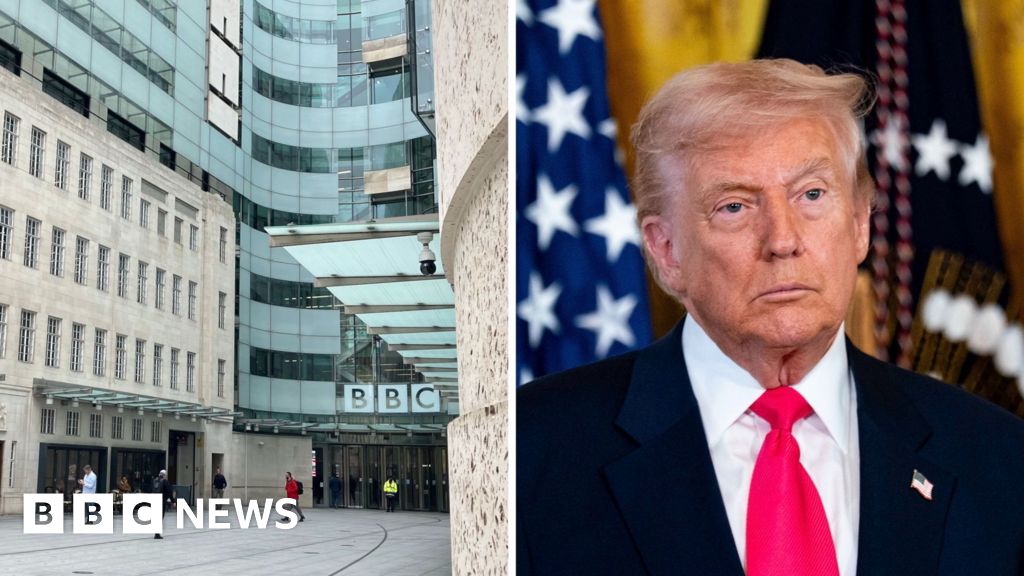
The BBC apologizes to Donald Trump for an edited January 6th speech clip giving a "mistaken impression," but rejects his $1 billion compensation demand. The cor
BBC Apologizes to Trump for Edited January 6th Speech, Rejects $1 Billion Lawsuit
The British Broadcasting Corporation (BBC) has issued a formal apology to former US President Donald Trump regarding a "Panorama" episode that featured an edited segment of his January 6, 2021, speech. While expressing regret for the "mistaken impression" created by the edit, the broadcaster has firmly rejected Trump's substantial demand for $1 billion (£759m) in compensation for alleged defamation.
The Core of the Controversy
The BBC acknowledged that its editorial decision unintentionally gave "the mistaken impression that President Trump had made a direct call for violent action." In response, the corporation has committed to not re-airing the controversial 2024 program. This apology comes after intense legal pressure and a direct threat of lawsuit from Trump's legal team, who had set a deadline for a retraction, apology, and compensation.
Political and Corporate Repercussions
The fallout from the incident has had significant effects across both political and corporate landscapes. The UK's Culture Secretary publicly stated her confidence in the BBC's commitment to addressing the situation with the required seriousness, emphasizing the importance of upholding "the highest standards." While stressing the BBC's foundational independence from government influence, she confirmed ongoing daily discussions with the corporation’s chairman, director general, and senior leadership. Importantly, she clarified that the UK government has maintained a distance from direct engagement with the Trump administration on this specific issue, framing it as primarily a BBC internal and legal matter.
Internally, the scandal has already triggered notable changes, with the resignations of BBC Director-General Tim Davie and Head of News Deborah Turness announced on Sunday, underscoring the gravity with which the corporation is treating these editorial failings.
Detailed Account of the Misleading Edits
In its official Corrections and Clarifications, the BBC elaborated on the review of the "Panorama" program, which confirmed the misleading nature of the editing. The statement read: "We accept that our edit unintentionally created the impression that we were showing a single continuous section of the speech, rather than excerpts from different points in the speech, and that this gave the mistaken impression that President Trump had made a direct call for violent action."
The problematic "Panorama" segment specifically combined Trump's remark, "We're going to walk down to the Capitol, and we're going to cheer on our brave senators and congressmen and women," with a statement delivered over 50 minutes later in the original speech: "And we fight. We fight like hell." Trump's legal representatives contend that this splicing fundamentally distorted his message, making it appear as a direct incitement to violence. Speaking to Fox News, Trump himself described his speech as having been "butchered" and viewers as "defrauded" by the presentation.
Compounding the BBC's challenges, the Daily Telegraph revealed a second, similarly edited clip broadcast on "Newsnight" in 2022. This earlier edit also merged disparate parts of the January 6th address, followed by a presenter's voiceover, "and fight they did," overlaid with footage of the Capitol riots. Former White House Chief of Staff Mick Mulvaney publicly criticized this "spliced together" video. Trump's legal team now argues that these repeated incidents demonstrate a "pattern of defamation" against the former President.
BBC's Legal Defense Strategy
Despite the apology concerning the editing practices, the BBC maintains that it "strongly disagrees there is a basis for a defamation claim." In its formal response to Trump's legal team, the BBC presented five primary arguments against the $1 billion lawsuit:
- The "Panorama" episode was not distributed on BBC's US channels and was accessible only to UK viewers via iPlayer, thus minimizing any alleged harm within the United States.
- The corporation argued that the documentary did not cause Trump demonstrable harm, implying his political standing was not significantly damaged.
- The edit was primarily intended to shorten a lengthy speech for broadcast purposes, not to maliciously mislead viewers.
- The controversial 12-second clip was part of an hour-long program that featured a variety of voices, including those supportive of Trump, and was never meant to be interpreted in isolation.
- Under US law, opinions on matters of public concern and political speech are afforded heavy protection under defamation statutes.
An internal BBC source reportedly confirms a strong conviction within the corporation regarding the robustness of its defense. Meanwhile, Liberal Democrats leader Sir Ed Davey has called upon the UK Prime Minister to engage directly with Trump to halt the lawsuit threat and actively safeguard the BBC's fundamental principles of impartiality and independence.
The initial concerns regarding the "Panorama" documentary were first ignited by a leaked internal memo, published by the Telegraph newspaper, which also raised criticisms about the BBC's coverage of other sensitive topics such as trans issues and BBC Arabic's coverage of the Israel-Gaza conflict.
By news
7 months ago