Gaza's Future: Palestinian Voices Excluded from US-Run Planning Center
Nov 18, 2025
 Palestinian Territory Occupied
International Affairs
Palestinian Territory Occupied
International Affairs
Palestinian Territory Occupied
International Affairs
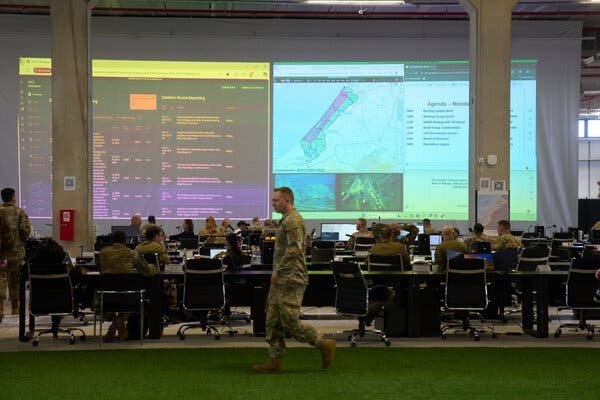
A US-led initiative to plan Gaza's post-conflict future faces scrutiny as Palestinian voices are notably absent from the critical discussions, raising concerns
Gaza's Future: Palestinian Voices Excluded from US-Run Planning Center
An international initiative spearheaded by the United States to chart the future of the Gaza Strip is drawing sharp criticism due to the notable exclusion of Palestinian representation from its crucial planning discussions. This absence raises significant questions about the legitimacy, effectiveness, and long-term viability of any proposed post-conflict framework for the besieged territory.
The Exclusionary Approach: A Flawed Foundation
The core of the controversy lies in the fundamental principle of self-determination. Critics argue that to design a future for Gaza without the direct input of its inhabitants and their legitimate representatives is not only undemocratic but also fundamentally flawed. Such an approach risks imposing solutions that do not align with the needs, aspirations, or cultural context of the Palestinian people, potentially sowing the seeds for future instability and resentment.
While the exact composition and mandate of the U.S.-run center remain somewhat opaque, the implication from its title is clear: it seeks to develop comprehensive plans for Gaza's governance, reconstruction, and security. However, the lack of Palestinian voices at the table suggests a top-down strategy that may overlook critical on-the-ground realities and indigenous perspectives necessary for sustainable peace.
Implications for Legitimacy and Stability
Experts in international relations and conflict resolution often emphasize that local buy-in is paramount for the success of any peace-building or reconstruction effort. Without the participation of key Palestinian stakeholders—ranging from political factions to civil society leaders and ordinary citizens—any plan, no matter how well-intentioned, risks being perceived as an external imposition. This perception can severely hinder implementation, foster resistance, and ultimately undermine the very goals of stability and prosperity it aims to achieve.
Path Forward: The Imperative of Inclusion
The international community, including key Arab states and European allies, often stresses the importance of an inclusive approach to resolving the Israeli-Palestinian conflict. The current situation in Gaza demands a coordinated effort that respects Palestinian agency and ensures their active role in determining their own destiny. Moving forward, for any plan to gain traction and establish a credible path to peace, a fundamental re-evaluation of the planning process and a deliberate effort to incorporate diverse Palestinian perspectives will be essential. This inclusivity is not merely a matter of fairness but a pragmatic necessity for achieving lasting solutions.
By news
7 months ago