Ukraine's Top Security Official Denies Accepting Trump Peace Plan Terms Amid Ongoing War
Nov 21, 2025
 Ukraine
International Relations
Ukraine
International Relations
Ukraine
International Relations
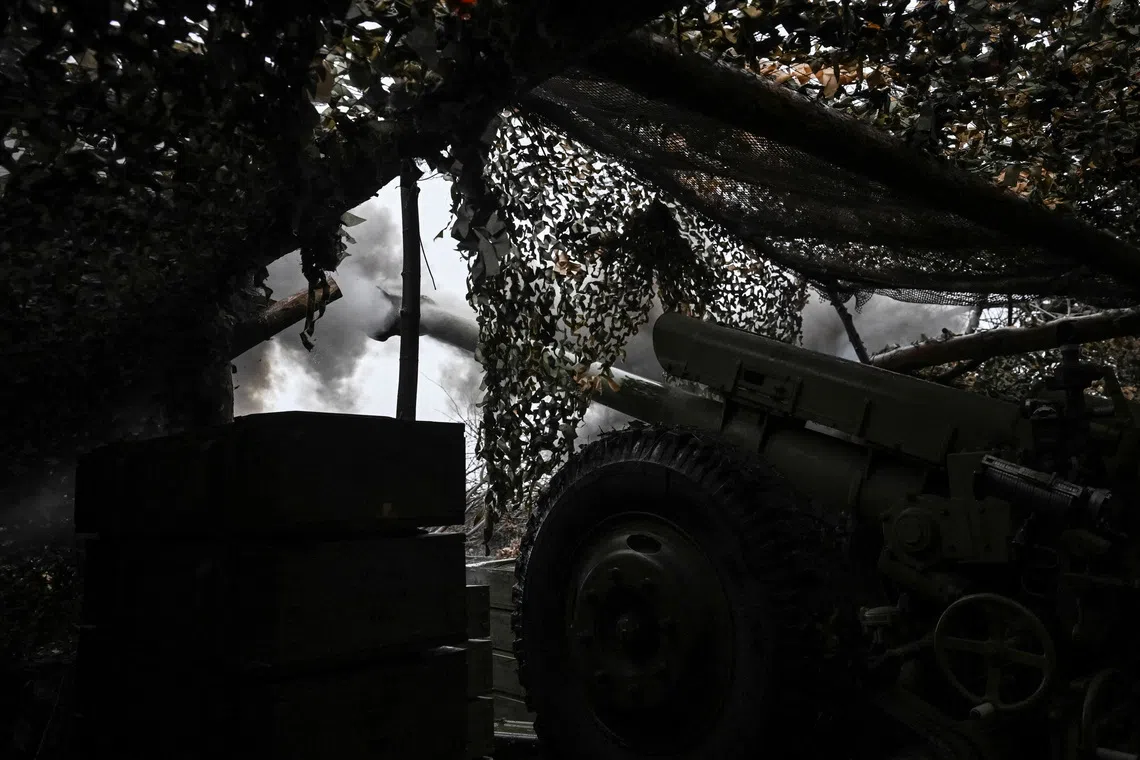
Ukraine's security chief, Rustem Umerov, denies agreeing to a US peace plan proposing territory loss, military cuts, and no NATO membership for Kyiv. President
Ukrainian Official Refutes Claims of Accepting Trump's Peace Proposal Amidst War
A senior Ukrainian security official has firmly denied reports suggesting he agreed to the terms of a contentious peace plan put forth by the Trump administration. Rustem Umerov, Secretary of Ukraine's National Security and Defense Council, clarified on Friday that his recent visit to the United States was purely for technical purposes, involving meeting arrangements and dialogue preparation, not to assess or approve any peace proposals. This denial directly contradicts earlier assertions by U.S. officials who claimed Umerov had accepted the majority of a 28-point plan, with minor modifications, before presenting it to President Volodymyr Zelenskiy.
The Controversial U.S. Peace Framework
The peace plan in question, a copy of which was reviewed by Reuters, outlines several drastic concessions from Kyiv, aligning closely with many of Russia's long-standing demands. Key provisions include Ukraine relinquishing additional territory, significantly reducing its military forces, and permanently abandoning any aspirations to join the NATO Western alliance. In return, Russia would cede smaller portions of land it has seized in other regions.
Furthermore, the proposal calls for a gradual lifting of sanctions against Russia, its readmission into the G8 group of industrialized nations, and the pooling of frozen Russian assets into an investment fund, with Washington reportedly receiving a share of the profits. While the plan meticulously details Russian objectives, it remains notably vague on Ukraine's crucial demands, such as robust and enforceable security guarantees – a core request to deter future aggression, which is addressed in a single, unelaborated line. Notably, European nations, who are currently shouldering much of Ukraine's defense funding after President Donald Trump cancelled financial support from the United States, were conspicuously excluded from the drafting process.
Kyiv's Response and Diplomatic Maneuvers
Despite Umerov's categorical denial of approval, President Zelenskiy acknowledged receiving the plan during a meeting with a U.S. Army delegation. He emphasized Ukraine's readiness for "constructive, honest and prompt work" with U.S. teams to refine the peace proposal. Meanwhile, the Kremlin has adopted a cautious public stance, indicating it had not yet been informed of Kyiv's readiness to negotiate on this specific plan.
This accelerated U.S. diplomatic push arrives at a challenging juncture for Kyiv. Ukrainian forces are currently on the defensive, facing slow but persistent Russian advances on the battlefield as the war approaches its fourth winter. The failure of the 2023 counteroffensive has led to a grueling war of attrition along a 1,200-km front line. Russia claims significant gains, including control of Kupiansk and much of Pokrovsk, although Kyiv disputes outright loss of these cities, acknowledging only slow territorial concessions. Compounding these military difficulties, Zelenskiy's government is also navigating a corruption scandal, which recently saw two cabinet ministers dismissed.
Trump's Reoriented Foreign Policy
Having returned to office with a vow to swiftly end the conflict, President Trump has demonstrably shifted U.S. policy away from its previous staunch support for Ukraine. His administration appears more amenable to accommodating some of Russia's justifications for its 2022 invasion. However, Trump has also shown impatience with Moscow, evidenced by the cancellation of a proposed summit with Vladimir Putin last month and the imposition of sanctions on Russia's two primary oil companies – a measure even his predecessor, Joe Biden, refrained from. These sanctions, which came into full effect on Friday, have already begun to impact Russian oil prices. White House Press Secretary Karoline Leavitt confirmed that Secretary of State Marco Rubio and special envoy Steve Witkoff had quietly developed the plan over approximately a month, with Trump's backing, aiming for a "win-win scenario" after five years of devastating conflict.
The situation underscores the complex and often conflicting pressures shaping the future of the Russia-Ukraine war, with major international players advocating for different paths to resolution.
By news
8 months ago
No cameras found for this country.