Asbestos Crisis Deepens in Australian Wind Sector as Vestas Confirms Contaminated Brake Pads
Australia's renewable energy sector is grappling with a significant industrial safety concern as a second major player, international giant Vestas, has confirmed the presence of white asbestos in brake pads supplied by Chinese company 3S Industry. This revelation escalates an ongoing issue, originally brought to light by Goldwind Australia, concerning illegally imported materials in critical wind farm infrastructure.
Asbestos Found at Vestas' Golden Plains Wind Farm
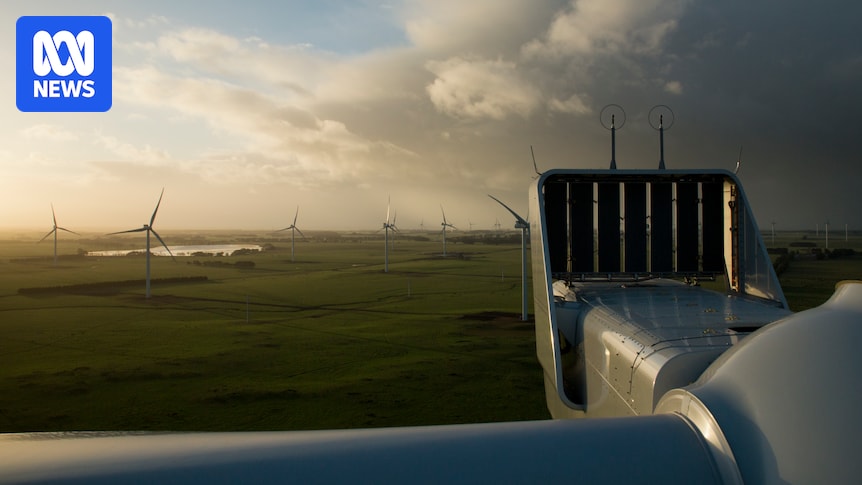
Vestas, which oversees 44 wind farms nationwide, reported a positive test for asbestos in brake pads at its Golden Plains facility in regional Victoria, approximately 130 kilometers west of Melbourne. The discovery follows an advisory from 3S Industry, informing Vestas that the supplied lift pads might contain asbestos. In response, Vestas has enacted immediate measures, quarantining affected turbines and planning hoist replacements while comprehensive investigations proceed. The company firmly stated its zero-tolerance policy for asbestos in its procurement specifications, emphasizing that the supplier has acknowledged responsibility for the breach. Vestas is collaborating with its supplier and partners to eradicate any potential exposure risks.
Goldwind's Earlier Discovery and Broad Implications
Earlier findings by Goldwind Australia, a key contributor to the nation's renewable energy capacity, first exposed asbestos in lift brake pads across its numerous wind farms. These crucial brake pads are integral to the lifts that transport technicians within the towering wind turbine structures. The widespread use of 3S Industry's brake pads across a majority of Australian wind turbine operators underscores the potential scale of this issue.
Australia's Strict Asbestos Import Ban Challenged
The importation of asbestos or products containing asbestos has been strictly prohibited in Australia since 2003, making these recent discoveries a grave violation of national law. The federal government, through Climate Change and Energy Minister Chris Bowen, has defended its handling of the crisis amidst accusations of complacency. Speaking in parliament, Minister Bowen underscored the gravity of the "very serious matter," confirming that state regulators have initiated a comprehensive program of checks across various wind farms to identify further impacts.
Political Scrutiny and Calls for Action
The government's response has drawn sharp criticism from the Coalition. Opposition frontbencher Tim Wilson, the Shadow Minister for Industrial Relations and Employment, accused the government of sluggishness in its safety protocols. Mr. Wilson has formally urged the federal government to conduct a national audit, impose a temporary halt on the installation of the problematic components, and implement more stringent supply chain checks for renewable energy imports. He warned that these tainted brake pads pose not only direct safety hazards but also "broader reputational and operational risks" to Australia's ambitious clean energy transition.
Beyond Wind Turbines: Broader Industrial Concerns
Minister Bowen further clarified that 3S Industry's products are not limited to wind turbines, providing "industrial lifts for high infrastructure" in other sectors as well, indicating a potentially wider scope for asbestos contamination across industrial facilities.
Worker Safety at Forefront: Union Condemnation
While occupational hygienists have assessed the asbestos brake pads as presenting a low risk to the general public, the primary concern remains the safety of workers directly interacting with these components. Goldwind Australia, after its discovery at the Cattle Hill wind farm in Tasmania, emphasized that only certified asbestos removal professionals would handle the safe replacement of the contaminated pads.
The Construction, Forestry, Maritime, Mining and Energy Union (CFMEU) has vehemently condemned the situation. CFMEU national secretary Zach Smith described the asbestos breach as "beyond belief," asserting that companies have "flouted" the two-decade-old ban, thereby endangering workers with the risk of severe illness, cancer, and death. The union alleges that multiple wind energy companies, including Goldwind Australia, Vestas, and Beijing Energy, are now under investigation due to the scare.