Lebanon's Shattered Peace: Israeli Strikes Continue, Reshaping Hezbollah's Stronghold & Public Sentiment
Nov 27, 2025
 Lebanon
Middle East Conflict
Lebanon
Middle East Conflict
Lebanon
Middle East Conflict
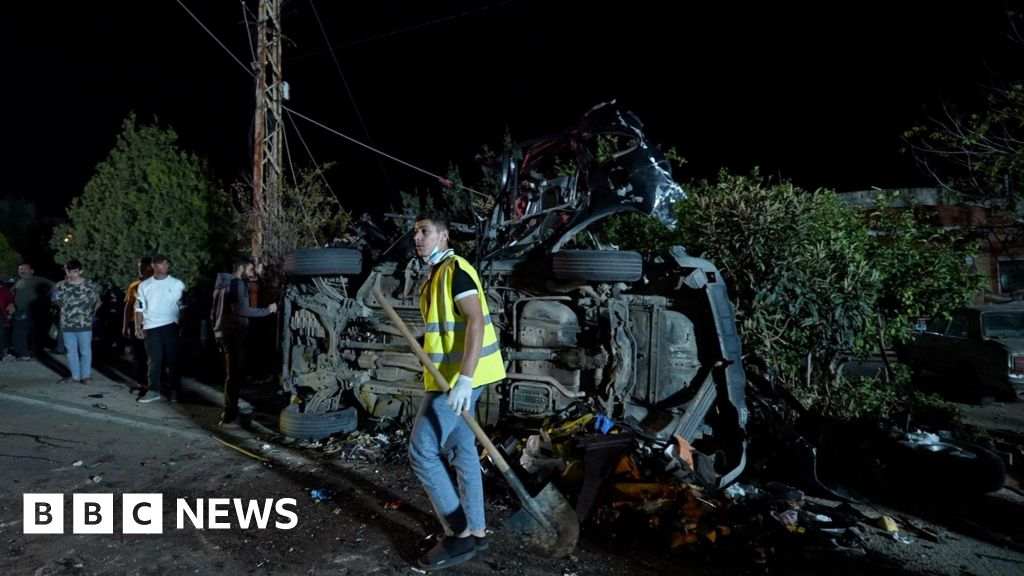
Israeli strikes in southern Lebanon persist, shattering security and altering views in Hezbollah strongholds. Residents voice weariness amid ceasefire violation
Lebanon's Fragile Peace Shattered by Persistent Israeli Strikes
Southern Lebanon, a region historically dominated by the Shia Muslim community and the formidable political and militant group Hezbollah, is grappling with a profound crisis. Despite a nominal ceasefire established last November, Israeli airstrikes persist almost daily, shattering the fragile sense of security and even altering long-held perceptions among residents.
Froun Incident Highlights Civilian Impact
The gravity of the situation was starkly evident on a recent Friday evening when an Israeli air strike targeted a vehicle in the village of Froun. Arriving an hour post-incident, a correspondent observed rescue workers having already cleared the remains of the sole casualty, later identified by the Israeli military as a "Hezbollah terrorist." For locals like Mohamad Mokdad, whose home was directly impacted, the aftermath was devastating. Cleaning debris and human remains from his veranda, Mokdad voiced a desperate plea: "Who is going to help us? ... I just want to live in peace. I don't want parties. I don't want anyone." His implicit rejection of Hezbollah (meaning "Party of God") reflects a rare, burgeoning dissent.
Israel's Justification and Ceasefire Violations
Israel maintains that its operations are aimed at Hezbollah, specifically targeting the group's attempts to reconstitute its strength after being significantly weakened in previous conflicts. This campaign, observed across southern Lebanon, has not only eroded public safety but also challenged the traditional widespread support Hezbollah once commanded.
The current hostilities are a continuation of decades-long conflict, with the recent intense phase beginning on October 8, 2023, when Hezbollah initiated rocket fire following Israel's Gaza operation. The US and France brokered truce stipulated Hezbollah's withdrawal of fighters and weapons south of the Litani River (approximately 30km from the Israeli border) and Israel's exit from invaded Lebanese territories, paving the way for Lebanese army deployment. However, a year later, Israeli forces reportedly occupy at least five southern Lebanese hilltops and conduct regular air and drone strikes. UNIFIL, the UN peacekeeping force, records over 10,000 Israeli air and ground violations since the ceasefire. The Lebanese health ministry reports more than 330 casualties, including civilians.
Hezbollah's Resilience and Political Standoff
Israeli officials allege Hezbollah is rebuilding military capabilities and smuggling weapons south of the Litani, directly violating the truce. While Israel claims to possess evidence, it has not been publicly disclosed. Defence Minister Israel Katz recently warned, "Hezbollah is playing with fire," criticizing Lebanese President Joseph Aoun for inaction. President Aoun, who assumed office in January, pledged to establish a "state monopoly on arms" – effectively disarming Hezbollah, which is designated a terrorist organization by nations like the UK and US. However, in Lebanon, Hezbollah functions as a powerful political entity with government representation and a crucial social service provider.
Conversely, UNIFIL states it has not observed Hezbollah's military activity or infrastructure rebuilding south of the Litani. Hezbollah itself refutes Israeli claims, asserting the ceasefire terms apply only south of the Litani, where it hasn't resisted Lebanese army operations. The group has not fired on Israel since the truce, save for mortar fire in December in the disputed Mount Dov/Shebaa Farms area, which it termed a response to Israeli violations.
Local Voices: Weariness and Questioning the Consensus
Further highlighting the tension, Lt Col Avichay Adraee, Israeli army spokesperson, recently warned Beit Lif villagers via social media about "dozens of terrorist infrastructures" linked to Hezbollah, implying imminent action. Worried residents appealed for Lebanese military presence. A subsequent visit revealed a significantly depleted village, with less than a third of its 8,000 pre-war inhabitants remaining. The local Imam recounted Lebanese soldiers, accompanied by UNIFIL, patrolling but not inspecting private properties – a move possibly to avoid perceived collaboration with Israel. Amidst the ruins of a mosque, a resident quietly stated a growing sentiment: "Hezbollah needs to decide: it either responds to Israel or accepts defeat, disarms and let us move on with our lives. This can't continue." Such direct criticism, once unthinkable, underscores the population's profound weariness.
Ezzat Hammoud, Beit Lif's mayor, vehemently denies any militant or weapon presence, attributing Israeli warnings to intimidation tactics or pressure on the Lebanese army. Haider, whose family home was allegedly marked by the Israeli military, insisted on a tour to prove its civilian nature, seemingly hoping media exposure would offer protection. He echoed the desire for stability: "We want stability, we don't want war, or anything related to it." This openness to speak about such sensitive issues, rare just months ago, reflects a desperate longing for peace.
The Disarmament Dilemma and Future Uncertainty
Hezbollah's Secretary General, Naim Qassem, recently reaffirmed the group's refusal to surrender its weapons, calling them their "source of strength." He asserted, "The enemy... wants to erase our life and our existence, but we'll remain steadfast. We'll either live with dignity or die with dignity."
Hezbollah's formidable arsenal, surpassing even Lebanon's national army, has long been a contentious issue, with critics accusing the group of subservience to Iran and dragging Lebanon into conflicts. They view the current situation as an opportune moment for disarmament. However, President Aoun, a former army chief, cautions against using force, fearing exacerbated sectarian divisions and civil war, warning that such actions could "lead Lebanon to ruin." Western diplomats confirm US pressure on Lebanese authorities regarding disarmament, yet express skepticism about the "Lebanese way" of handling it. The Lebanese army is reportedly preparing to announce the completion of disarmament south of the Litani next month, with plans to address other regions subsequently. The future of peace in southern Lebanon remains highly uncertain.
By news
7 months ago
No cameras found for this country.