Homeplus Acquisition Bid Fails Amid Deepening Uncertainty for Korean Retailer; Liquidation Looms as Political Pressure Mounts
Nov 27, 2025
 South Korea
Business
South Korea
Business
South Korea
Business
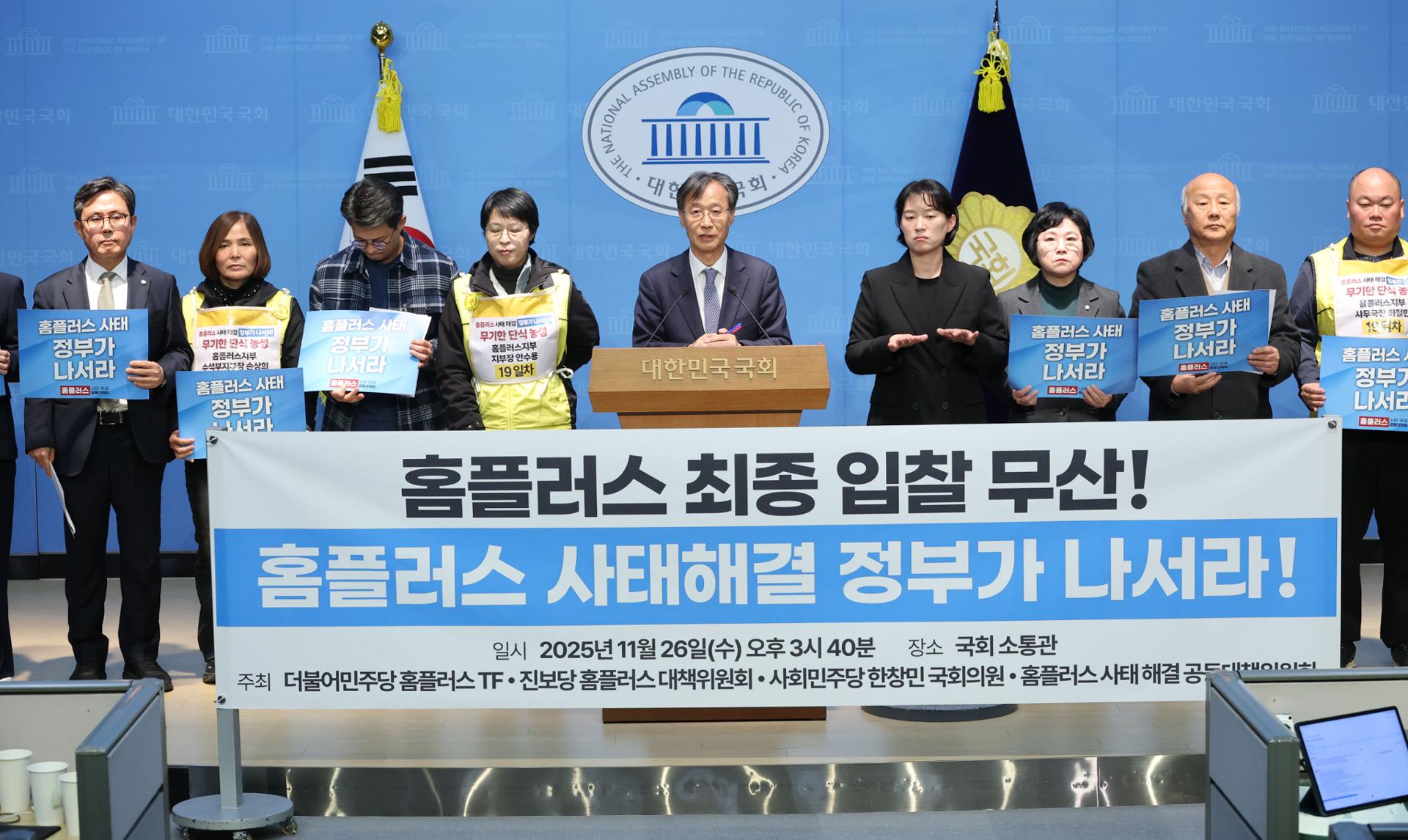
South Korean retailer Homeplus faces liquidation after its main acquisition bid failed, raising concerns for 100,000 jobs. Lawmakers urge NongHyup to intervene
Homeplus Faces Liquidation Threat After Acquisition Bid Fails Amid Political Pressure
The future of South Korean retail giant Homeplus hangs in the balance following the failure of its main acquisition bid, which concluded without a single participant. This critical setback has plunged the company's corporate rehabilitation process into profound uncertainty, with industry observers now openly discussing the grim prospect of liquidation. The Seoul Bankruptcy Court confirmed the lack of bids by the Wednesday deadline, stating it would evaluate the next steps, including a potential independent recovery plan or a second round of bidding.
Financial Woes and Market Challenges
Homeplus, the nation's second-largest discount supermarket chain, initially sought corporate rehabilitation on March 4 after experiencing a significant credit rating downgrade. Despite its substantial valuation of approximately 7 trillion won ($4.8 billion), potential buyers have been deterred by a confluence of factors. These include the broader weakening prospects for the retail sector, particularly large supermarkets struggling against the rise of online commerce, coupled with Homeplus's considerable debt burden and declining financial performance. Notably, companies that participated in preliminary bidding, Harex Infotech and SNomad, opted out of the main sale.
A report by Samil PwC, the court-appointed investigation committee, further underscores the precarious situation, indicating that Homeplus's liquidation value stands at about 3.68 trillion won, significantly exceeding its going-concern value of approximately 2.5 trillion won. This financial reality makes liquidation a more attractive, albeit socially impactful, option from a purely economic standpoint.
Mounting Concerns for Employment and Political Intervention
The human cost of this crisis is immense. Homeplus directly employs 20,000 individuals, with an additional 80,000 to 90,000 indirect positions at stake. The Homeplus union has intensified its calls for government intervention, staging a rally outside the presidential office in Seoul on November 17. Union representatives emphasized that the government cannot afford to ignore an issue affecting over 100,000 livelihoods and numerous local businesses.
Political figures, particularly from the ruling Democratic Party of Korea, have amplified pressure on the National Agricultural Cooperative Federation (NACF) to acquire Homeplus, framing it as an issue of public interest. During a recent parliamentary audit, Representative Eoh kiy-ku urged NACF Chairman Kang Ho-dong to consider the takeover. However, Kang has publicly rejected this notion, citing the NACF's own financial struggles. Critics also highlight the operational complexities, noting that NACF stores primarily focus on supporting farmers and stabilizing agricultural prices, a business model distinct from Homeplus's broader retail operations.
A Glimmer of Hope: Extended Bidding Period
Despite the immediate failure, a Homeplus official indicated a window of opportunity remains. The company is prepared to extend the sale process and postpone the submission of its rehabilitation plan beyond the December 29 deadline, provided an appropriate buyer emerges. Bid proposals will continue to be accepted until then, offering a glimmer of hope for a last-minute resolution.
By news
7 months ago
No cameras found for this country.