Israel Expands Gaza Aerial Strikes Beyond Ceasefire 'Yellow Line' Amidst Truce Hurdles & West Bank Raids
Nov 27, 2025
 Palestinian Territory Occupied
Middle East Conflict
Palestinian Territory Occupied
Middle East Conflict
Palestinian Territory Occupied
Middle East Conflict
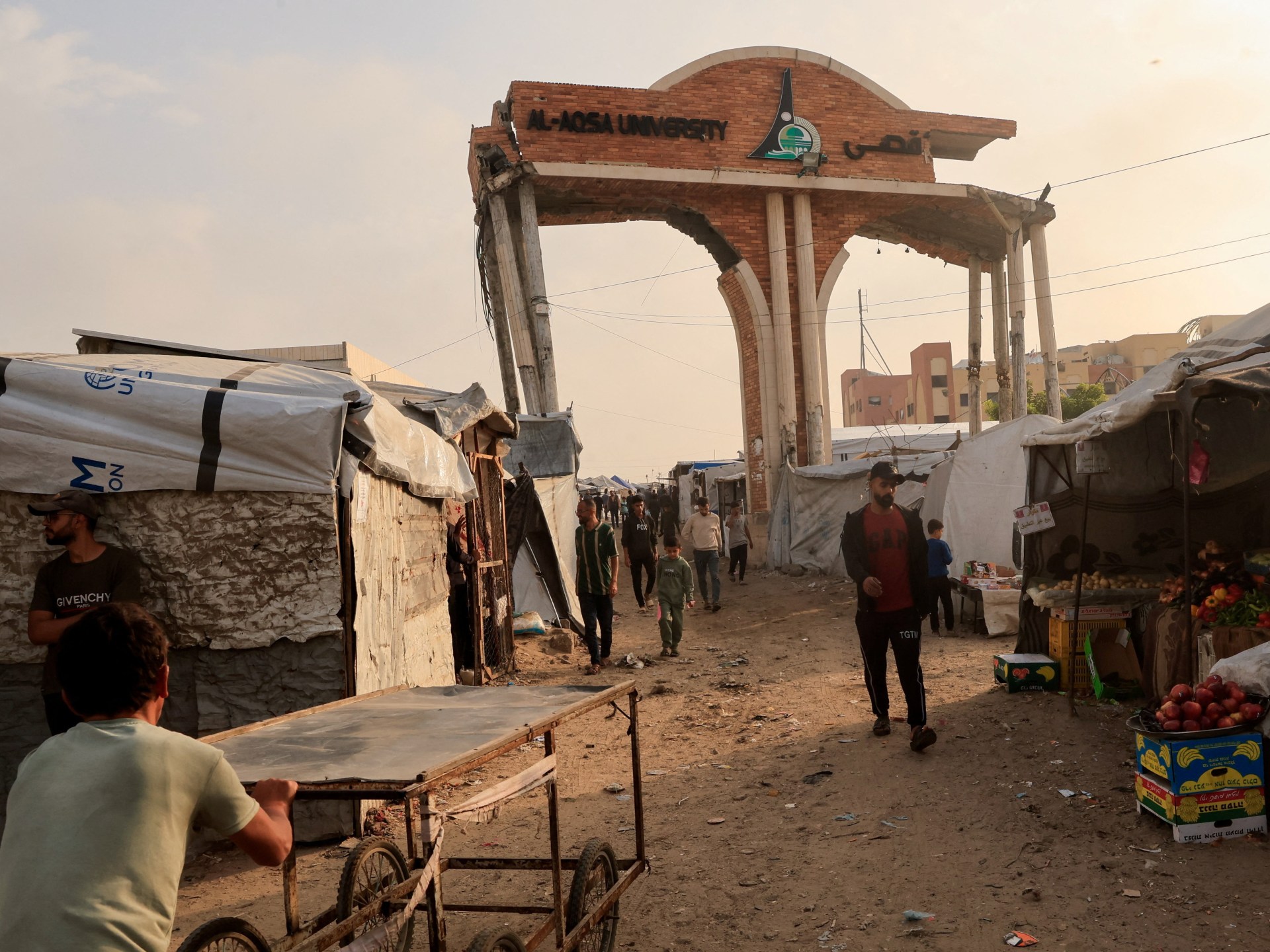
Israeli forces escalated air strikes in southern and central Gaza, breaching ceasefire 'yellow line' zones and conducting West Bank raids. Truce negotiations fa
Gaza Under Renewed Assault: Israel Breaches Ceasefire Lines, Truce Talks Face Major Obstacles
Israeli forces have significantly escalated their aerial campaign across southern and central Gaza, carrying out a series of air strikes in regions previously designated as withdrawal zones under the current ceasefire agreement. These attacks, notably targeting central Gaza's Bureij camp and eastern Khan Younis, occurred beyond the so-called "yellow line" – an area where Israeli forces were meant to remain disengaged, according to the terms of the repeatedly violated truce. This escalation unfolds as the conflict, described by some as a “genocidal war,” continues unabated.
West Bank Sees Increased Raids and Arrests
Adding to the volatile situation, Israeli military operations extended into the occupied West Bank. A new wave of raids and arrests swept through areas including Qalqilya, Tubas, Hebron, Tulkarem, and Nablus. In Tubas, local Palestinian Red Crescent officials reported that Israeli forces conducted field interrogations and assaulted at least 25 individuals, many of whom required urgent medical attention.
Complex Prisoner Exchange Continues Amidst Accusations
The delicate process of prisoner exchange, a cornerstone of the ceasefire, has seen further developments. Israel recently transferred the bodies of 15 Palestinian prisoners to Gaza authorities. This followed Hamas and Palestinian Islamic Jihad handing over the remains of an Israeli captive. Hamas has asserted its “steadfast commitment” to completing the exchange, having released all living Israeli captives and 26 out of 28 stipulated deceased captives' remains. In turn, Israel has freed nearly 2,000 Palestinian prisoners and returned 345 Palestinian bodies, some reportedly showing signs of torture, mutilation, and execution.
Ceasefire's Future in Peril: Trapped Fighters and Phase Two Doubts
The fragile ceasefire continues to grapple with significant challenges. A critical hurdle involves dozens of Hamas fighters reportedly trapped in tunnels on the Israeli-occupied side of the yellow line in southern Gaza, near Rafah. Israel claims to have killed 20 of these fighters in the past week. Hamas has vehemently accused Israel of breaching the ceasefire by targeting these besieged individuals, calling upon mediators to pressure Israel for their safe passage home.
Meanwhile, discussions are underway concerning the transition to the second phase of the ceasefire. This phase is envisioned to include the deployment of an armed International Stabilisation Force tasked with demilitarizing Gaza, establishing an international body for temporary governance, and overseeing reconstruction efforts. Mediators from Turkey, Qatar, and Egypt convened in Cairo to deliberate these plans.
Concerns Over Israel's Long-Term Intentions
However, substantial questions persist regarding nearly every aspect of this proposed second phase, as well as Israel's true commitment to seeing it through. Critics, such as Muhammad Shehada of the European Council on Foreign Relations, express deep concern. Shehada suggests that Israel has not abandoned its alleged plan for the “ethnic cleansing of Gaza,” potentially aiming to render the strip uninhabitable, thus creating conditions designed for societal collapse, or using any Hamas retaliation as justification to resume what he terms “the genocide.” The path forward for Gaza remains fraught with uncertainty and profound challenges.
By news
7 months ago