
Devastating Blaze Engulfs Hong Kong Housing Complex, Claims 83 Lives
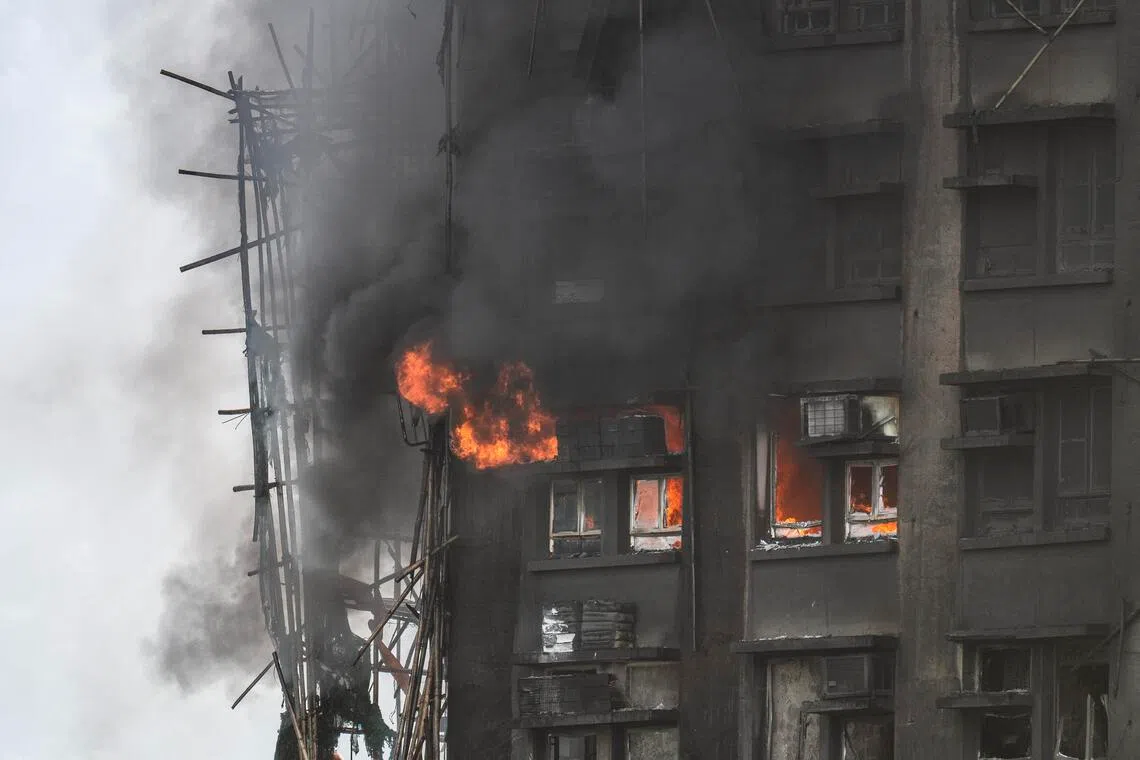
Hong Kong is reeling from its most catastrophic fire in nearly eight decades, an inferno that swept through the Wang Fuk Court housing complex in the Tai Po district. The confirmed death toll has tragically risen to 83, making it the city's deadliest blaze since 1948. The incident has not only shocked the semi-autonomous region but also sparked a swift criminal investigation, leading to the arrest of key figures from the construction company responsible for renovations.
The Tragedy Unfolds: Tai Po Complex Engulfed
The fire, which raged for over 24 hours, ravaged the Wang Fuk Court, an eight-tower complex housing more more than 4,600 residents in some 2,000 apartments. Many of the victims were discovered in two high-rise blocks, battling intense heat, thick smoke, and collapsing debris. The complex, undergoing extensive renovations, was shrouded in bamboo scaffolding and green mesh, materials now central to the ongoing investigation. Deputy Director of Fire Services, Derek Armstrong Chan, confirmed that firefighters, despite the immense challenges, successfully rescued survivors from various buildings.
Manslaughter Charges and Gross Negligence
Hong Kong police have taken decisive action, arresting two directors and an engineering consultant from Prestige Construction, the firm contracted for the building's maintenance. They face suspicions of manslaughter, with authorities citing “gross negligence” and the use of “unsafe materials” as contributing factors to the fire's uncontrolled spread and the resulting mass casualties. Police Superintendent Eileen Chung emphasized that there's strong reason to believe the company's responsible parties were derelict in their duties. The investigation intensified with a raid on Prestige Construction's offices, where bidding documents, employee lists, computers, and mobile phones were seized.
Humanitarian Response and Official Support
In the wake of the disaster, a significant humanitarian effort has mobilized. Authorities established eight shelters, accommodating approximately 900 displaced residents. Chief Executive John Lee announced a HK$300 million (S$50 million) fund to aid residents, complemented by substantial donations from major companies like Xiaomi, Xpeng, Geely, and the charity foundations of Alibaba's Jack Ma and Tencent. Even Pope Leo extended “spiritual solidarity” to those affected. On a broader scale, China's President Xi Jinping urged an “all-out effort” to manage the crisis, underscoring the tragedy's political sensitivity in a region grappling with housing and safety issues.
Broader Implications and Safety Concerns
This devastating fire has ignited widespread concern over Hong Kong's building safety standards, particularly within its densely packed, high-rise residential complexes. The use of foam material sealing windows in some buildings, installed during the year-long maintenance, has come under scrutiny. Discussions within the city's development bureau about gradually replacing traditional bamboo scaffolding with metal alternatives are gaining renewed urgency. Comparisons are being drawn to London's Grenfell Tower inferno in 2017, which killed 72 people and was similarly attributed to flammable cladding and systemic failings in construction and governance. The tragedy also highlights Hong Kong's persistent struggle with affordable housing shortages, a long-standing source of public discontent, and could fuel further resentment towards authorities amidst efforts to tighten political control.