
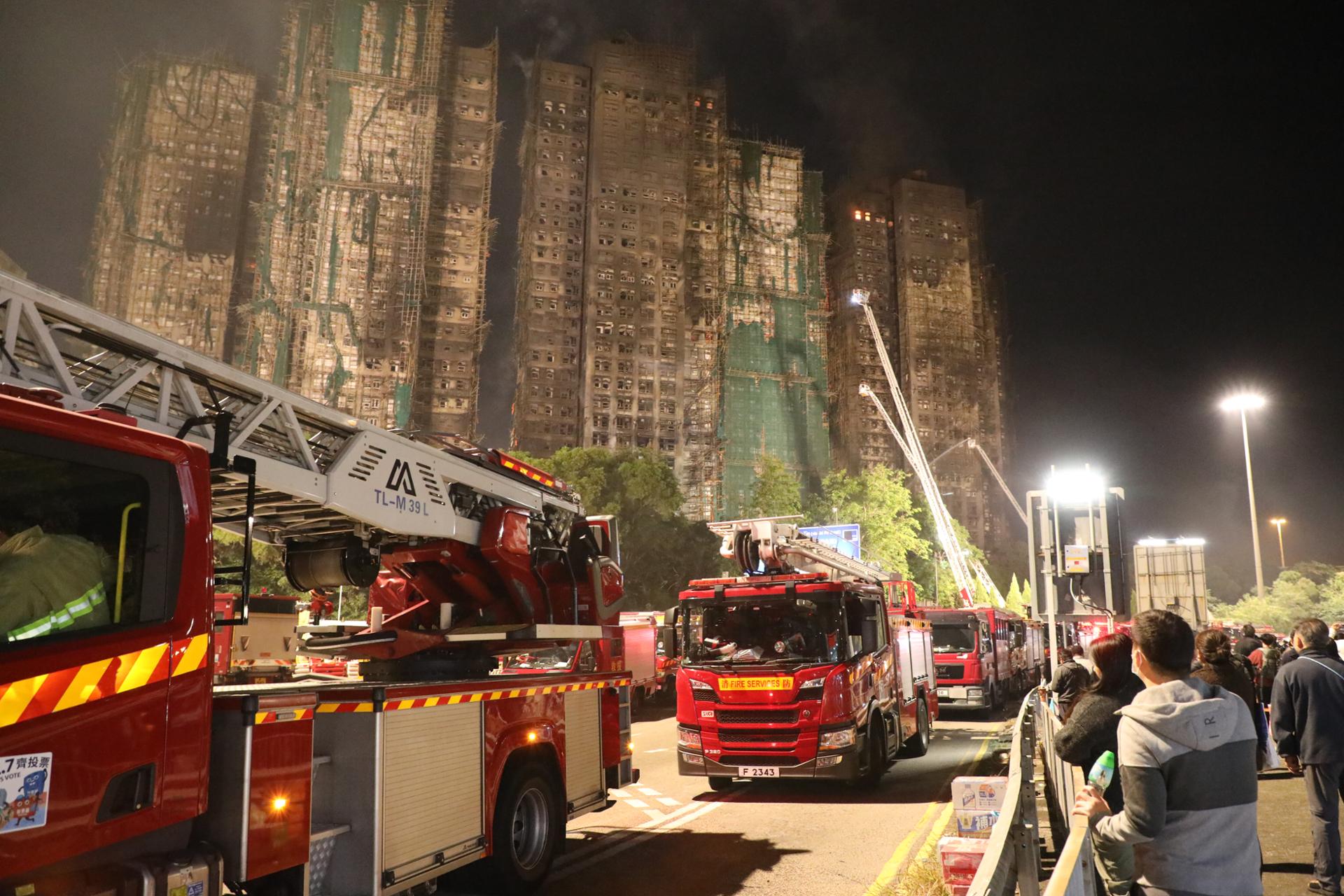
Hong Kong Blaze Prompts Urgent High-Rise Safety Review in South Korea
A recent catastrophic high-rise fire in Hong Kong has cast a sharp spotlight on the fire safety preparedness of residential and commercial towers across South Korea. With a dramatic surge in high-rise living over the last decade, concerns are mounting whether existing regulations adequately protect the nation's soaring vertical communities from similar tragedies.
South Korea's Vertical Growth and Persistent Fire Threat
South Korea has witnessed an unprecedented vertical expansion. Data from the Ministry of Land, Infrastructure and Transport reveals that buildings with 25 or more floors more than doubled in a decade, skyrocketing from 8,268 in 2013 to 21,033 by 2023. This growth means that a staggering three out of four apartment households — 8.96 million out of 11.67 million — now reside on the 15th floor or higher.
Despite this upward trend in residential living, apartment fires remain a persistent threat. The National Fire Agency reported 2,592 apartment fires from January to October this year alone, resulting in 37 fatalities and 338 injuries – the highest casualty count in five years. Last year saw 3,193 apartment fires nationwide, leading to 28 deaths and 335 injuries.
A History of High-Rise Incidents
High-rise complexes have, tragically, been the scene of several major incidents. In March, a hotel in Busan's LCT Landmark Tower experienced a fire, prompting evacuations though no major casualties occurred due to a rapid 13-minute containment. More severe was the October 2020 inferno at a residential-commercial complex in Ulsan, which caused an estimated 10.6 billion won ($7.2 million) in property damage. Strong winds exacerbated that disaster, quickly spreading flames up the 33-story building’s exterior. Just two months later, in December, four lives were lost during a renovation fire on the 12th floor of an apartment building in Gunpo, Gyeonggi Province.
One of the most notable high-rise fires occurred in October 2010 at Busan's Wooshin Golden Suites, where a blaze starting on the fourth floor rapidly ascended to the 38th. Combustible exterior panels fueled the vertical spread, while firefighters faced severe limitations as their ladder trucks could only reach up to the 16th floor.
Modern Safety Measures vs. Older Building Vulnerabilities
In response to such incidents, modern ultrahigh-rise buildings (50+ floors) in Korea are now mandated to include specific fire evacuation features, such as refuge floors, located at least every 30 stories. These critical safe havens, equipped with drinking water, smoke-exhaust systems, and emergency communication, offer residents a temporary shelter until rescue teams can arrive, particularly when external evacuation is impossible. The National Fire Agency also updated its fire safety manual in late 2023, introducing apartment-specific evacuation guidelines.
However, the primary concern lies with the vast number of older apartment complexes constructed before these enhanced safety standards were implemented. Current fire regulations are not applied retroactively, leaving many aging structures, especially those without sprinkler systems, highly vulnerable. Startling statistics from July this year reveal that nearly half of the nation's apartment complexes – 24,401 out of 49,810 – still lack full sprinkler installations. Among these, 6,147 complexes have incomplete sprinkler coverage, while 5,855 entirely lack sprinklers below the 15th floor.
Although sprinklers became mandatory for all floors in buildings six stories or taller in 2018, countless older complexes, particularly those built pre-1990 and under 15 floors, remain unprotected. Compounding the issue, many older buildings still utilize highly combustible exterior cladding.
Expert Calls for Retroactive Application and Improved Inspections
Kong Ha-sung, a professor in Fire and Disaster Prevention at Woosuk University, advocates for retroactively enforcing sprinkler installations and noncombustible exterior materials, even if it requires a longer compliance period. He also highlights a significant challenge for ultrahigh-rise structures: fire truck water pressure often fails to reach levels above the 30th floor. Professor Kong further criticized current inspection protocols, stating, "As far as I know, inspections are done at least once a year, but they mostly check whether the pump turns on. They rarely test if water actually comes out of the sprinkler heads. That should be part of a proper inspection."
The Hong Kong tragedy serves as a potent reminder that while new regulations bolster future constructions, a significant gap in safety persists for South Korea's existing older high-rise communities, necessitating urgent re-evaluation and action.