Baikonur Cosmodrome Damaged After Joint US-Russia Soyuz Launch: Roscosmos Investigates Structural Integrity Concerns
Nov 28, 2025
 Kazakhstan
Space Exploration
Kazakhstan
Space Exploration
Kazakhstan
Space Exploration
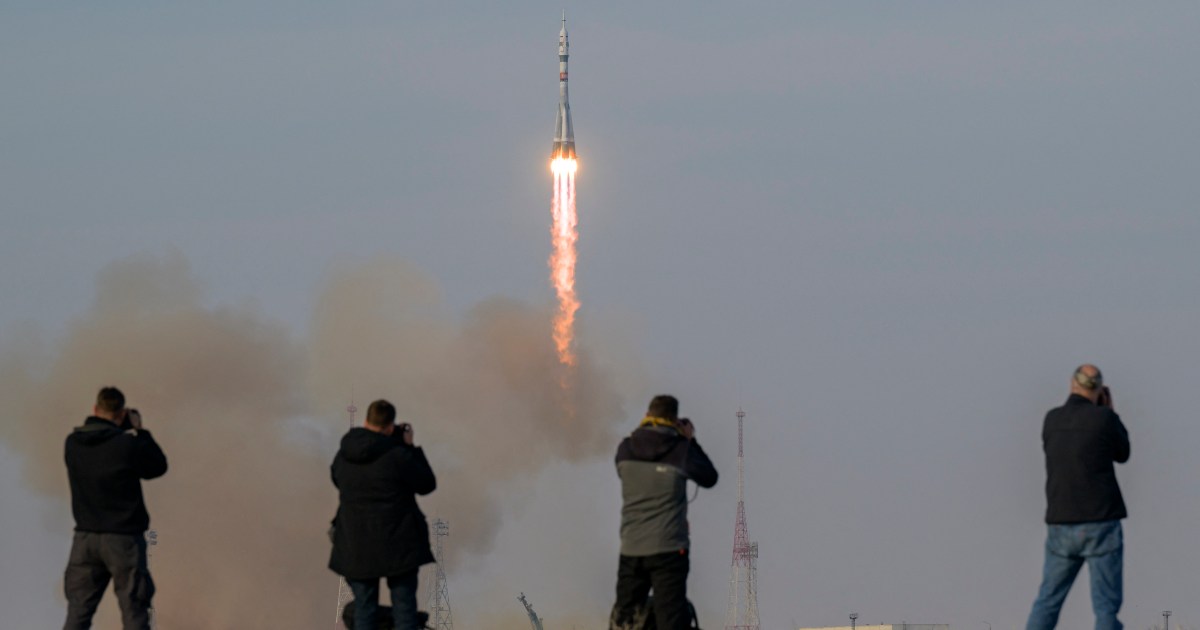
Russia's Roscosmos reported damage to the Baikonur Cosmodrome in Kazakhstan following a joint Soyuz MS-28 launch with NASA. While repairs are underway, space bl
Baikonur Cosmodrome Damaged After Joint US-Russia Space Launch
A critical Russian launch facility situated in Kazakhstan, the Baikonur Cosmodrome, reportedly sustained damage during a recent joint mission that saw Russian and American astronauts successfully blast off to the International Space Station (ISS). Moscow's state space corporation, Roscosmos, confirmed the incident, stating that "a number of elements of the launchpad" were affected.
The Soyuz MS-28 mission, a collaborative effort between Roscosmos and NASA, launched from Baikonur on Thursday, November 27, 2025, at 12:28 pm Moscow time (09:27 GMT). Aboard the Soyuz 2.1a booster rocket were Roscosmos cosmonauts Sergey Mikaev and Sergey Kud-Sverchkov, alongside NASA astronaut Chris Williams. The crew's journey was successful, with the spacecraft docking smoothly with the ISS later that day, and all astronauts reported to be in good health.
Launchpad Integrity Under Scrutiny
Despite the mission's success, post-launch inspections at the Baikonur Cosmodrome revealed the extent of the damage. Roscosmos assured the public that an assessment of the launch complex's condition is underway and that "all the necessary reserve elements are there to restore it and the damage will be eliminated very soon." The crew from the damaged launch is slated for an eight-month stay on the ISS, conducting 40 scientific experiments and two spacewalks before returning to Earth in July 2026.
However, concerns have been voiced by Russian space bloggers, who suggest the damage might be more severe than official statements indicate. Georgy Trishkin, a Russian rocket launch analyst, claimed immediately after the morning launch that the "service cabin collapsed" and parts of the structure fell onto launchpad 31, potentially causing significant damage that could halt operations for an extended period. Similarly, space journalist Vitaly Egorov pointed to visible damage during the official broadcast, noting a "massive metal structure that should not have been there" in the gas exhaust tray beneath the launchpad.
Implications for Russia's Space Program
Should the Baikonur Cosmodrome be rendered inoperable for a significant duration, Egorov warned of a serious setback for Russia, stating it would "lose the ability to launch people into space" for the first time since 1961. This incident adds to a challenging period for Russia's space program, which, once a symbol of national pride, has faced years of underfunding and corruption scandals.
Enduring US-Russia Space Cooperation
Despite a near-total breakdown in relations between Moscow and Washington due to the conflict in Ukraine, space exploration remains one of the few avenues for continued US-Russia cooperation. While other partnerships with Roscosmos have been curtailed by Western sanctions against Russia, the critical function of the ISS and shared space endeavors underscore the enduring, albeit fragile, bond in this domain.
By news
6 months ago
No cameras found for this country.