Cyclone Ditwah Unleashes Deadly Floods & Landslides in Sri Lanka: 56 Killed, Thousands Displaced Amidst Widespread Damage
Nov 28, 2025
 Sri Lanka
Natural Disaster
Sri Lanka
Natural Disaster
Sri Lanka
Natural Disaster
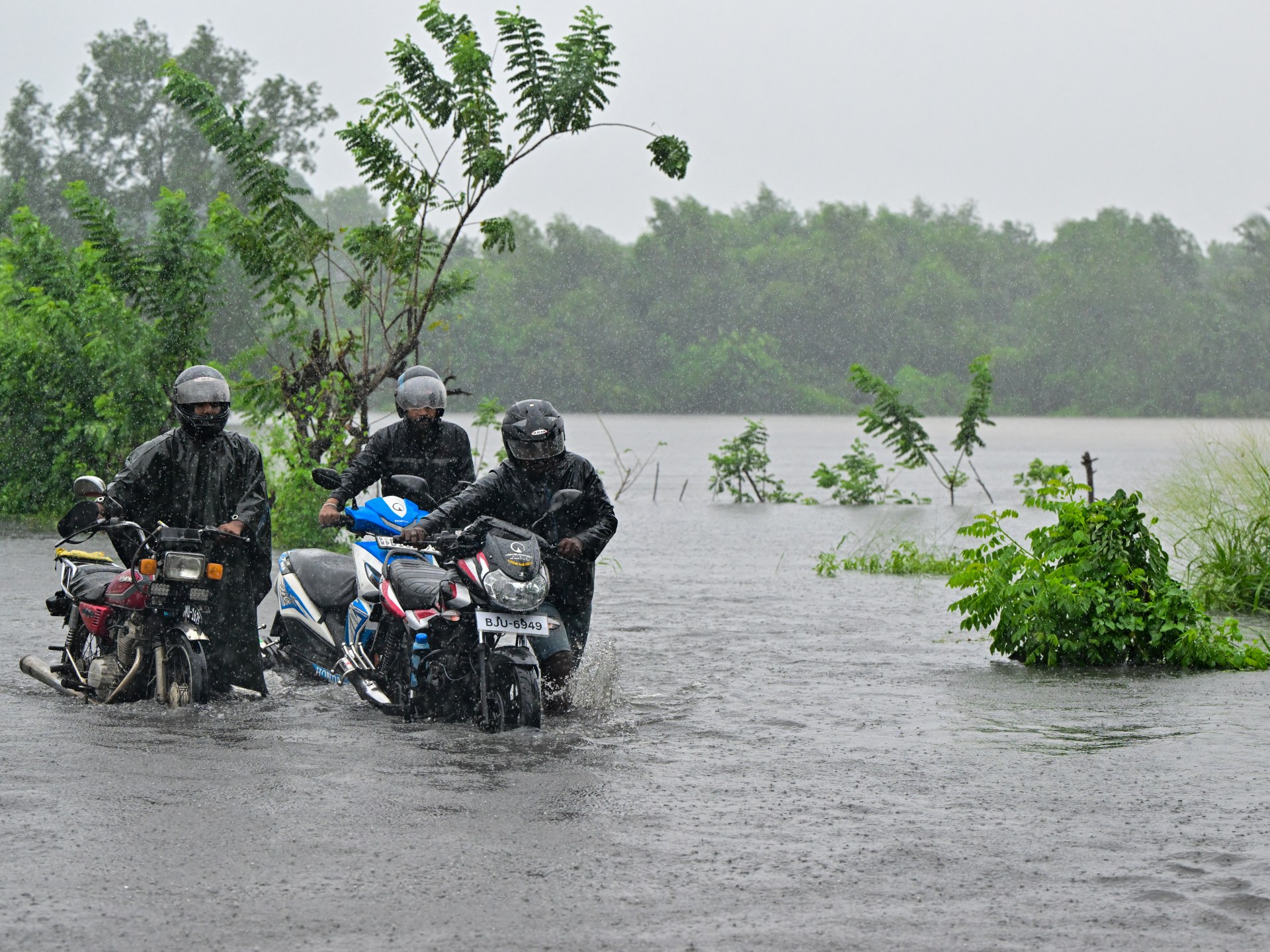
Deadly Cyclone Ditwah caused floods and landslides in Sri Lanka, killing 56 people and displacing thousands. Infrastructure, flights, and daily life are disrupt
Sri Lanka Grapples with Aftermath of Deadly Cyclone Ditwah
Sri Lanka has been plunged into crisis following the devastating impact of Cyclone Ditwah, a powerful tropical storm that swept across the South Asian island nation on Friday. The catastrophe has claimed at least 56 lives, leaving a trail of widespread destruction, with thousands displaced and infrastructure severely compromised. The immediate aftermath has seen intensive rescue operations and a significant disruption to daily life.
Cyclone Ditwah's Destructive Path
Making landfall early Friday morning, Cyclone Ditwah brought fierce winds, reaching speeds of up to 65 kilometers per hour (40 miles per hour), primarily impacting Sri Lanka's eastern and central regions. However, the most destructive element proved to be the torrential rainfall. Between Thursday and Friday, the country experienced an extraordinary downpour, exceeding 300mm (11.8 inches) in some areas, which triggered widespread flooding and deadly landslides across the island.
Human Toll and Search Efforts
The human cost of Cyclone Ditwah is significant. The death toll rapidly climbed to 56 by Friday. Many of the fatalities, over 25, occurred in the central mountainous, tea-growing districts of Badulla and Nuwara Eliya, located approximately 300km (186 miles) east of the capital, Colombo. Beyond the confirmed casualties, 23 individuals remain missing nationwide, with 21 of those concentrated in the hard-hit Badulla and Nuwara Eliya regions. Additionally, 14 people have sustained injuries.
Widespread Damage and Infrastructure Chaos
The heavy rains and associated disasters have caused extensive damage. Four houses were completely destroyed, and over 600 others sustained damage. Landslides sent significant amounts of mud, rocks, and trees onto major roads and railway lines, rendering many impassable. Floodwaters further submerged critical transportation routes, exacerbating the disruption.
Air travel was also severely affected. Fifteen flights, including international services from Muscat, Dubai, New Delhi, and Bangkok, had to be diverted. These flights, originally bound for Bandaranaike International Airport (BIA) in Colombo, were redirected to Mattala Rajapaksa International Airport (MRIA) in Sri Lanka's southern province, Mattala, as well as to airports in Trivandrum and Kochi in India throughout Thursday and Friday afternoon.
Emergency Response and Government Action
In response to the crisis, Sri Lanka's Disaster Management Centre (DMC) launched a massive evacuation effort, successfully moving 43,991 people from 12,313 families to schools and other public shelters. Military helicopters played a crucial role, seen rescuing three individuals stranded on a rooftop in Hanwella, Colombo District. The navy and police also utilized boats for evacuation operations.
The government took decisive action to minimize further risk and facilitate emergency efforts, declaring Friday a holiday for all government offices and schools. Train services were suspended, and the Colombo Stock Exchange concluded trading early. Several roads remain closed across the country as clearance operations are underway.
Understanding Tropical Storms
Tropical storms like Cyclone Ditwah form over warm ocean waters near the equator. The process begins when warm, moist air rises, creating a low-pressure zone. As this air cools and is replaced by more rising warm air, a continuous cycle is established, generating strong winds and heavy rainfall. As the system gains intensity and its rotation quickens, a calm, clear 'eye' develops at its center, characterized by very low air pressure. Once wind speeds reach 63km/h (39mph), the system is classified as a cyclonic or tropical storm. Cyclone Ditwah, with its 65km/h winds, falls into this category. If winds escalate to 119km/h (74mph) or more, it officially becomes a tropical cyclone.
Ongoing Situation and Economic Context
As of Friday, schools and government offices remained closed, and significant road and train closures were still in effect. The Irrigation Department issued a red-level flood warning for low-lying areas along the Kelani River valley for the next 48 hours, specifically highlighting the risk to Colombo, the nation's capital.
This natural disaster comes at a sensitive time for Sri Lanka's economy. The country, under President Anura Kumara Dissanayake, is navigating a fragile recovery after implementing austerity measures as part of an IMF bailout. While there have been nascent signs of improvement, particularly in the tourism sector, the economy remains heavily reliant on effective debt management. The impact of Cyclone Ditwah poses a new challenge to this delicate recovery.
By news
7 months ago
No cameras found for this country.