India's Shifting Pakistan Policy: Caution Prevails After Delhi Blast Amidst Geopolitical Shifts & Diplomatic Lessons
Nov 29, 2025
 India
Geopolitics
India
Geopolitics
India
Geopolitics
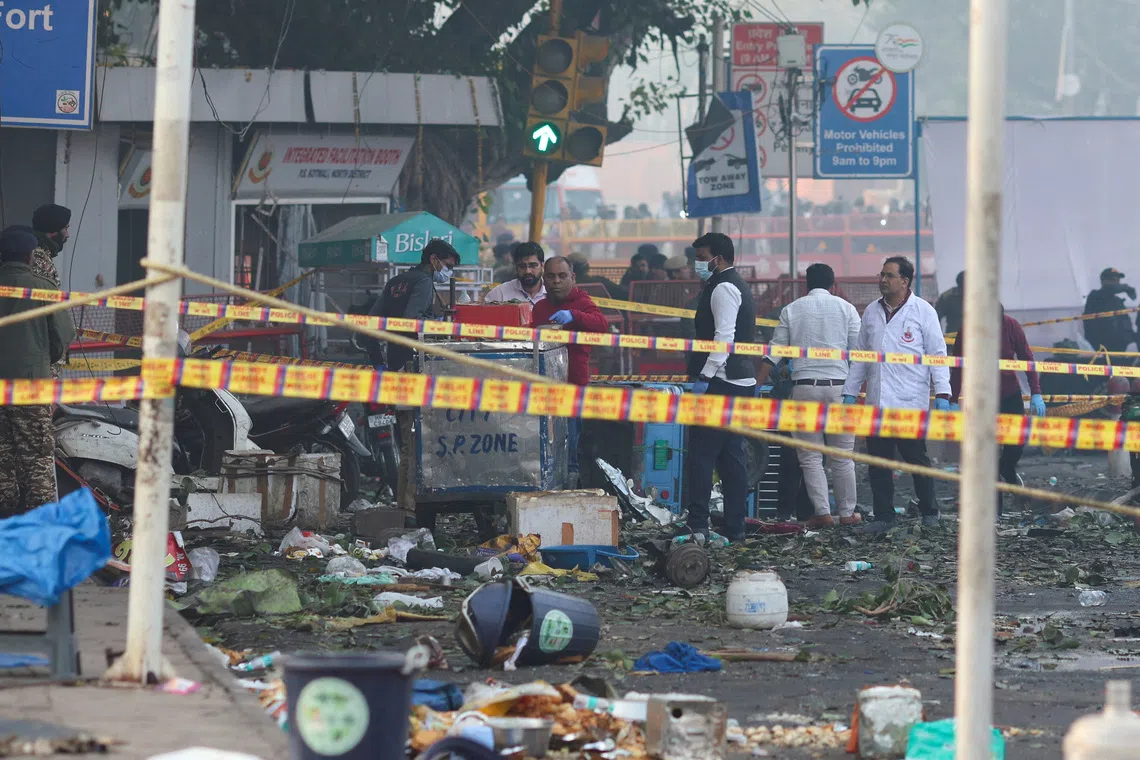
India adopts a cautious stance on Pakistan after a New Delhi blast, refraining from immediate blame. This shift follows diplomatic costs from Operation Sindhoor
India's Evolving Strategy: A Cautious Approach to Pakistan After Delhi Blast
India is carefully recalibrating its strategy towards Pakistan, moving away from its previous swift retaliatory stance, particularly evident following a recent major bomb attack in New Delhi. The November 10 blast near the historic Red Fort, the first significant terror incident in the capital in over two decades, has been met with a remarkably restrained response from Prime Minister Narendra Modi's government.
A Nuanced Policy Shift
Unlike past incidents, where accusations against Pakistan were quick to follow, India has largely withheld direct blame, despite preliminary investigations suggesting links between the terror module and the Pakistan-based Jaish-e-Mohammed militant group. This measured approach marks a significant shift, especially given Modi’s prior warning that any terror attacks originating from Pakistan would be considered an "act of war" – a declaration made after the Red Fort blast that tragically claimed at least 13 lives.
Lessons from Diplomatic Fallout: Operation Sindhoor
This newfound caution appears to be a direct consequence of the diplomatic fallout and international scrutiny India faced after "Operation Sindhoor" in May. This limited military conflict erupted following an April terror attack in Pahalgam, Kashmir, which killed 25 Indians and one Nepali. India's subsequent cross-border strikes were met with lukewarm support from world leaders, who questioned the strength of evidence presented by New Delhi regarding Pakistan's alleged involvement. The experience highlighted the significant diplomatic costs of a confrontational stance without irrefutable proof.
Navigating Complex Global Dynamics
Adding to India's complex foreign policy landscape are its evolving ties with key global players. Relations with the United States have become strained under President Donald Trump's administration, characterized by trade disputes, including significant tariffs on Indian goods and Russian oil purchases. Trump's repeated claims of mediating between India and Pakistan further displeased New Delhi, which has historically resisted third-party intervention in bilateral issues.
Concurrently, China's influence with Pakistan has grown, a dynamic observers noted during the May India-Pakistan clash. A 2025 US-China Economic and Security Review Commission report even suggested Beijing used the conflict as a live testing ground for its advanced weaponry and intelligence capabilities. Pakistan’s Foreign Minister Ishaq Dar claimed Chinese J-10C jets were instrumental in Downing Indian fighter jets during the skirmish, though India denied this specific detail while confirming losses.
Experts like Mr. Ajai Sahni from the Institute for Conflict Management in New Delhi suggest that India's current restraint stems from its prior commitment to an "act of war" response. An immediate accusation would corner the Modi government into an extreme, potentially escalatory, reaction. Dr. Amit Ranjan of the National University of Singapore's Institute of South Asian Studies further emphasizes the global demand for evidence post-Pahalgam, pushing India towards a more evidence-driven approach before taking action.
Red Fort Blast Investigation Details
The ongoing investigation into the Red Fort attack focuses on a "white-collar terror module" involving the radicalization of Indian doctors with alleged ties to Ansar Ghazwat-ul-Hind (an al-Qaeda affiliate) and Jaish-e-Mohammed. Six individuals have been arrested, and Dr. Umar-un-Nabi, an assistant professor, has been identified by investigators as the suicide bomber.
Despite the government's cautious stance, some prominent figures within the ruling Bharatiya Janata Party (BJP), like Maharashtra Chief Minister Mr. Devendra Fadnavis, have already begun publicly accusing Pakistan.
Pakistan's Counter-Accusations
Pakistan, in contrast, has adopted a more assertive posture. Following a suicide bombing in Islamabad on November 11, Prime Minister Shehbaz Sharif swiftly accused India of "state terrorism," claims India has dismissed. Later, Pakistan’s Information Minister Attaullah Tarar blamed the banned Tehreek-i-Taliban Pakistan (TTP) and Afghanistan for the attack, highlighting Pakistan's deteriorating relationship with the Taliban government.
Historical Tensions and the Road Ahead
The long-standing animosity between India and Pakistan, particularly over Kashmir – a region claimed entirely by both – continues to simmer. India consistently accuses Pakistan of supporting separatist movements and terror groups, a charge Pakistan denies. The two nuclear-armed neighbors have a history of conflicts over Kashmir, including two wars and a limited conflict. In the past decade, India, under Modi, had favored cross-border strikes, such as those in 2016 and the Balakot air strikes in 2019, in response to terror attacks.
However, the current global climate, coupled with India’s complex bilateral relationships and the lessons learned from Operation Sindhoor, mandates a more comprehensive and cautious strategy. As Dr. Ranjan notes, "India has to look at all the angles before making a move," indicating a period of calculated assessment rather than immediate reprisal. The significant troop deployment along the border underscores the inherent instability and the ever-present risk of provocation in this volatile region.
By news
7 months ago
No cameras found for this country.