Pope Leo XIV's Historic Turkiye Visit: Minorities Hail New Era of Openness & Property Reforms
Nov 29, 2025
 Turkey
Religion
Turkey
Religion
Turkey
Religion
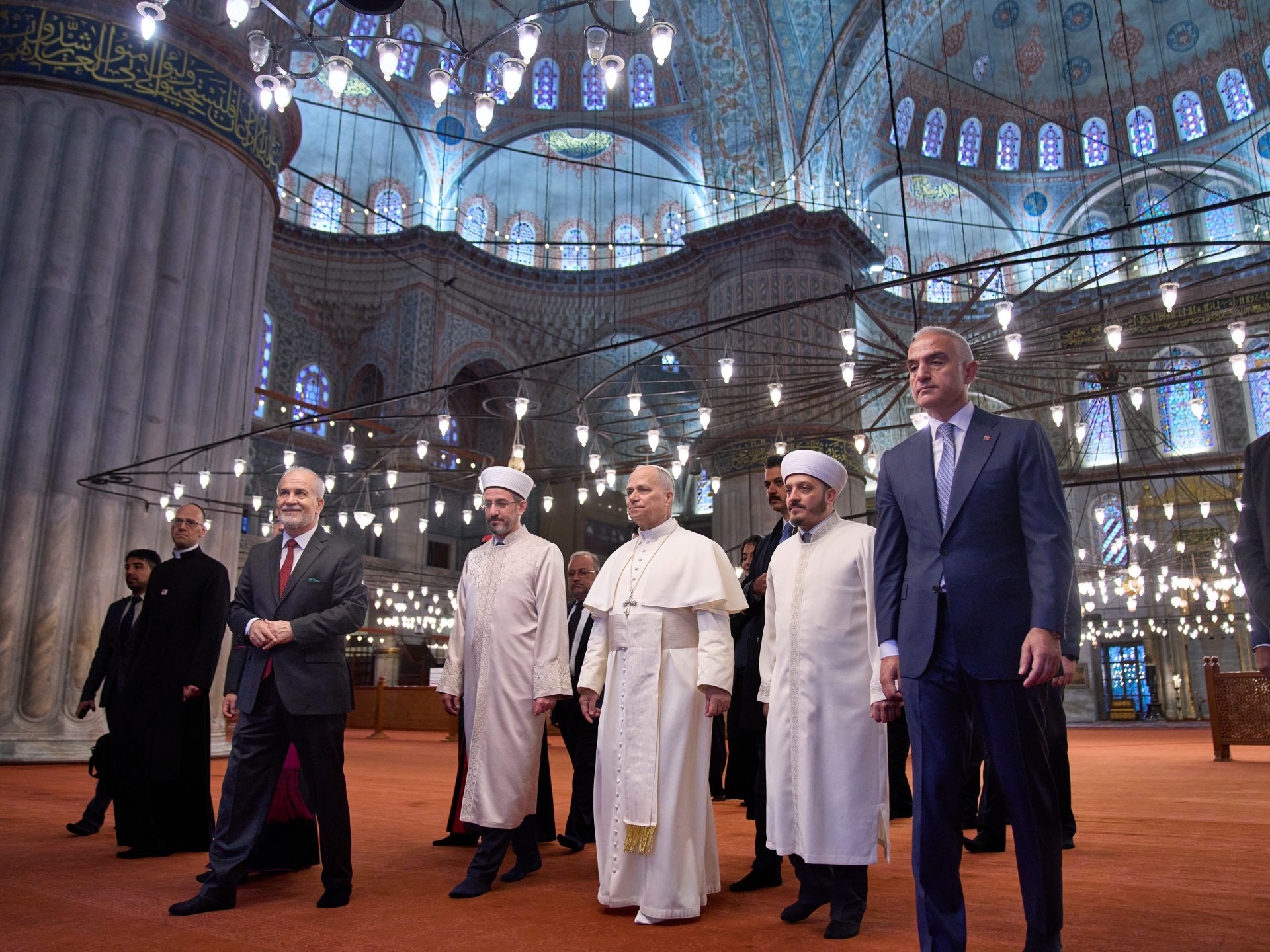
Pope Leo XIV's visit to Turkiye signals a new era of openness for Christian minorities. Reforms have facilitated property returns and greater visibility, foster
Pope Leo XIV's Historic Turkiye Visit: A New Dawn for Christian Minorities
Pope Leo XIV’s inaugural overseas journey as the head of the Roman Catholic Church to Turkiye marks a profoundly symbolic moment, signaling what minority communities perceive as a renewed era of openness in the predominantly Muslim nation. This pivotal visit saw the pontiff engaging in discussions with President Recep Tayyip Erdogan, meeting diverse religious leaders, and touring sacred sites within a country where Christianity's ancient heritage intertwines with a formidable Islamic tradition.
Historical Roots and Enduring Communities
While Turkiye's population of over 80 million is almost entirely Muslim, it remains home to centuries-old Greek, Armenian, Syriac, and Latin Christian communities. These groups, integral to the nation's social fabric, have weathered decades of political friction, demographic shifts, and property disputes. Today, their representatives express a sentiment of increased visibility and confidence, unparalleled in recent memory. The timing of Pope Leo's visit is seen as particularly significant, reflecting a period where historic foundations feel more empowered to restore assets, organize religious activities, and directly engage with state institutions.
Manolis Kostidis, vice president of the Greek Foundations Association, hailed the papal visit as "a great honour for Turkiye" and immensely important for both the Ecumenical Patriarchate and the Greek community. He emphasized Istanbul's historical role as an imperial host and suggested that welcoming such a distinguished guest underscores the patriarchate's value, especially with recent Turkish government support.
The Challenging 20th Century and Subsequent Resilience
The early Turkish Republic saw hundreds of thousands in its Greek, Armenian, and Syriac populations. However, the 20th century witnessed a significant decline due to a series of political upheavals: the 1942 Wealth Tax disproportionately affecting non-Muslims, the devastating 1955 Istanbul pogrom, and the 1964 deportation of over 12,000 Greek citizens amidst Cyprus tensions. Subsequent administrative barriers and legal rulings accelerated emigration. Despite their reduced numbers, these communities demonstrate remarkable resilience, continuity, and a deep-seated connection to their ancestral land.
Can Ustabası, head of the Minority Foundations Representative Office, noted that while minorities once numbered in the millions, they are now much smaller, estimating roughly 85,000 within Turkiye's 85 million population. He acknowledged their past struggles but highlighted a stark contrast in the atmosphere over the last two decades.
Reforms and Renewed Confidence
Since the early 2000s, minority foundations have benefited from crucial legal amendments. The Foundations Law, originating from the Ottoman era and adapted by the Republic, governs property ownership and management for non-Muslim charitable organizations. European Union-driven harmonization packages between 2003 and 2008 further enhanced their capacity to register assets, reclaim properties seized under previous rulings, and accept donations and inheritances. This culminated in a 2011 government directive mandating the return or compensation for properties confiscated under the 1974 Court of Cassation ruling and prior administrative actions.
Ustabası credits President Erdogan's instruction to "return what rightfully belongs to them" with fundamentally altering the stance of state bodies. He recalled how church painting permits once took years, now doors open readily. Lawyer Kezban Hatemi, a long-time advisor to minority foundations, recognized these as "major reforms" but stressed that more progress is needed. She described earlier state reluctance as stemming from decades-old security concerns and restrictive legal interpretations, leading to extensive bureaucratic hurdles for even basic repairs or property registrations.
The EU process, Hatemi explained, provided significant momentum, but political will was equally vital in removing a "major blockage." Despite this, she noted that historical anxieties persist, with some abroad still cautioning against property investment in Istanbul, haunted by memories from the 1940s to 1970s. Ustabası confirmed that approximately 1,250 properties "were returned through EU harmonisation reforms and changes to the Foundations Law" between 2003 and 2018. Kostidis added that this restitution transcends material gain, making them feel like "full citizens" and marking one of the "most comfortable periods" for minorities since Erdogan assumed power in 2003.
Return Migration and a "Turkiye Without Terrorism"
A clear indicator of this renewed confidence is visible among Syriacs, particularly in Tur Abdin, their historic heartland in southeastern Turkiye (Midyat and the wider Mardin region). Here, return migration from Europe has slowly commenced, with individuals rebuilding homes, drawn by improved infrastructure and enhanced security, even preparing for long-term residency. Ustabası directly attributes this shift to better security conditions in the southeast, a region previously plagued by clashes between the Turkish state and the PKK. He asserted that "A Turkiye without terrorism opens many doors," enabling people to feel safe traveling, restoring homes, and returning to their villages.
While large-scale returns to Istanbul are less likely, Kostidis believes some could return if residency issues are resolved, advocating for a "special regulation" for Greeks from Istanbul holding Greek citizenship. He emphasized that Istanbul's strength lies in its plurality, advocating for the coexistence of all communities—Muslim, Jewish, Armenian, Syriac, Greek.
Lingering Challenges and a "Powerful Message"
Despite significant strides, unresolved legal and administrative issues persist, including foundation board elections, ambiguities concerning autonomy, and lingering property handover cases. Ustabası calls for legal framework changes, while Hatemi points out that the state "still intervenes in foundation governance in ways it never does with Muslim foundations." This mentality, she hopes, will fully change. Turkish-Armenian journalist Etyen Mahcupyan noted a slowdown in reform momentum post-2016 failed coup, suggesting renewed focus on EU membership could reinvigorate progress.
Mahcupyan views Pope Leo's visit as having considerable political and symbolic weight, seeing the pontiff as both a religious and political figure. He believes the visit positively contributes to Turkiye's foreign policy ambitions, aligning with Ankara's desire for global political acceptance. He highlighted the Pope's "clear position" on the war in Gaza, which resonates with Turkiye's stance, fostering international goodwill and softening attitudes towards non-Muslims. Kostidis reinforced this, stating that a Muslim-majority nation hosting Christian world leaders conveys an incredibly "powerful message," ensuring minority communities are not overlooked.
By news
7 months ago
No cameras found for this country.