
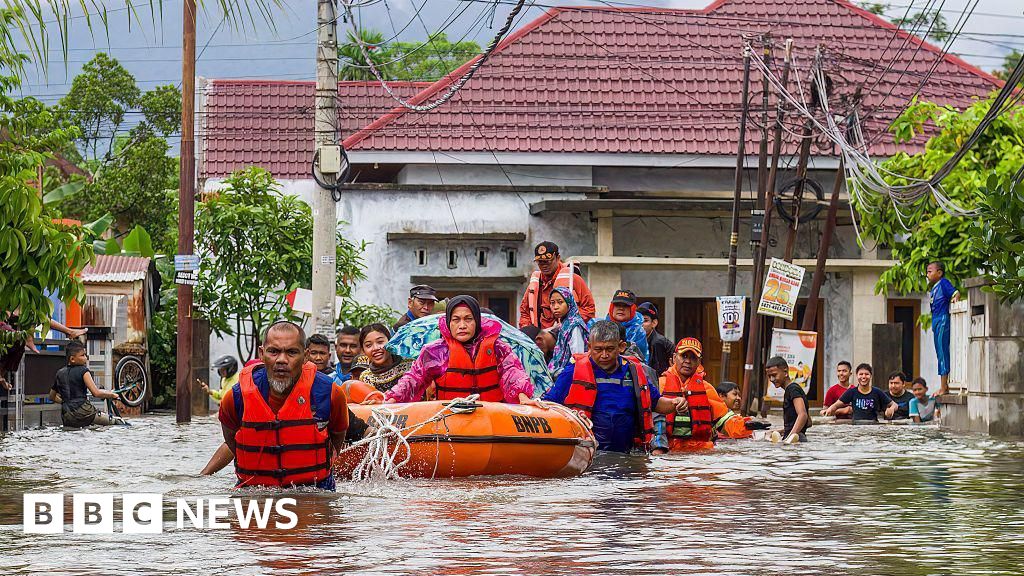
Southern Asia is grappling with one of its most devastating natural disasters in recent memory, as torrential monsoon rains, exacerbated by tropical storms, have triggered widespread flooding and catastrophic landslides. The humanitarian crisis has claimed an estimated 600 lives across Indonesia, Thailand, Malaysia, and Sri Lanka, with hundreds more still reported missing, suggesting the death toll is likely to escalate. Millions have been displaced, their lives upended by the relentless deluge.
Indonesia Bears the Brunt of Unprecedented Deluge
The Indonesian archipelago, particularly the island of Sumatra, has experienced immense destruction. Intense rainfall commenced on Wednesday, leading to immediate and severe flooding. Residents recounted harrowing escapes; a Bireuen resident in Aceh province told Reuters, "During the flood, everything was gone... I wanted to save my clothes, but my house came down." The situation worsened with the arrival of the exceptionally rare Cyclone Senyar, which unleashed unprecedented landslides and flooding, submerging thousands of buildings and sweeping away homes. Indonesia’s disaster agency reported over 300 fatalities and nearly 300 individuals still missing by Saturday. Arini Amalia, from Aceh Province, described the terrifying speed of the waters to the BBC, recalling how she and her grandmother narrowly escaped to higher ground, only to find their home completely swallowed by the flood upon returning. Another survivor, Meri Osman, recounted being "swept away by the current" from his home in West Sumatra, clinging to a clothesline until rescue. Difficult weather conditions continue to impede search and rescue missions, leaving hundreds stranded even as tens of thousands have been evacuated to safety.
Thailand's Decades-Worst Deluge Cripples Southern Provinces
Thailand’s southern provinces have also been hit hard, suffering their worst floods in a decade. Songkhla province saw water levels rise a staggering 3 meters (10 feet). By Saturday, the government confirmed over 160 deaths across 10 affected provinces, impacting more than 3.8 million people. The city of Hat Yai recorded an astonishing 335mm of rainfall in a single day, an event described as the heaviest in 300 years. As waters receded, the true scale of the tragedy emerged, with death tolls surging. A hospital morgue in Hat Yai became so overwhelmed that employees resorted to moving bodies to refrigerated trucks. Residents like Thanita Khiawhom of Hat Yai expressed profound distress, stating, "We were stuck in the water for seven days and no agency came to help." In response, the Thai government has pledged significant relief measures, including compensation of up to two million baht ($62,000) for families who lost members.
Malaysia and Sri Lanka Face Severe Impacts Amidst Regional Crisis
Neighboring Malaysia, while reporting a lower death toll of two, has not escaped devastation. Parts of its northern Perlis state lie submerged, forcing tens of thousands into shelters. Sri Lanka, simultaneously battling Cyclone Ditwah, has declared a state of emergency. The island nation has recorded over 130 deaths and approximately 170 missing persons. Officials report that more than 15,000 homes have been destroyed, displacing some 78,000 people into temporary shelters. A third of the country is also grappling with power outages and a lack of running water, compounding the humanitarian crisis.
Climate Change and Unusual Storm Patterns Drive Extreme Weather
Meteorologists suggest the extreme weather across Southeast Asia is a complex interaction between Typhoon Koto in the Philippines, the rare formation of Cyclone Senyar in the Malacca Strait, and the annual monsoon season. While the monsoon typically brings heavy rains between June and September, climate change is increasingly altering storm patterns, leading to greater intensity, longer durations, heavier rainfall, flash flooding, and stronger winds, magnifying the destructive potential of such natural events. The region faces a challenging recovery as rescue operations continue amid an ongoing environmental crisis.