Venezuela Condemns Trump's Threat to Close Airspace Amid US Military Buildup and Escalating Tensions
Nov 30, 2025
 Venezuela
International Relations
Venezuela
International Relations
Venezuela
International Relations
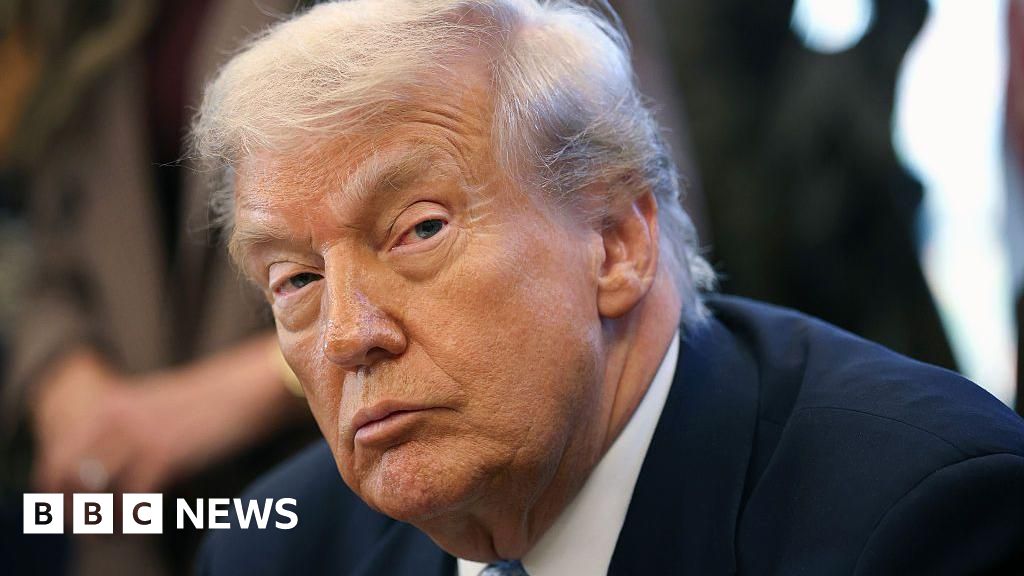
Venezuela vehemently rejects former President Trump's declaration to close its airspace, labeling it an illegal aggression. The move escalates tensions amid US
Venezuela Fervently Condemns Trump's Airspace Closure Threat Amid Soaring Tensions
Caracas has unequivocally denounced former US President Donald Trump's recent assertion that the airspace surrounding the South American nation should be considered entirely closed. Venezuela swiftly condemned Trump's remarks, labeling them as "another extravagant, illegal, and unjustified aggression against the Venezuelan people" and a "colonialist threat"—a forceful rejection underscoring that the United States lacks the legal authority to unilaterally impose such a closure on another sovereign nation's airspace.
The Contested Airspace: Trump's Declaration and Venezuela's Defiance
The contentious statement, shared by Trump on Truth Social, directly targeted "Airlines, Pilots, Drug Dealers, and Human Traffickers," explicitly declaring "THE AIRSPACE ABOVE AND SURROUNDING VENEZUELA TO BE CLOSED IN ITS ENTIRETY." This provocative declaration arrives amidst a significant and visible build-up of US military presence in the broader Caribbean region. This includes the deployment of the formidable USS Gerald Ford aircraft carrier and approximately 15,000 troops, a mobilization that represents the largest US military maneuver in the area since its 1989 invasion of Panama. The US government maintains that these substantial deployments are primarily aimed at combating illicit drug trafficking, claiming responsibility for at least 21 strikes on boats believed to be transporting narcotics, operations which have reportedly resulted in over 80 fatalities.
However, Venezuela's President Nicolás Maduro vehemently contests this narrative. He views these aggressive US actions not as mere anti-drug efforts, but as a concerted and sustained campaign by Washington to destabilize and ultimately depose his left-wing government. Maduro's re-election last year remains a point of intense contention, widely disputed by Venezuelan opposition parties and numerous international bodies as rigged. Crucially, the US has yet to provide concrete, verifiable evidence to substantiate its specific claims regarding the effectiveness and necessity of these drug interdiction operations.
Domestic US Opposition: Congressional Concerns Over War Powers
Trump's escalating rhetoric and thinly veiled threats have not only inflamed international relations but have also drawn significant criticism from both sides of the US political spectrum. Prominent Democrats, including the top Senate Democrat Chuck Schumer, have expressed profound alarm. Schumer posted on X that Trump's "reckless actions towards Venezuela are pushing America closer and closer to another costly foreign war" without the requisite legislative approval. Republican Representative Marjorie Taylor Greene, until recently a close ally of Trump, echoed these fundamental constitutional concerns, issuing a clear "Reminder, Congress has the sole power to declare war." These bipartisan voices highlight a deep-seated unease within the US legislature regarding presidential authority in matters of military engagement without explicit congressional consent.
Broader Context: FAA Warnings, Airline Suspensions, and Venezuelan Military Drills
The current state of heightened tension was foreshadowed by earlier events. Preceding Trump's latest remarks, the US Federal Aviation Administration (FAA) had already issued specific warnings to airlines about "heightened military activity in and around Venezuela," prompting several major international carriers to suspend flights to the country as a precautionary measure. In a reciprocal move, Caracas subsequently revoked the take-off and landing rights of these airlines. In response to what it perceives as an escalating threat, Venezuela's foreign ministry has urgently appealed to the international community, the United Nations, and other relevant multilateral organizations to "firmly reject this immoral act of aggression." Concurrently, in a clear display of national resolve, Venezuela's military conducted highly publicized exercises along its coastal areas, with state television showcasing anti-aircraft weaponry and artillery being expertly maneuvered, signaling a readiness to defend its territorial integrity and sovereignty.
International Reactions and Sanctions: The "Cartel de los Soles" Designation
Further complicating the already fraught relationship, the US has taken additional measures, notably designating the "Cartel de los Soles" (Cartel of the Suns)—a group it explicitly alleges is led by President Maduro—as a foreign terrorist organization. This severe classification grants US law enforcement and military agencies significantly expanded powers to target and dismantle the alleged network. Predictably, Venezuela's foreign ministry has responded with an emphatic and unequivocal rejection, stating it has "categorically, firmly, and absolutely rejected" this designation. The international community remains divided on these developments. Leaders like Colombia's left-wing President Gustavo Petro, who himself has faced US sanctions, have openly criticized the US approach, suggesting it uses "violence to dominate" Latin America. Conversely, other leaders in the region have welcomed and supported Trump's firm stance, reflecting the complex geopolitical dynamics at play.
By news
2 days ago
No cameras found for this country.