EU Urges Korea: Bolster Cyber Defenses & AI Research Against Foreign Manipulation Amid Global Tech Rivalry
Dec 1, 2025
 South Korea
International Relations
South Korea
International Relations
South Korea
International Relations
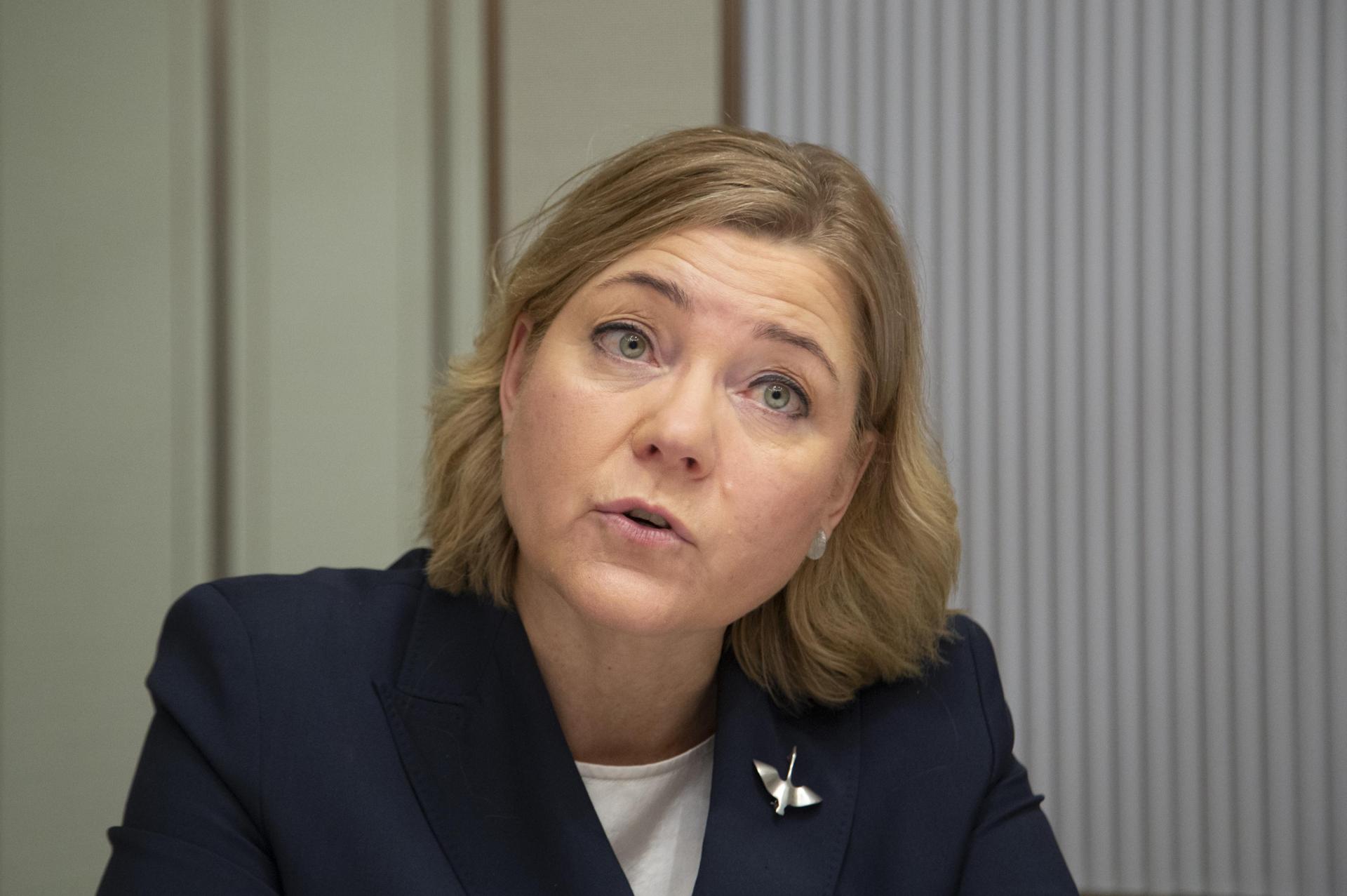
EU official Henna Virkkunen warns democracies face foreign manipulation, urges Korea-EU cooperation on AI, cybersecurity, and semiconductors. Amid Korea's X con
EU Official Warns Democracies Face Persistent Foreign Manipulation
Henna Virkkunen, the European Commission's Executive Vice President for technology sovereignty, security, and democracy, has issued a stark warning: democracies worldwide are facing relentless "constant hybrid attacks" from foreign actors. Speaking during an interview in Seoul, Virkkunen underscored the urgent need for enhanced collaboration with South Korea to effectively combat escalating cyberthreats, rampant misinformation, and sophisticated online manipulation campaigns.
Korea's Digital Battleground: The X Controversy
Virkkunen's timely remarks coincide with a burgeoning debate in South Korea regarding foreign online influence. A recent update by X (formerly Twitter) revealing users' access locations brought to light that numerous influential political accounts, ostensibly supportive of President Lee Jae Myung, were operating from China. This revelation sparked outrage, prompting Rep. Joo Jin-woo of the main opposition People Power Party (PPP) to demand mandatory nationality labeling for users on Korean online communities.
Joo highlighted a widely followed account that, using Lee's 2022 campaign photo, had posted over 65,000 criticisms of the PPP from an IP address traced to China. "This is not just one account," Joo emphasized on Facebook, expressing concern over the mass production of Korean political content from China, which he termed a potential act of "interference and manipulation of public opinion." He urged the swift passage of a bill requiring Korean portals to display commenter nationalities, framing it as a national security imperative.
Europe's Shared Struggle: Lessons from Russia
Hours after the controversy erupted in Seoul, Virkkunen confirmed that Europe grapples with similar threats, particularly from Russia, which she accused of orchestrating sustained disinformation campaigns during its conflict with Ukraine. "Our democracies are very much under attack," she stated, highlighting Russia's continuous spread of misinformation and propaganda online as a core security concern. She detailed how hostile foreign actors frequently combine cyberattacks, propaganda, and coordinated manipulation to destabilize societies.
EU's Proactive Stance: Digital Services Act & Democracy Shield
The European Union is actively combating these threats through robust regulatory frameworks like the Digital Services Act (DSA). This landmark legislation mandates that major online platforms identify and mitigate systemic risks to democratic processes and electoral integrity. "All illegal content must be taken down. In Europe, the rules are the same online and offline," Virkkunen asserted, noting that X is currently under investigation for non-compliance, alongside other large online platforms. She stressed that platforms must adhere to these regulations to continue operating within the EU market, irrespective of their business interests.
Furthermore, the EU's new Democracy Shield Initiative aims to fortify election protection, enhance platform monitoring, and establish rapid response systems against manipulation. The EU also collaborates with platforms under a voluntary Code of Practice, leverages trusted flaggers, and organizes pre-election roundtables to pinpoint actors attempting to exploit online environments. Virkkunen highlighted the critical need for platforms to allocate significant resources to prevent the convergence of cyberattacks and disinformation before elections.
Bridging Gaps: EU-Korea Tech Alliance
While acknowledging that EU-Korea cooperation on cyberthreats and foreign manipulation is "not yet deep" due to the EU's specialized platform governance rules, Virkkunen expressed strong willingness to share expertise. "These platforms have enormous power in our societies and economies. They cannot operate only by their own terms and conditions," she cautioned. She emphasized that robust cybersecurity must be complemented by citizen education and strong, independent media to counter low public awareness and digital vulnerabilities.
Fostering Future Technologies: AI, Semiconductors, and 6G
Virkkunen's two-day visit to Seoul marked the third anniversary of the Korea-EU Digital Partnership, launched in November 2022. She advocated for deeper cooperation across AI, semiconductors, and cybersecurity, urging both partners to strengthen their digital alliance amidst intense global technological competition. With Korea emerging as a leader in generative AI, Virkkunen sees "significant potential" for joint research, cross-border testing, and bolstering critical infrastructure defenses against hybrid operations.
Beyond research, the EU seeks concrete industrial cooperation, including joint AI innovation projects and further collaboration on semiconductors. Existing projects span semiconductors, 6G networks, and quantum technologies, with Korea participating in the EU’s Horizon Europe research scheme. Europe, a global leader in quantum science, also sees this as a promising area for joint ventures, particularly in quantum chips. Four joint semiconductor research projects are already underway, with the EU keen to move beyond research to enhancing global chip supply chain resilience and exploring investment opportunities for Korean companies in Europe.
Ensuring Trustworthy Technology: A Global Mandate
As the EU finalizes comprehensive regulations like the AI Act and Data Act, Virkkunen underscored the vital importance of international cooperation to ensure the ethical and trustworthy development of technology. She stressed that AI models, especially those used for critical applications like loan approvals or transport systems, must meet clear standards before market entry. Collaborative efforts with Korea, she suggested, could further facilitate safer cross-border data flows and interoperability, reinforcing collective preparedness against hostile actors seeking to destabilize societies and erode trust.
By news
8 months ago
No cameras found for this country.