
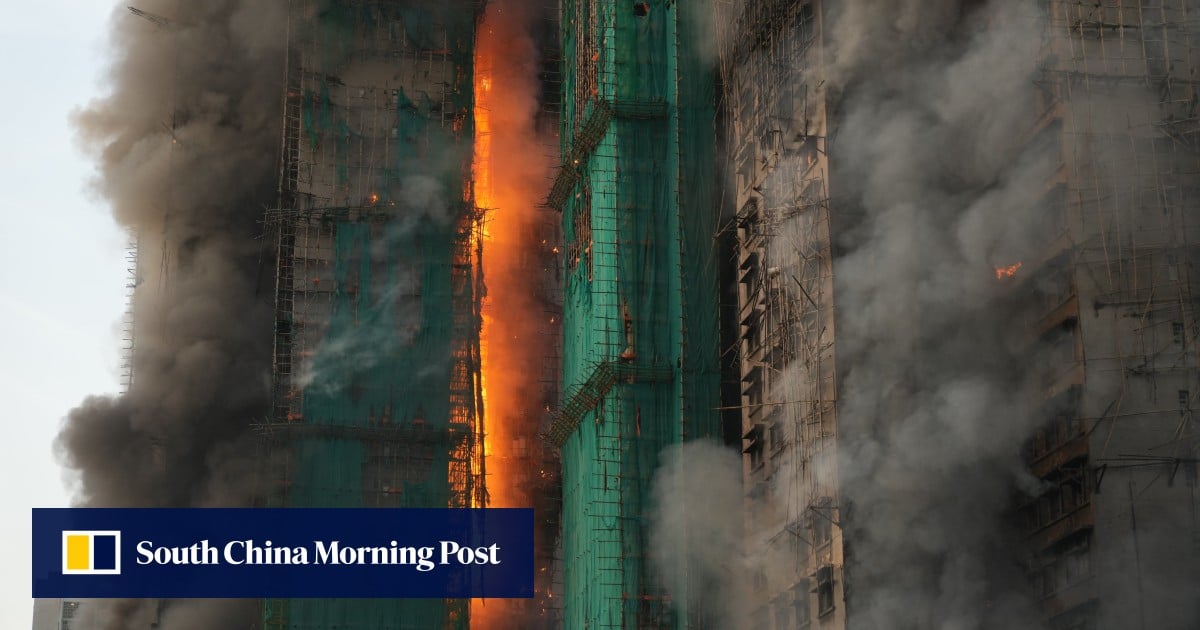
The tragic inferno that claimed 151 lives in Hong Kong's Tai Po district has been linked to the use of substandard, non-fire-retardant protective netting on buildings undergoing renovation. Authorities revealed this devastating discovery following investigations into what has become the city's deadliest blaze in seven decades.
Investigation Uncovers Critical Safety Failures
The incident occurred at Wang Fuk Court, a residential estate whose eight blocks had been enveloped in scaffolding and green mesh since July of the previous year for renovation work. Officials announced on Monday that a shocking seven out of 20 protective net samples collected from the site failed to meet critical fire retardant standards.
"Cunning Methods" Used to Evade Detection
Preliminary findings indicate a deliberate lapse in safety. After typhoon damage in July, some of the exterior nets were reportedly replaced with significantly cheaper, non-fire-resistant materials. Chief Secretary Eric Chan Kwok-ki condemned these actions, stating that cunning methods
were employed, involving a mix of compliant and non-compliant netting.
Crucially, the substandard materials were strategically placed to evade detection. Samples which failed the requirements were found in spots difficult to reach, where firefighters have to climb out, to avoid detection from authorities,
Chan explained at a press briefing. This suggests a calculated attempt to cut costs at the expense of public safety, leading to catastrophic consequences for the residents of Wang Fuk Court. The ongoing investigation aims to bring those responsible to justice and reinforce building safety standards across the region.