Putin Meets US Envoys on Ukraine Peace Amid European Accusations & Shifting Aid Dynamics
Dec 3, 2025
 Ukraine
International Relations
Ukraine
International Relations
Ukraine
International Relations
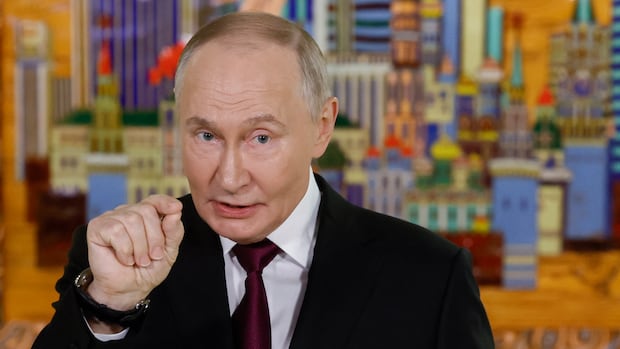
US envoys meet Putin on Ukraine peace talks as Russia accuses Europe of blocking peace. Ukraine seeks EU support amid concerns over proposals favoring Moscow. E
High-Stakes Diplomacy: US Officials Engage Putin on Ukraine Peace Amidst European Concerns
In a critical diplomatic maneuver, U.S. special envoy Steve Witkoff and former President Donald Trump's son-in-law, Jared Kushner, met with Russian President Vladimir Putin in Moscow. The meeting unfolded against a backdrop of accusations from Putin, who claimed Europe was "blocking the entire peace process," and amidst Ukraine's urgent appeal for greater European support in U.S.-brokered peace talks. Ukraine fears a current proposal unduly favors Moscow's position.
Putin's Defiant Stance and Delayed Talks
Prior to the U.S. delegation's arrival, Putin, accompanied by Kremlin economic envoy Kirill Dmitriev and aide Yuri Ushakov, had dismissed European peace proposals, asserting Russia’s readiness for war if Europe desired one. This defiant rhetoric, delivered at a forum in Moscow, delayed the scheduled meeting with the U.S. envoys, which started an hour and a half late. Putin continued to characterize the 27-country European Union as hostile and a "vassal entity" of the United States, yet surprisingly, he seemed less opposed to the idea of Ukraine potentially joining the EU, perhaps deeming it unlikely or irrelevant to his vision of a multipolar world dominated by major powers like Russia, China, and the U.S.
Ukraine's Perspective: Skepticism and Resilience
Ukrainian President Volodymyr Zelenskyy, on an official visit to Ireland, expressed his willingness to meet Trump again, contingent on the outcome of the Moscow talks. Meanwhile, Ukraine's Foreign Minister Andrii Sybiha sharply criticized Putin’s remarks, stating they demonstrated Russia's lack of intent to end the war and that the Russian president was "wasting the world's time." Sybiha emphasized Ukraine's support for "fair efforts" towards a just peace, having made significant progress with U.S. and European partners. He called for Moscow to be compelled to end the conflict. Ukraine also denied Russia's claim of having seized the key eastern city of Pokrovsk, underscoring the ongoing disinformation tactics.
Kushner's Controversial Return to Diplomacy
Jared Kushner's re-emergence in international diplomacy, without an official White House adviser title, has raised eyebrows. His involvement began months ago alongside Witkoff, contributing to the Israel-Hamas ceasefire deal finalized in October. Trump has frequently lauded Kushner's negotiating skills, stating, "We always bring Jared when we want to get that deal closed." Kushner's past includes an op-ed where he controversially labeled the Israel-Hamas conflict a "real-estate dispute." His previous tenure as an adviser during Trump's first term saw him and Ivanka Trump report substantial outside income, drawing scrutiny from watchdog groups like Citizen For Ethics. Reuters reported that Kushner and Witkoff met with Kirill Dmitriev, head of a Russian sovereign wealth fund, in Miami in October, preceding Kushner's presence at talks with Ukrainian officials.
Shifting Tides: Europe Outpaces US in Ukraine Aid
The landscape of international support for Ukraine has significantly altered under the Trump administration. Germany's Kiel Institute, a prominent tracker of aid, reports that European nations have become Ukraine's largest benefactor, contributing $167 billion US since Russia's 2022 invasion, surpassing the United States' $130 billion US. Nordic countries, particularly Norway and Sweden, have played a crucial role in compensating for dwindling U.S. contributions. The U.K., Germany, and France remain steadfast backers. Canada's Global Affairs department has committed nearly $22 billion in support. While the U.S. announced a new military assistance package in July, the plan hinges on Europe funding the purchase of American-made weaponry.
Trump's Assessment: "What a Mess"
During a White House cabinet meeting, Donald Trump described the war in Ukraine as "What a mess," expressing hope for a resolution from the U.S. delegation in Russia. He reiterated his questionable claim that the war "never would have happened" if he had been president in 2022, without elaborating. Trump also repeated his assertion of having ended "eight wars," suggesting he deserved Nobel Prizes, before quickly pivoting to discussing crime in American cities.
A Bleak Outlook for Peace?
Oleksi Melnyk, a Ukrainian defence analyst at the Razumkov Centre in Kyiv, offered a grim assessment, estimating only a "one per cent" chance of success for this latest peace initiative. He attributed this to Putin's perceived position of strength, the divisions among Ukrainians, Americans, and Europeans, and the unwavering Ukrainian societal commitment to national sovereignty. Melnyk referenced the 2014 protests that ousted Russia-backed President Viktor Yanukovych, highlighting Ukraine's deep-seated resolve against any terms that would diminish its independence.
Escalation on the Battlefield
Concurrently with the diplomatic efforts, the conflict intensified on the ground. Both Russia and Ukraine have escalated strikes on energy facilities as the war approaches its four-year mark. Ukraine's drone commander, Robert Brovdi, reported 108 missions in November, damaging critical energy and military infrastructure, including power substations in Russia and Russian-occupied Ukrainian territory. Reuters also reported that Ukraine struck at least eight Russian oil refineries last month as part of its strategy to weaken Moscow's war efforts.
By news
8 months ago
No cameras found for this country.