China's LandSpace Zhuque-3 Reusable Rocket Fails Landing After Launch, Highlighting Space Race Challenges Against SpaceX
Dec 3, 2025
 China
Space
China
Space
China
Space
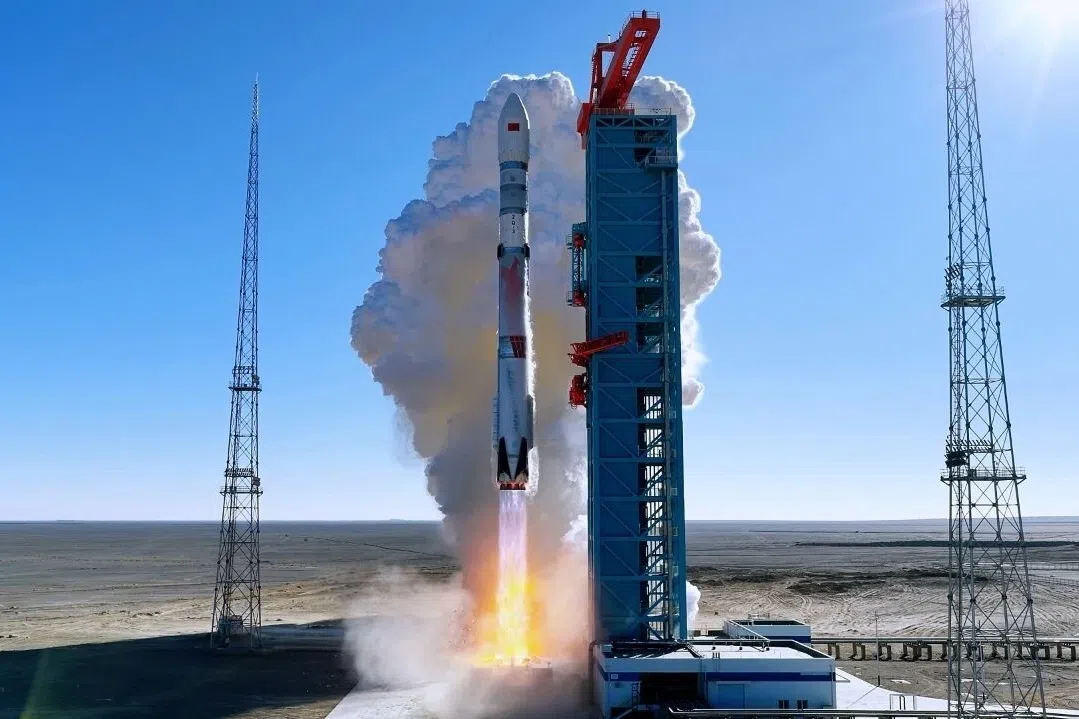
China's LandSpace Zhuque-3 reusable rocket crash-landed after its first orbital launch attempt on Dec 3, highlighting challenges in reusable tech against SpaceX
China's LandSpace Zhuque-3 Reusable Rocket Fails Landing After Inaugural Orbital Launch
The burgeoning Chinese private space sector recently experienced a significant setback as LandSpace Technology's Zhuque-3 rocket, designed with reusability in mind, crash-landed following its maiden orbital launch attempt. This incident, which unfolded on December 3, serves as a stark reminder of the formidable challenges China faces in mastering rocket recovery technology, an area where Elon Musk's SpaceX currently maintains a considerable lead.
The Mission and Its Unforeseen Outcome
The Zhuque-3, a partially reusable launch vehicle, commenced its ascent from the Dongfeng Commercial Aerospace Innovation Test Zone situated in north-west China. Reports from state media indicated an "abnormal burn" during the critical recovery phase, which ultimately led to the booster's uncontrolled descent and crash-landing. This ambitious mission marked a historic first for a private Chinese space company, aiming not only to achieve orbit but also to successfully recover its first-stage booster for future reuse.
The Global Reusability Landscape: SpaceX's Dominance
SpaceX has undeniably set the global benchmark for rocket reusability, a feat it accomplished by consistently recovering and recycling the boosters of its Falcon 9 rockets since 2017. This groundbreaking approach has yielded substantial benefits, including a significant reduction in launch costs and dramatically shortened turnaround times between missions. These advantages have propelled SpaceX to a near-monopoly in heavy-lift launches and established it as the premier provider of low-Earth orbit internet services through its vast Starlink constellation, which now comprises approximately 9,000 satellites.
China's Push for Reusable Space Technology
While China continues its rapid advancement in overall space capabilities, its current operational strategy largely depends on single-use rockets for deploying satellites. Nevertheless, the nation is aggressively cultivating its private space industry to bridge the existing gap in reusable launch technology. Several other companies are actively developing their own reusable rocket systems, including Beijing Space Pioneer Technology with its Tianlong-3, and Interstellar Glory Aerospace Science and Technology (also known as iSpace), which is developing the Hyperbola-3.
International Perspectives and Concerns
The advancements within China's reusable launch vehicle programs have not gone unnoticed by international observers, particularly the US Pentagon. During a conference held in National Harbor, Maryland, in September, Brigadier-General Brian Sidari of the US Space Force voiced concerns regarding the potential for China to rapidly scale up its on-orbit capabilities once it fully masters reusable lift systems.
LandSpace: A Pioneer in China's Private Space Sector
LandSpace, a Beijing-based startup, has emerged as a key player in China's private space landscape over the past decade, following the government's decision to open the industry to private sector participation. The Zhuque-3 rocket itself stands at an impressive 66 meters tall and is engineered to carry up to 18 satellites per launch. A notable achievement for LandSpace occurred in 2023 when it became the world's first company to successfully launch a rocket fueled by methane, a propellant recognized for its potential to be cleaner and safer than conventional rocket fuels. Despite the recent landing failure, this mission underscores both the unwavering determination and the ongoing technical hurdles inherent in China's ambitious pursuit of space innovation and reusability.
By news
8 months ago
No cameras found for this country.