Bulgaria's President Radev Calls for Government Resignation Amid Budget Protests & Political Crisis
Dec 3, 2025
 Bulgaria
Politics
Bulgaria
Politics
Bulgaria
Politics
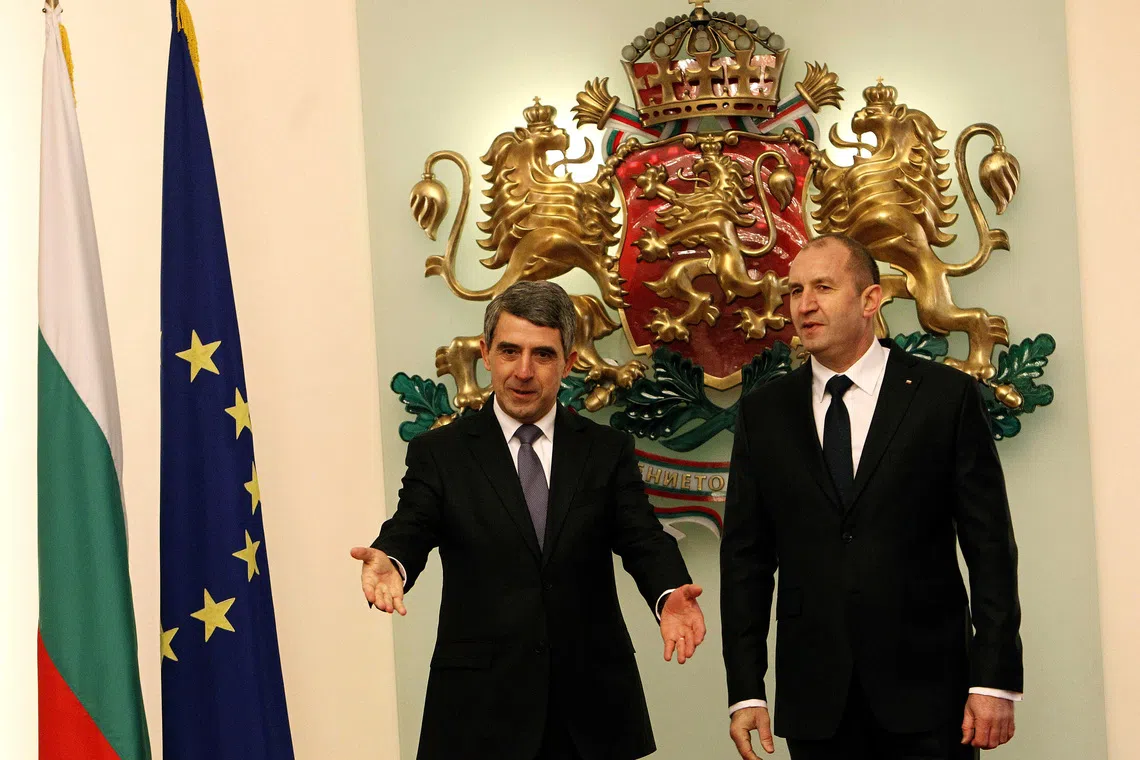
Bulgarian President Rumen Radev has called for the government's resignation after mass protests against its 2026 budget. The move highlights deep political inst
Bulgaria's President Demands Government Resignation Amid Budget Protests and Political Crisis
Bulgaria finds itself in deeper political turmoil as President Rumen Radev has publicly urged the minority government of Prime Minister Rosen Zhelyazkov to resign immediately. This dramatic call comes in the wake of widespread nationwide protests against the proposed 2026 budget, which led to the government withdrawing its controversial fiscal plan earlier this week.
Controversial Budget Fuels Public Outrage
The contentious budget, notable for being the first drafted in euros ahead of Bulgaria's planned adoption of the common currency on January 1, sparked public outrage due to its inclusion of significant tax hikes aimed at funding increased state expenditure. Demonstrations across the country highlighted a profound dissatisfaction with the government's economic policies and broader governance.
President Radev's Stance: Call for "Real Change"
President Radev, currently serving his second term in what is largely a ceremonial role, delivered a forceful address on state broadcaster BNT. He asserted that the protests clearly indicate the government's failure to meet public expectations and called for decisive action. "Bulgaria needs a real change that will lead to the rule of law and the restoration of statehood, and that is something that the current governing coalition cannot achieve," Radev stated, advocating for early elections as the "only way forward."
A History of Instability: Seven Elections in Four Years
This latest crisis is a stark reminder of Bulgaria's persistent political instability. The Balkan nation has struggled with a succession of weak coalition governments, resulting in an extraordinary seven elections within just four years. The current cabinet, formed after months of intricate negotiations following the October 2024 election, only received parliamentary approval in January.
Opposition Files No-Confidence Motion
Long a vocal critic of the GERB-party-dominated administration, President Radev has consistently accused it of corruption. Echoing these sentiments, the opposition 'Continue the Change-Democratic Bulgaria' (CC-DB) party announced plans to file a no-confidence motion against the government on Friday. They also intend to organize further protests next week, coinciding with parliamentary debates on the motion. This would mark the sixth no-confidence vote faced by the government since taking office.
Ruling Coalition Rejects Demands, Warns of "Chaos"
Despite the mounting pressure, the ruling coalition has firmly rejected calls for resignation. Boyko Borissov, president of the powerful GERB party, warned against the potential for "chaos" and soaring prices should the government step down, particularly in the lead-up to Bulgaria's euro adoption. The government itself has yet to comment publicly on President Radev's demand or the opposition's planned actions.
Implications for Bulgaria's Future
As the European Union's poorest member state and one grappling with significant corruption challenges, Bulgaria desperately requires political stability to effectively utilize EU funds for its essential, yet often neglected, infrastructure projects. The current standoff further complicates the country's path towards economic and institutional reform.
By news
8 months ago