New Zealand Faces Undetected Measles Spread: Paediatrician Warns of Community Transmission & Low Vaccination Risk
Dec 3, 2025
 New Zealand
Health
New Zealand
Health
New Zealand
Health
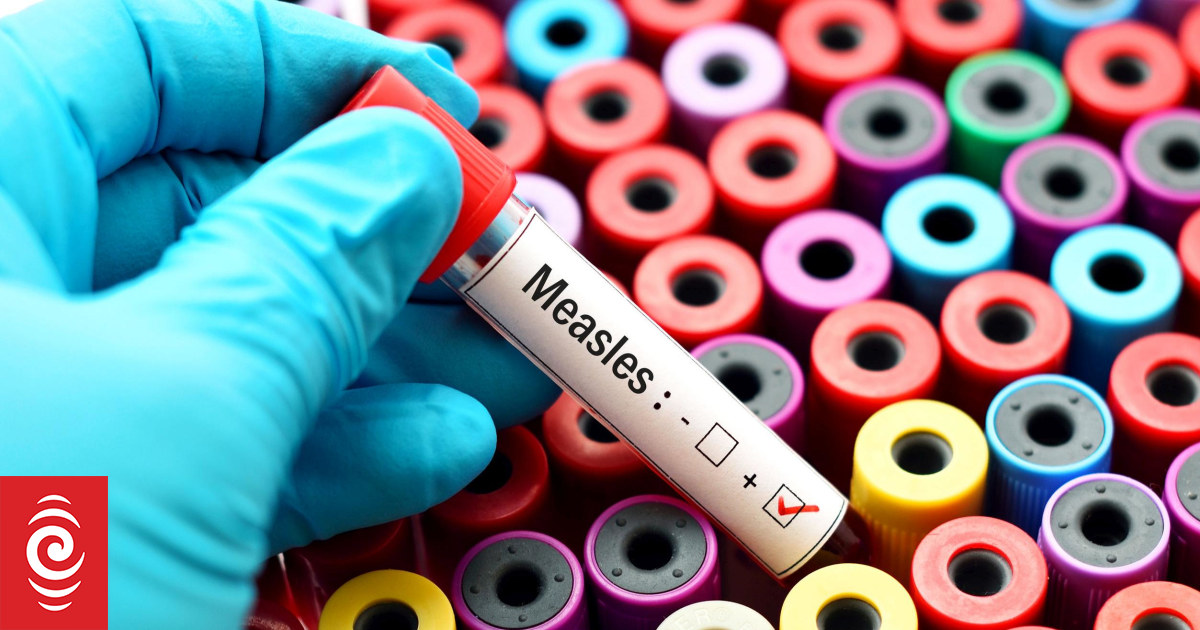
Five new measles cases confirmed in New Zealand, raising total to 27 since October. A paediatrician warns of undetected community spread, driven by travel and l
New Zealand Grapples with Undetected Measles Spread, Experts Urge Vaccination
Health authorities in New Zealand are grappling with a concerning resurgence of measles, as a paediatrician voices alarm over the potential for undetected community spread. Health New Zealand (HNZ) recently confirmed five new cases – one in Dunedin, one in Waikato, and three in Auckland – bringing the total reported infections since October 8 to 27. While 22 individuals are no longer infectious, experts anticipate more cases.
Unlinked Cases Spark Investigation
The latest cases currently lack clear links to previous infections, prompting HNZ's public health medicine specialist, Dr. Matt Reid, to initiate investigations into potential connections with earlier reports or areas of interest. This lack of direct linkage fuels concerns about the disease's silent dissemination within the population.
Deadly Disease, Urgent Call for Vaccination
Dr. Owen Sinclair, chairperson of the Immunisation Taskforce, emphasized the gravity of the situation, stating, "We should be really worried, as I think this is a sign that this is spreading." He dismissed the likelihood of these cases stemming purely from international visitors, pointing instead to active transmission within New Zealand communities. Sinclair underscored that with no specific cure for measles, high vaccination rates are the only effective means to halt its progression. He cautioned that while hospitals aren't currently overwhelmed, continued spread could quickly change this.
Vulnerable Populations at High Risk
Particular concern has been raised regarding populations with lower immunization rates. Sinclair highlighted that if cases emerge in highly vaccinated areas, the disease might naturally fizzle out. However, the presence of cases in Waikato and Auckland is troubling. Auckland, especially West and South Auckland, was the epicenter of the last major outbreak, leaving these communities vulnerable. Additionally, Waikato has a significant Māori population with notably low vaccination coverage, making them particularly susceptible. "It's a great concern, we really don't want it affecting those populations," Sinclair stressed.
Travel a Key Factor in Spread
Dr. Nikki Turner, principle medical advisor at the Immunisation Advisory Centre, described the new cases as "disappointing" but "not totally unpredictable." She acknowledged the extensive efforts by health services in contact tracing previous cases, but noted the two-to-four-week incubation period makes full containment challenging. Dr. Turner suggested that domestic and international travel are likely drivers of the current spread. New Zealanders' frequent travel habits mean new cases could either be imported from regions with high measles activity or stem from individuals unknowingly incubating the virus while traveling within the country.
A Community-Wide Call to Action
Children and infants face the highest risk of severe measles complications, making increased vaccination rates in these age groups a top priority. However, Dr. Turner also pointed out an overlooked group: mid-life adults who may have missed vaccinations in their youth. She issued a broad call to action: "If you're not sure you've had two vaccines and you're under the age of about mid-50s, then go and check." She reiterated the virus's high virulence and the ease with which it can be carried and spread unknowingly.
Dr. Owen Sinclair reinforced this message, urging everyone to see vaccination as a positive, life-saving measure. "Please just make a little bit of effort to do it. You could save your life, your child's life, and someone else's life." The overarching message is clear: proactive vaccination is crucial to protect individuals and prevent a wider, more devastating measles outbreak across New Zealand.
By news
8 months ago
No cameras found for this country.