
Sumatra Reels from Catastrophic Floods: A Fight for Survival in Indonesia
Sumatra, Indonesia is grappling with an immense humanitarian crisis following catastrophic floods and landslides that have claimed the lives of over 770 people. Across the island, homes are buried, bridges are destroyed, and vital transportation links are severed, leaving many areas inaccessible. Humanitarian organizations are warning that the scale of the rescue and recovery efforts required is unlike anything seen before.
In Sibolga, a seaside town in Central Tapanuli, the situation is particularly dire. While it managed to escape the direct brunt of the flood damage, the town has been almost entirely cut off from the rest of the country due to damage to access routes. Residents are facing a critical shortage of electricity, dwindling food, fuel, and clean water supplies.
Desperation Mounts in Cut-Off Communities
Ms. Nur Apsyah, a 28-year-old resident, vividly describes the unprecedented hardship. “It has never been like this in Sibolga before,” she stated while waiting in line for food aid. With no electricity, no jobs, and money running out, the struggle to simply eat is a daily reality. The desperation has even led to looting in local mini-markets, which Ms. Nur attributes to the perceived lack of governmental support.
Emergency Aid Efforts Underway Amidst Logistical Hurdles
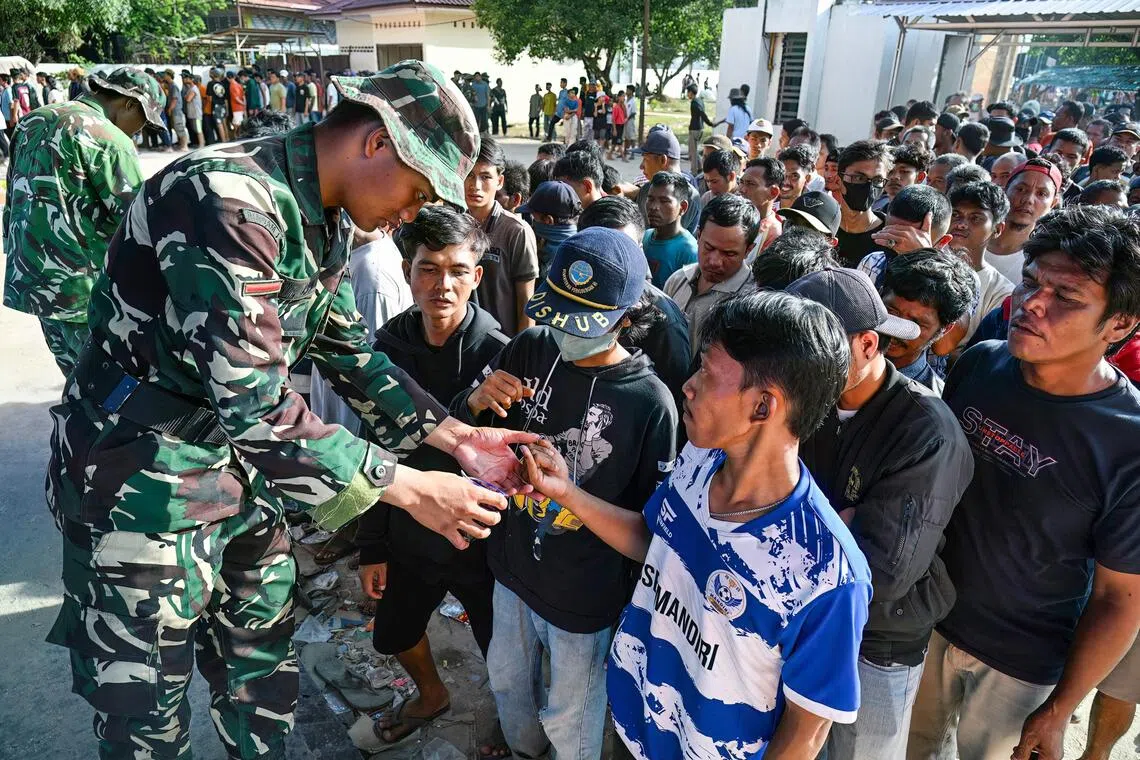
In response to the escalating crisis, the Indonesian military, under the oversight of Coordinating Human Development and Culture Minister Pratikno, has initiated efforts to distribute essential supplies. On December 3, soldiers oversaw the distribution of rice to flood survivors, with recipients having their fingers marked with ink to prevent double distribution and hoarding. Men were seen shouldering 50kg sacks, while women carried them atop their heads, a testament to the urgent need.
Despite these efforts, challenges persist. While queues for rice and fuel have shown some improvement, forecasts of additional rain threaten to exacerbate the already critical situation, raising fears of new damage and worsening shortages. Many businesses in Sibolga remain closed due to the lack of electricity, with the few open relying solely on generators.
Daily Battles for Basic Necessities Highlight Crisis Severity
Sahmila Pasaribu, 55, recounts spending hours in a fruitless search for basic necessities. “Even if she had the money, there is nothing that can be bought,” she lamented, highlighting the widespread scarcity of fuel, rice, and cooking oil. The disruption to vital services extends to water, as grocery store owner Mr. Sopian Hadi, 30, has been regularly visiting a government water office for a week since landslides cut off the water supply to his home. He also endured a six-hour wait to fill his motorcycle's gas tank.
Amidst the profound challenges, a spirit of resilience shines through. Mr. Sopian Hadi, despite the overwhelming circumstances, refuses to succumb to despair. “I am not desperate, because to survive, (we) can’t despair,” he affirmed, embodying the courage of many Indonesians facing this immense natural disaster.