
Iraq Takes Decisive Action: Freezes Funds of Iran-Backed Hezbollah and Houthis
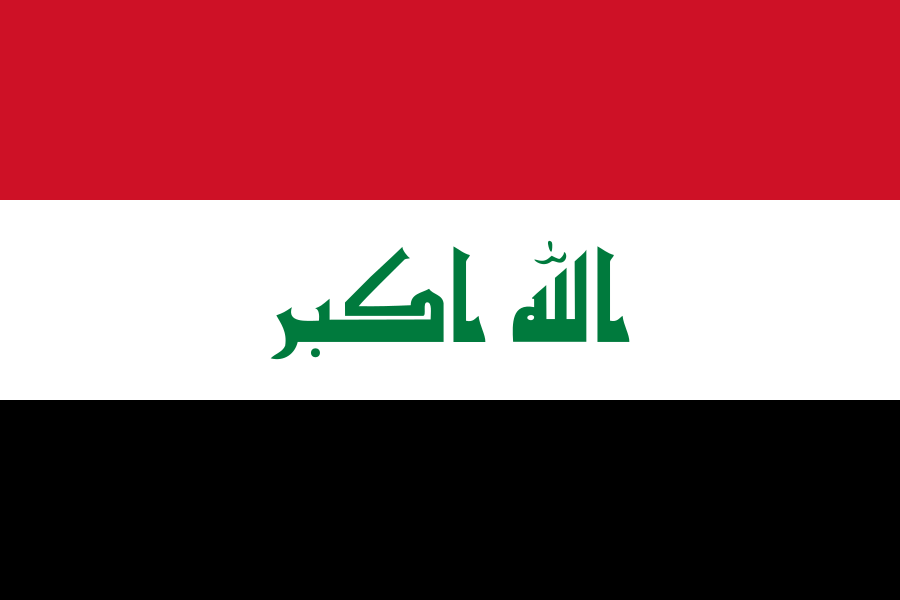
Baghdad has announced a significant policy shift, officially freezing the assets of prominent Iran-backed armed groups, including Lebanon's Hezbollah and Yemen's Houthi movement. This landmark decision, detailed in Iraq's official gazette, signals a notable evolution in the nation's complex foreign policy, particularly as it navigates its crucial relationships with both the United States and Iran.
Navigating Geopolitical Tensions
The measure is expected to be welcomed by Washington, D.C., which has consistently pursued strategies to curb Tehran's considerable influence throughout the Middle East. For Iran, its strategic alliance with Iraq remains vital, offering essential economic support amidst ongoing international sanctions. However, Iraq faces a delicate balancing act. It endeavors to preserve strong ties with both global powers and is acutely aware of the risks of being caught in the crossfire of escalating U.S. pressure on Tehran, particularly under the current U.S. presidential administration.
Iran's Influence and Regional Dynamics
Iran has long wielded substantial influence in Iraq, cultivated through strong military, political, and economic ties, including its support for powerful Shi'ite militias and various political factions within Baghdad. Yet, the recent surge in U.S. pressure coincides with a period where Iran's regional proxies have experienced significant challenges, notably due to Israeli military actions. This situation potentially diminishes Tehran's overall leverage in the region.
Iraq's latest move highlights the intricate geopolitical chessboard of the Middle East, where nations must carefully calibrate their alliances and domestic policies in response to a continuously shifting regional power balance.