
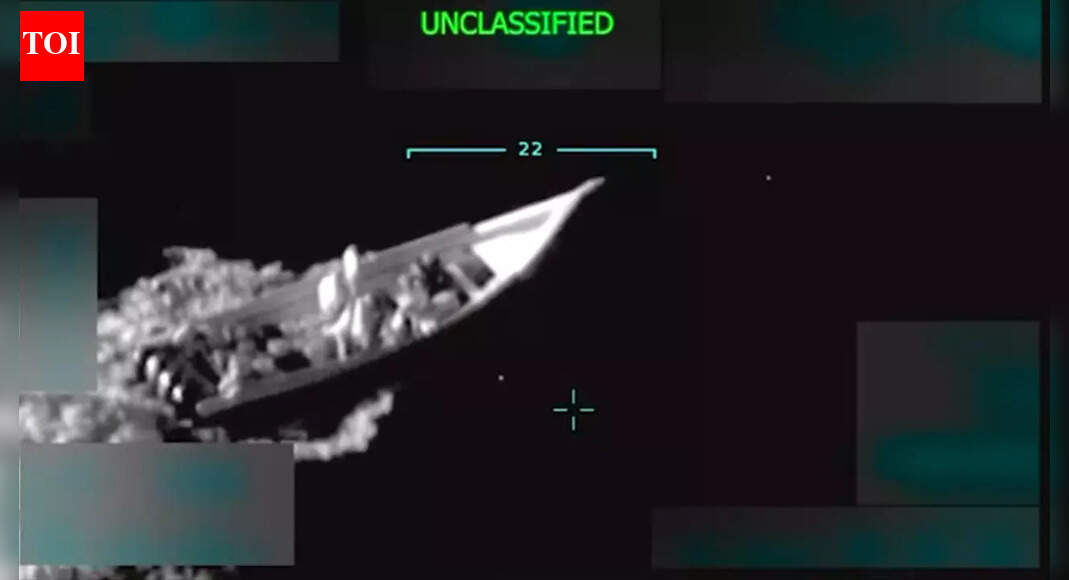
The family of a Colombian fisherman, Alejandro Carranza, tragically killed in a U.S. strike off the Colombian coast in the Caribbean, has escalated their pursuit of justice by filing a formal complaint with the Inter-American Commission on Human Rights. This significant step, taken on Tuesday by prominent U.S. human rights lawyer Dan Kovalik, challenges the narrative surrounding Carranza's death on September 15.
Allegations of Unlawful Killing Amid Conflicting Narratives
Kovalik asserts that Carranza was engaged in his lifelong profession of fishing for marlin and tuna, directly contradicting the U.S. claim that the vessel was involved in drug trafficking. The complaint names U.S. Secretary of Defense Pete Hegseth as responsible for authorizing such naval bombings, with his actions allegedly ratified by then-President Donald Trump. The family's objective is clear: to secure compensation for their profound loss and to halt what they describe as unlawful killings. Kovalik emphasized in an interview with CNN that these actions violate both international and U.S. law, marking the complaint as a crucial first stride towards accountability.
Wider Context of U.S. Operations in the Caribbean
This incident is set against a backdrop of increased U.S. military operations in the region. Since early September, the U.S. has conducted at least 22 strikes on suspected drug trafficking boats across the Caribbean and Pacific, resulting in a reported 83 fatalities. While the U.S. maintains these operations comply with the Law of Armed Conflict and target vessels linked to armed drug cartels, the case of Alejandro Carranza presents a stark contrast. Former President Trump previously characterized the September 15 strike as eliminating "narcoterrorists from Venezuela" transporting illicit drugs.
Colombian President Weighs In
However, Colombian President Gustavo Petro has publicly supported Carranza's family, describing him as a dedicated fisherman with no ties to the drug trade. Petro acknowledged the possibility that Carranza, facing financial hardship, might have occasionally transported prohibited goods, but firmly stated that such actions do not warrant a death sentence. Interestingly, lawyer Dan Kovalik also represents President Petro, who himself faced U.S. sanctions on October 24 over alleged involvement in the global drug trade—allegations Petro vehemently denies. The ongoing legal challenge underscores the complex and often contentious nature of anti-narcotics operations in the region, particularly when civilian lives are impacted under disputed circumstances.