
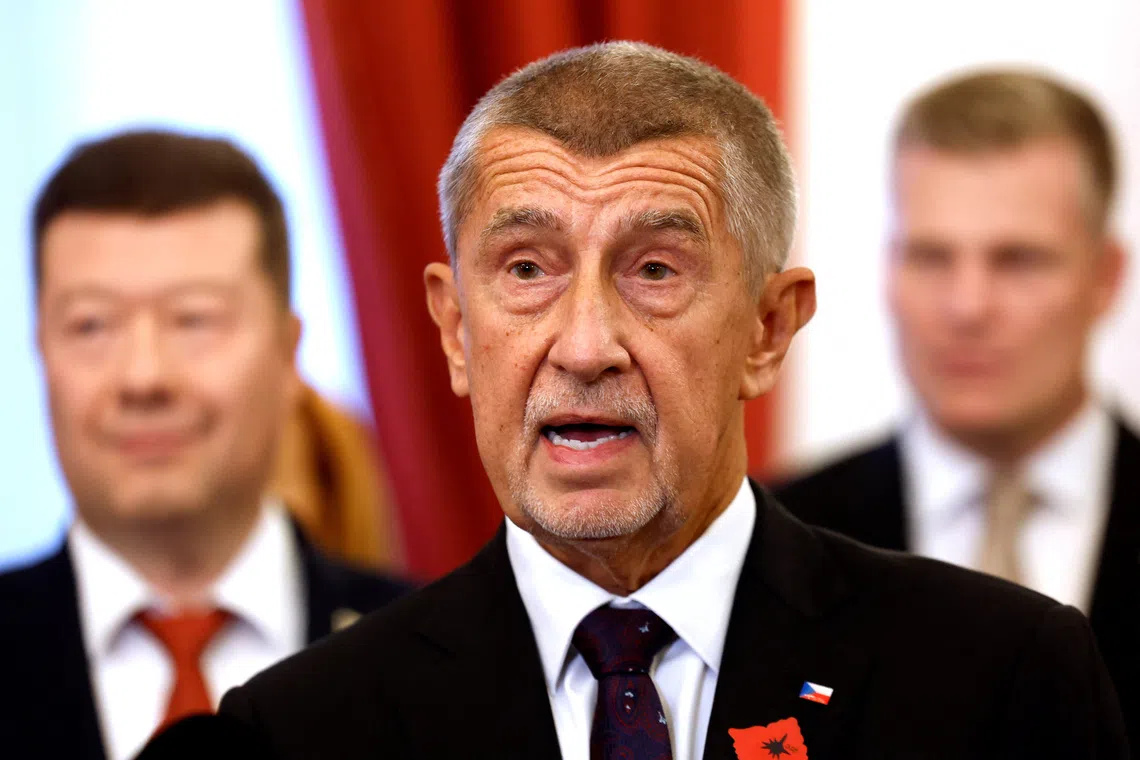
Czech political veteran Andrej Babis, leader of the populist ANO party, has announced a significant move to clear his path to the premiership: he will transfer ownership of his sprawling Agrofert business empire into an independently managed trust. This decision directly addresses a conflict of interest, a key condition set by President Petr Pavel for his appointment as Prime Minister.
Babis Resolves Conflict to Assume Premiership
Babis, 71, whose party emerged victorious in the October parliamentary election, has been working to form a coalition government. His partners include the far-right, anti-EU SPD party and the Motorists party, which has actively campaigned against the European Union's carbon emission reduction policies. The President had given Babis a week to resolve the conflict of interest stemming from his vast business holdings and his potential role as head of government.
In a public statement via Facebook video, Babis declared, "I decided to irreversibly give up the Agrofert company, with which I will have nothing in common and never own it again." He emphasized that this action fully satisfies the President's requirements.
Agrofert: A Central European Business Behemoth
Agrofert is a titan of Central European industry, with Forbes magazine estimating Babis's personal wealth at $4.3 billion due to his ownership. The group encompasses roughly 230 companies, involved in diverse sectors ranging from the production of fertilizers, urea, plastics, and biofuels to agricultural operations like grain farming, cattle breeding, and food manufacturing, including salami and bread. Employing nearly 30,000 individuals, Agrofert is also a significant beneficiary of European Union agricultural funding and various government subsidies and tax relief incentives for innovation and investment.
Past Conflicts and the New Trust Structure
This isn't Babis's first encounter with conflict-of-interest allegations. During his previous tenure as Prime Minister from 2017 to 2021, Czech courts and EU bodies had already determined a conflict of interest existed, leading to Agrofert being placed in trust funds. Babis asserts that his new arrangement goes beyond mere legal compliance, designed to meet both Czech and European regulations. He specified that the trust would be overseen by an independently appointed administrator and protector, and crucially, he would not be a beneficiary. Ownership of the trust is designated to pass to his children upon his death.
Future Government Agenda and Foreign Policy Stance
Looking ahead, Babis has outlined ambitious plans for his incoming government. These include promises to increase pensions and salaries, a commitment to challenge the EU's proposed pact on immigration regulation across the 27-nation bloc, and a firm stance against implementing an EU levy on fossil fuels for household heating. While he has also pledged to limit military aid to Ukraine, he has resisted calls from his SPD coalition partners for referendums on withdrawing from either the European Union or NATO, indicating a complex balancing act in his foreign policy approach.