
Australia's Housing Crisis Transforms Caravan Parks into Last-Resort Accommodation
Australia's escalating housing crisis is fundamentally reshaping the role of caravan parks, transforming them from holiday havens into the strained "landlords of last resort" for countless individuals and families teetering on the brink of homelessness. Owners and staff are grappling with immense emotional and operational pressures as they confront an unprecedented demand for long-term accommodation.
A Daily Struggle on the Frontlines
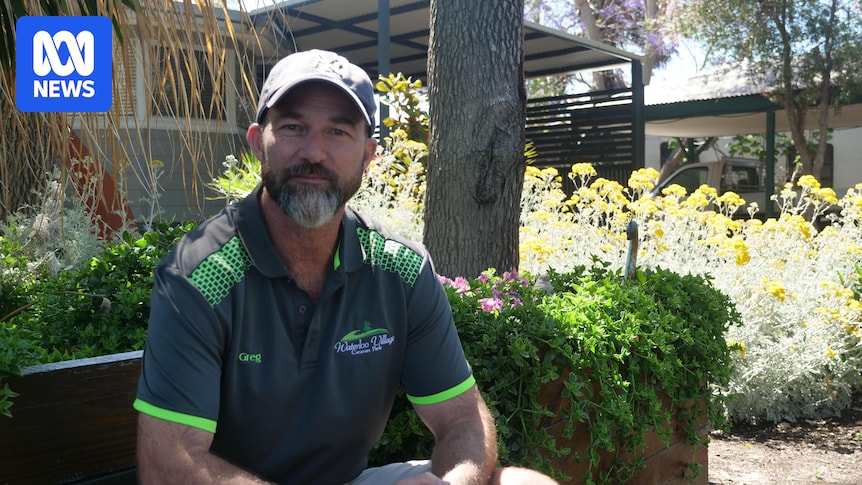
Greg Homer, who has co-managed Waterloo Village Caravan Park near Bunbury, Western Australia, since 2011, describes a relentless daily reality. His phone rings non-stop, and he frequently encounters desperate people, sometimes in tears, pleading for any form of shelter. "Our phone does not stop ringing every single day," he recounts, adding, "We've had people in tears at our front counter, people who come back multiple times a day." The emotional toll of turning away families with young children, some simply asking to pitch a tent anywhere on the property to avoid sleeping in their cars, weighs heavily on him and his team. This profound shift underscores a nationwide acute housing shortage.
Caravan Parks: An Affordable, Yet Exhausted, Option
The appeal of caravan parks for those struggling financially is clear: they often represent the most affordable accommodation style available. Mr. Homer notes that his park has been fully occupied for months, a stark contrast to previous years. This sentiment is echoed by long-term resident Kylie Holt, who, along with her young family, has lived in a converted school bus on caravan park sites for five years. She emphasizes the universal need for a stable home, however humble, and expresses concern about finding alternative vacancies if she were forced to move. Mrs. Holt has witnessed a dramatic increase in permanent residents, noting that the number of long-term families and individuals at her location has doubled in the last three years, encompassing diverse groups from young mothers to older widowed or divorced men on pensions.
South West's Alarming Homelessness Surge
The urgency of the situation is further highlighted by regional data. The Australian Bureau of Statistics reported a staggering 62.9% rise in homelessness in Western Australia's South West region between 2016 and 2021, marking it as the second-largest increase in the state. This statistic directly correlates with the mounting pressure on local caravan parks.
Operational Challenges and Safety Concerns
For park managers like Angela Kaitsioukas, the transition from hosting short-term holidaymakers to managing a predominantly long-term residential community brings a host of new difficulties. She reports a significant increase in anti-social behavior, posing serious safety concerns for her staff. "There have been a couple of times where I have been quite scared," Ms. Kaitsioukas reveals, admitting that her office now keeps pepper spray for protection. The need to implement stringent checks, including requiring current police clearances, has become essential, yet even these measures are sometimes circumvented by false documentation. The persistent stress is leading Ms. Kaitsioukas to consider discontinuing long-term residency options, expressing a desire for her facility to revert to its original purpose as purely a caravan park.
An Emergency Valve No Longer Available
The crisis extends beyond individual park struggles. Mark Glasson, CEO of Anglicare, warns that even the capacity of caravan parks, once an emergency overflow, has been stretched to its breaking point by the prolonged housing shortage. "The inaccessibility of caravan parks for many people means that they are sleeping rough, they're sleeping in their cars, in tents, in people's backyards," he states, lamenting that this critical "emergency valve is no longer available." This grim reality underscores the systemic failure to provide adequate affordable housing across Australia.