Taiwan's Cheng Li-wun: Once Pro-Independence, Now Nationalist Party Head & Open to Dialogue with China
Dec 5, 2025
 Taiwan
Politics
Taiwan
Politics
Taiwan
Politics
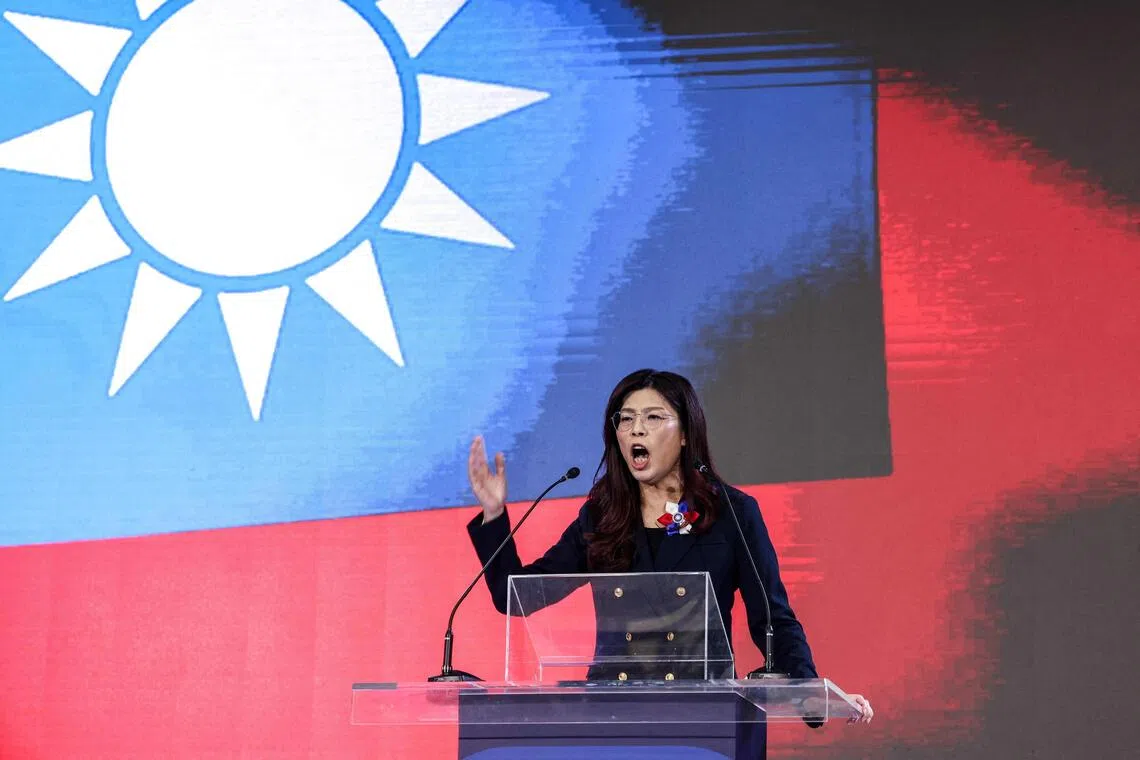
Taiwan's opposition leader, Cheng Li-wun, has dramatically shifted from advocating independence to leading the Nationalist Party and seeking dialogue with China
Taiwan's Opposition Leader Cheng Li-wun Shifts Stance Towards China
The political landscape of Taiwan is witnessing a profound and unexpected transformation as Cheng Li-wun, once a fiery proponent of the island's independence, now helms the Nationalist Party (Kuomintang) and signals a dramatic shift towards engagement with mainland China. Her journey from student activist advocating severance from Chinese ties to a leader open to meeting Beijing's highest officials has stunned many observers.
From Independence Activist to Nationalist Leader
Decades ago, Ms. Cheng was a prominent voice among student activists in Taiwan, passionately urging for the island to declare full independence from China. She sharply criticized the Nationalist Party, which had governed Taiwan for years following its retreat from the mainland, viewing it as yet another colonizing force. Her rhetoric was clear: Taiwan must forge its own distinct path, free from any Chinese influence.
However, the political winds have undeniably shifted for Ms. Cheng. Following her victory in the party's leadership election in October, she now stands at the helm of the very Nationalist Party she once vehemently opposed. This striking reversal of allegiances underscores a complex evolution in her political philosophy.
A New Stance on Cross-Strait Relations
Adding another layer to this remarkable transformation, Ms. Cheng recently performed a gesture of respect at the grave of Chiang Kai-shek, the austere Nationalist Party leader she once publicly reviled. This act symbolizes a reconciliation with the party's historical figures and, by extension, its legacy.
Her current public statements further underscore her changed perspective. Ms. Cheng now asserts that the people of Taiwan should proudly embrace their identity as also being Chinese. Moreover, she has openly declared her willingness to engage directly with leaders in Beijing, signaling a potential new era of cross-strait dialogue. This pivot marks a significant departure from her earlier independence advocacy and introduces a new dynamic into Taiwan's intricate relationship with mainland China.
By news
9 months ago
No cameras found for this country.