The enigma of Jack the Ripper continues to captivate the public imagination, 136 years after a series of brutal murders terrorized Victorian London's Whitechapel district. The identity of the serial killer, responsible for the deaths of at least five women—Mary Ann Nichols, Annie Chapman, Elizabeth Stride, Catherine Eddowes, and Mary Jane Kelly, known as the “canonical five”—remains one of history's most persistent cold cases. Despite countless theories and relentless efforts to unmask him, the Ripper's true identity has consistently eluded definitive proof, leaving behind a void that speculation eagerly fills.
The Controversial Shawl Claim: A New Lead or Another Dead End?
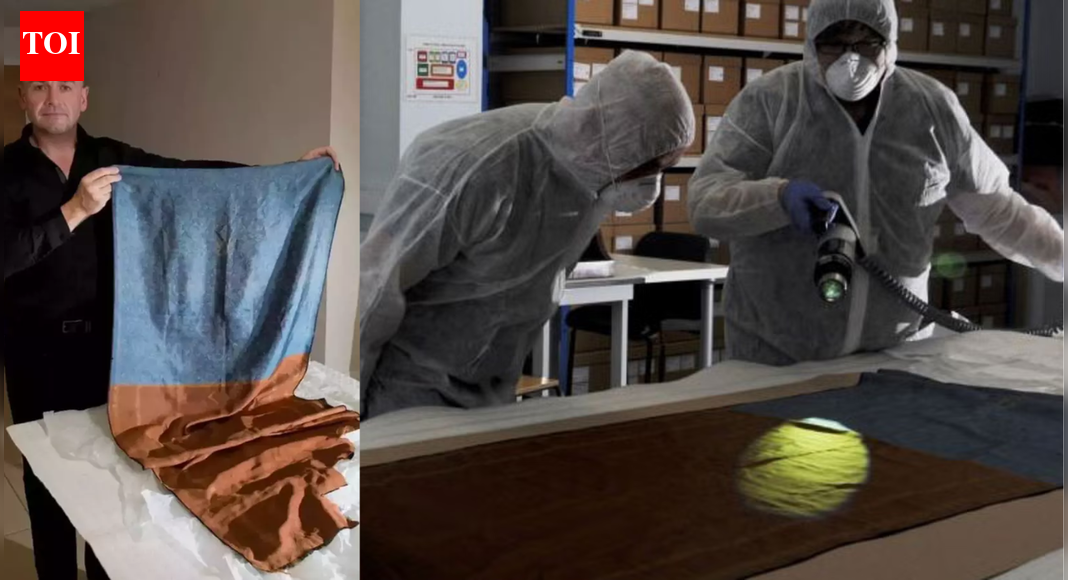
The latest ripple in this long-unsolved mystery centers around a purportedly blood-stained shawl. London businessman Russell Edwards claimed in 2007 to have acquired a fabric piece believed to originate from Catherine Eddowes' murder scene, the Ripper's fourth canonical victim. Edwards and his collaborators asserted that DNA traces on the shawl matched both Eddowes and a living descendant of Aaron Kosminski, a Polish immigrant and a prime suspect for Victorian police. Edwards’ conclusion was straightforward: the DNA implicates Kosminski as Jack the Ripper.
However, this bold claim has met with widespread skepticism from forensic experts and historians alike.
Why Experts Are Skeptical of the DNA Evidence
When Edwards initially published his findings in his 2014 book, Naming Jack the Ripper, the scientific community noted a critical absence: no detailed technical data or methodology was provided for the DNA analysis. As Science.org highlighted, this made independent assessment impossible.
More specifics emerged in 2019, including a mitochondrial DNA match to a Kosminski relative. Yet, this is where the scientific objections solidify. Mitochondrial DNA, inherited maternally, is not a unique identifier like a fingerprint. As mitochondrial DNA expert Hansi Weissensteiner explained, such a match can only exclude a suspect, not pinpoint one. Thousands of men living in London at the time could share the same mitochondrial DNA profile as Kosminski, meaning the evidence barely narrows the field of potential suspects.
Beyond the nature of the DNA itself, the authenticity and integrity of the shawl are also heavily questioned. With 137 years having elapsed since the murders, the fabric has undoubtedly been handled, stored, and potentially contaminated by countless individuals. Forensic DNA interpretation expert Jarrett Ambeau underscored this point on NewsNation, stating that the science cannot determine precisely when or by whom the DNA was deposited. In essence, the shawl's story remains inconclusive.
Aaron Kosminski: A Familiar Figure in Ripper Lore
Aaron Kosminski isn't a new name in the Jack the Ripper narrative. He was indeed a significant suspect for police in 1888, living in Whitechapel and suffering from mental illness, which eventually led to his institutionalization. While some officers privately believed him to be the Ripper, the evidence at the time was purely circumstantial—insufficient for a conviction then, and equally so now. The recent DNA claim on the contested shawl, in the eyes of experts, hasn't changed this fundamental lack of concrete proof.
Other Theories Emerge: The Enduring Search for Truth
The enduring nature of the Ripper mystery is further illustrated by the continuous emergence of alternative theories. Just last year, author Sarah Bax Horton, whose great-great-grandfather worked on the original case, proposed a different suspect: Hyam Hyams. In her book, One-Armed Jack: Uncovering the Real Jack the Ripper, Horton argues that witness descriptions align with Hyams' known medical conditions, including physical impairments. This highlights how every “solution” often reinforces the case's inherently unsolvable nature.
The Elusive Truth
Ultimately, the identity of Jack the Ripper will likely remain shrouded in the mists of history. The killer and all witnesses are long deceased. Most physical evidence was never properly preserved, and what little survives is compromised by time and contamination. Modern forensic techniques, while powerful, cannot conjure a robust forensic record where none truly existed.
Part of the case's allure lies in its original ambiguity. Even the iconic name “Jack the Ripper” likely originated from a hoax letter, a piece of sensational Victorian journalism that cemented itself permanently into the public consciousness. While new theories are morbidly entertaining, Jack the Ripper has evolved beyond a mere person into a cultural myth—a story that, stubbornly, refuses to reach a definitive conclusion. Russell Edwards believes he has found the man; scientists largely disagree. And in the vast gap between historical fog and contemporary speculation, the real answers continue to slip away.