
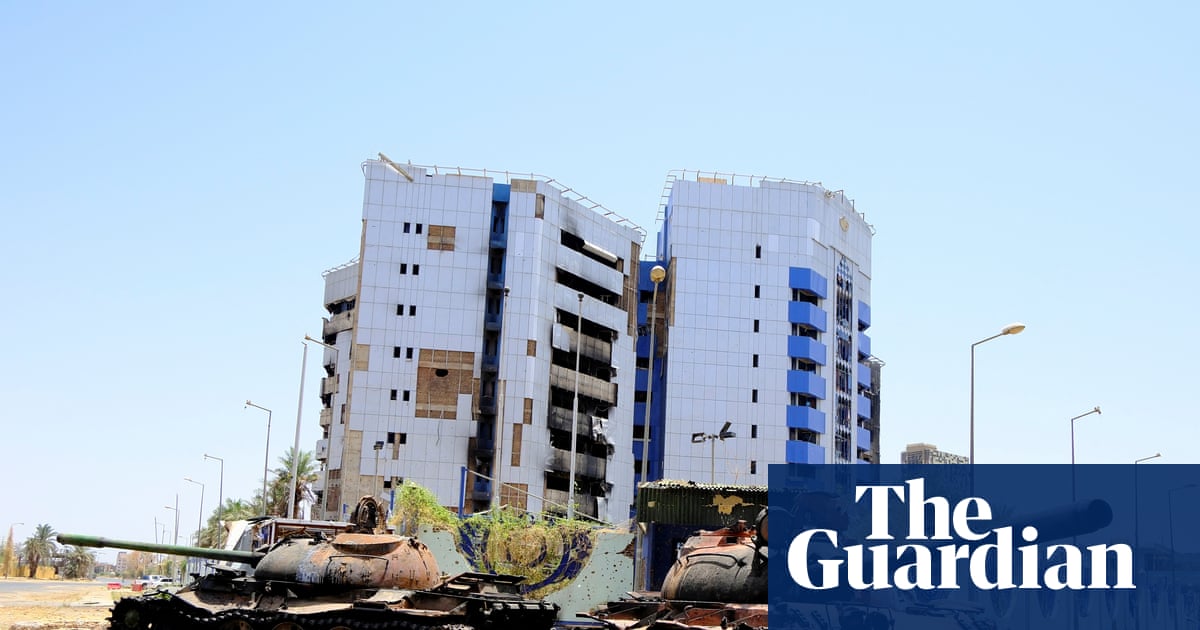
US Considers Broader Sanctions on Sudan's Army & RSF Amid Faltering Ceasefire and Humanitarian Crisis
The United States is reportedly poised to implement a significantly wider array of sanctions against the belligerent factions in Sudan's ongoing conflict. This move comes as Washington tacitly acknowledges the failure of its envoy, Massad Boulos, to broker a lasting ceasefire between the Sudanese army and the paramilitary Rapid Support Forces (RSF). The intervention of former President Donald Trump, spurred by a direct request from Saudi Crown Prince Mohammed bin Salman, has injected new momentum, with the implicit threat of harsher penalties for those obstructing peace.
Faltering Ceasefire Efforts and Trump's Involvement
Despite earlier announcements by Donald Trump that efforts to end the war were underway, his son-in-law, Massad Boulos, has spent months fruitlessly attempting to secure a ceasefire. US Secretary of State Marco Rubio, in a recent cabinet meeting, lauded Trump as “the only leader in the world capable of resolving the Sudan crisis,” a sentiment echoed by an Arab diplomat who noted Trump's ability to “inject momentum into peace processes.” Sources indicate that the warring parties have been informed of Trump's readiness to impose extensive punitive sanctions on any groups deemed to be impeding a ceasefire agreement.
International Efforts for Civilian Rule
Parallel to the US diplomatic push, Norway’s foreign ministry is preparing to host a broad spectrum of Sudanese civil society in Oslo. The aim is to delineate a roadmap for restoring a civilian government once the conflict subsides. This initiative underscores the international community's concern over the dire situation in Sudan.
A Deepening Humanitarian Catastrophe
The war has exacted a devastating toll. The UN estimates a death toll of 40,000 people, although human rights organizations suggest the actual figure is considerably higher. The conflict has triggered the world's most severe humanitarian crisis, displacing over 14 million people and exacerbating suffering across the nation.
Complex Regional Dynamics and External Influence
Regional powers play a significant role, with Saudi Arabia and Egypt largely supporting the Sudanese army, while the United Arab Emirates (UAE) has been accused of backing the RSF – a claim the UAE denies despite mounting evidence from the UN and independent experts. The efficacy of Trump's renewed involvement may hinge on his ability to privately persuade the UAE that its current stance is counterproductive. Similarly, Saudi Arabia might need to soften its insistence on preserving Sudan's “legitimate institutions,” a diplomatic term often understood to mean the existing Islamist-influenced army.
Escalating Violence and Broader Sanctions
The humanitarian situation continues to deteriorate, with the UN human rights chief warning of a “new wave of atrocities.” Since late October, following the RSF's capture of Bara in North Kordofan, at least 269 civilian deaths have been reported from aerial strikes, shelling, and summary executions. The US is now expected to broaden sanctions beyond the current focus on the leadership of the RSF, the army, a small group of Sudanese Islamists, and some UAE-based firms. Furthermore, there's an increased likelihood of steps being taken to enforce and extend the often-abused UN arms embargo on Darfur.
The Quad's Failed Peace Initiative
In September, the “quad” group – comprising the US, Saudi Arabia, UAE, and Egypt – proposed a plan for a three-month humanitarian truce, followed by a nine-month political process culminating in civilian rule. However, this initiative quickly unraveled. The RSF feigned acceptance but continued fighting, while the army vehemently rejected the roadmap, accusing the quad of bias and infuriating US envoy Boulos. The army viewed the proposal as an attempt to dismantle its power base.
Ongoing Diplomatic Efforts and Geopolitical Stakes
Norway's deputy foreign minister, Andreas Motzfeldt Kravik, recently met with the army leadership in Port Sudan, stressing that “Without a ceasefire, the country will continue to fragment, with serious consequences for the entire region.” Meanwhile, Trump's threat to label the Muslim Brotherhood as a foreign terrorist organization, supported by the House foreign relations committee, could weaken the Sudanese army due to its alleged extensive links with the movement. White House attention has also been spurred by reports of the army potentially offering Russia an extended port lease and claims of denying UN access for chemical weapons evaluations.
Lana Nusseibeh, the UAE minister of state, speaking at Chatham House, emphasized that the solution lies in restoring a broad-based civilian government. She asserted that neither the RSF nor the army (which she termed the “Port Sudan Authority”) has a legitimate claim to shape Sudan's future, given their grave violations. The urgent calls from the UN's human rights chief for states with influence to intervene immediately and halt arms flows underscore the critical need for an end to the conflict.