Putin's Belligerence Soars as Ukraine War Rages: Russia Claims Victories, Kyiv Denies, Peace Talks Falter Amid Corruption
Dec 5, 2025
 Ukraine
War & Conflict
Ukraine
War & Conflict
Ukraine
War & Conflict
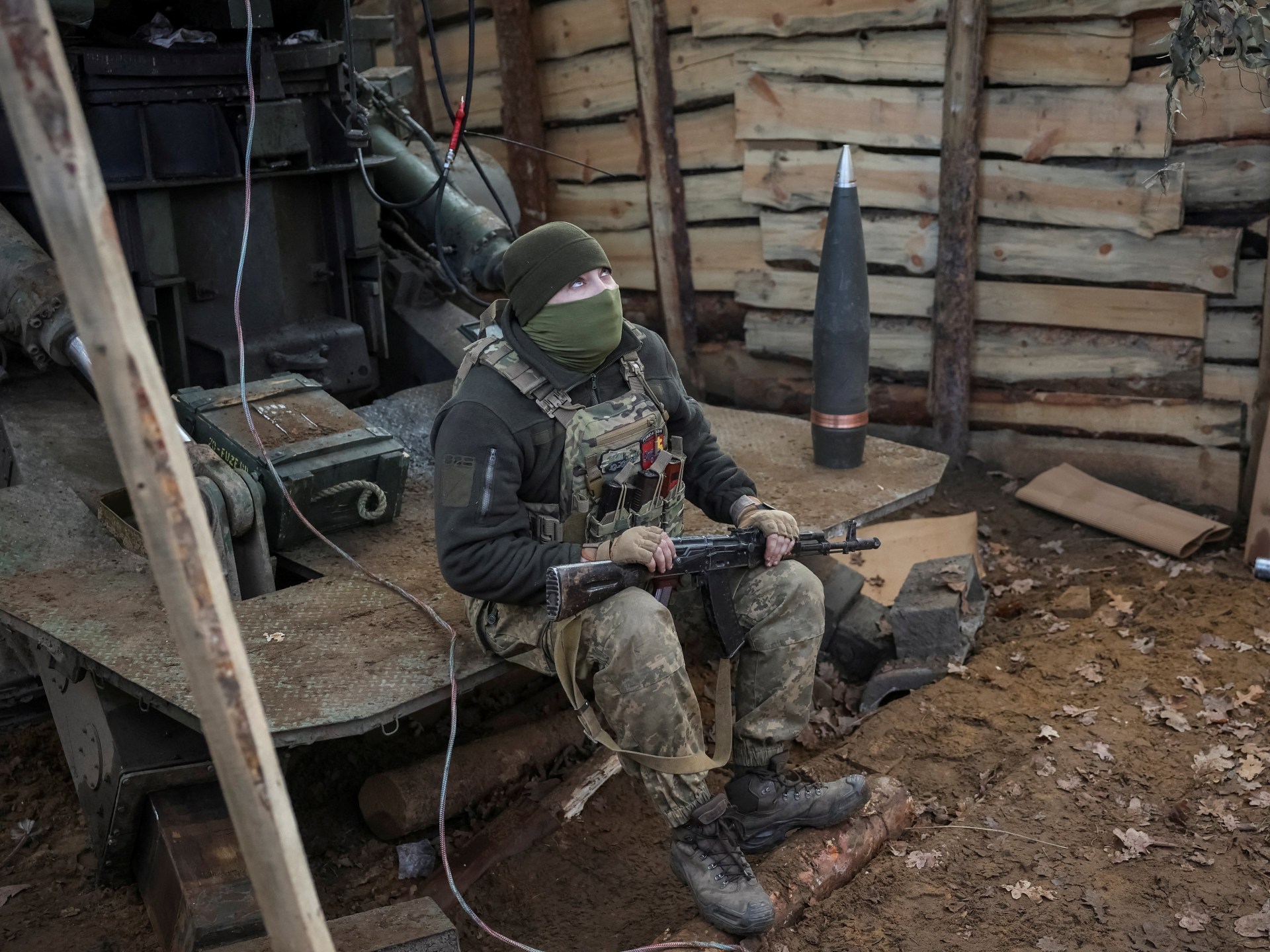
Russia rejected a US peace plan for Ukraine, claiming victories in eastern cities like Pokrovsk which Kyiv denies. Putin reiterated war aims and threatened Euro
Putin's Belligerence Soars as Ukraine War Rages Amid Faltering Peace Talks
The conflict in Ukraine intensified this week as Russia definitively rejected the latest United States peace proposal, simultaneously asserting control over key eastern Ukrainian cities – claims swiftly dismissed by Kyiv as pure propaganda. The escalating rhetoric from Moscow, particularly from President Vladimir Putin, underscores a growing belligerence despite ongoing diplomatic efforts.
Contested Territories: Russia's Claims vs. Ukraine's Reality
On Monday night, Russia's Ministry of Defence announced the capture of Pokrovsk, an eastern Ukrainian city reportedly under siege for a year. Defence Minister Andrei Belousov personally reiterated this assertion. Furthermore, Russia claimed to have dislodged Ukrainian forces from Vovchansk and Kupiansk in the northern Kharkiv region.
However, Ukraine's Joint Forces Task Force, responsible for Kharkiv's defense, strongly refuted these claims, stating, “Most of the city of Kupiansk is under the control of Ukrainian troops.” The General Staff of the Ukrainian Armed Forces labelled Russia's announcements as “brazen statements” designed to influence international negotiations, confirming that Ukrainian forces were still actively fighting in Pokrovsk, holding the northern railway line, and blocking Russian infiltration into Kupiansk. Commander-in-chief Oleksandr Syrskii added that efforts were underway to push the enemy out of their bridgehead north of Kupiansk.
Floundering Peace Efforts and Political Turmoil
These contested battleground claims emerged just before US envoy Steve Witkoff's arrival in Moscow for peace talks with Yury Ushakov, President Putin's aide. The Ukrainian General Staff suggested the timing of Russia's declarations was calculated to impact the US delegation.
Witkoff's documents were the product of intensive US-Ukrainian discussions in Florida and Geneva, refining an initial 28-point Washington peace plan. Russian officials, including Putin and Foreign Minister Sergey Lavrov, previously indicated the original plan stemmed from a controversial meeting between US President Donald Trump and Putin in Alaska, notably excluding Ukraine and its European allies. Ushakov confirmed that while the plan had been reduced to 20 points across four documents, Russia had not agreed to anything specific, instead focusing discussions on “territorial issues” and “economic cooperation” prospects with the US.
Adding complexity to Ukraine's position, President Volodymyr Zelenskyy's government continues to be plagued by high-profile corruption allegations, leading to the recent dismissal of his key aide, Andriy Yermak. This internal political instability raises questions among observers about Kyiv's negotiating strength.
Putin's Unwavering Resolve and Ominous Threats
Despite superficial acknowledgments of peace talks, Putin's pronouncements reveal an unwavering commitment to his war aims. The capture of Pokrovsk, he stated, provided “a good base for achieving all the objectives set at the beginning of the special military operation.” He explicitly threatened to “cut Ukraine off from the sea,” directly referencing Odesa and Mykolaiv, suggesting these crucial port cities remain targets from Russia's initial invasion plan.
Putin also issued a broader warning to Europe, asserting Russia's readiness to fight if provoked, though claiming no current intention to initiate such a conflict. He paradoxically described Russia's actions in Ukraine as “surgical, carefully” managed, not a “war in the literal, modern sense.” At the Valdai Discussion Club, he framed the conflict as instrumental in forging a multipolar world, creating a “more open, creative space for foreign policy.”
Escalation Continues: Attacks and Counter-Attacks
The rhetoric of peace contrasts sharply with the relentless military campaign. Between November 27 and December 3, Russian forces launched nearly 1,100 drones and 39 missiles, with Ukraine claiming interception of 1,000 drones and half the missiles. These attacks resulted in casualties, including four killed and 40 injured in Dnipro. Throughout November, Ukrainian cities and energy infrastructure endured 119 missiles and almost 3,000 Shahed drones.
Ukraine has vigorously retaliated, targeting Russian energy infrastructure. Andriy Kovalenko, head of Ukraine's Center for Countering Disinformation, highlighted successful strikes on the Saratov refinery, Engels airbase, and the Alabuga drone-manufacturing factory. Surface drones destroyed three Russian oil offloading docks at Novorossiysk, and Ukrainian forces also struck several oil storage tanks in Russia's Tambov region.
Beyond direct military action, Ukraine continues to advocate for stricter energy sanctions, aimed at stifling Russia's finances. Zelenskyy's adviser for sanctions policy, Vladyslav Vlasiuk, reported anticipated decreases in Russian crude oil production and exports, signaling the ongoing economic pressure.
As the war rages on, marked by conflicting claims, stalled diplomacy, and escalating military exchanges, the prospect of a swift resolution appears increasingly distant.
By news
9 months ago
No cameras found for this country.