UNSC Delegation Visits Lebanon Amid Israeli Escalation & Truce Violations; Aoun Urges Pressure, Hezbollah Stance
Dec 5, 2025
 Lebanon
International Relations
Lebanon
International Relations
Lebanon
International Relations
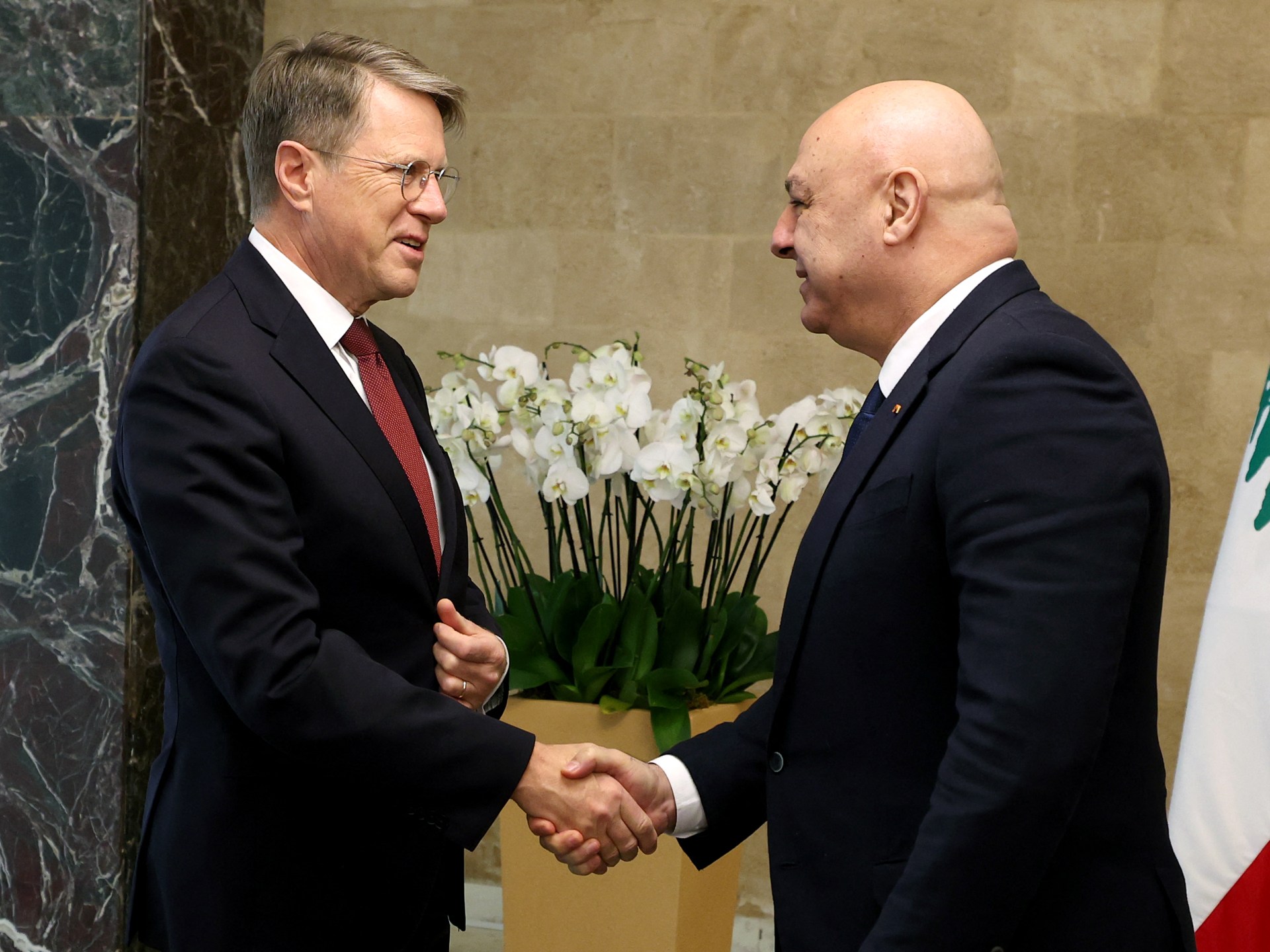
A UN Security Council delegation met with Lebanon's President Aoun to discuss escalating Israeli tensions and truce violations. Aoun urged Israel to respect the
UNSC Delegation Engages Lebanon Amid Israeli Escalation and Ceasefire Violations
A high-level delegation from the United Nations Security Council (UNSC) recently concluded a crucial visit to Lebanon, engaging with President Joseph Aoun and other top officials amidst heightened tensions with neighboring Israel. The visit, which included a tour of southern Lebanon, aimed to address persistent ceasefire violations by Israel and efforts to disarm Hezbollah.
President Aoun's Urgent Appeal to UNSC
President Aoun met with the UNSC team, including Slovenia's UN Ambassador Samuel Zbogar, at the Presidential Palace in Baabda, east of Beirut, on December 5. During the discussions, Aoun strongly urged the delegation to exert pressure on Israel to honor the November 2024 ceasefire agreement, which he stated Israel has violated almost daily. He also called for Israel's complete withdrawal from occupied territories in southern Lebanon. Aoun emphasized the importance of the delegation witnessing the "real picture" on the ground in the south, where the Lebanese army is reportedly working on a plan to dismantle Hezbollah's weaponry.
Fragile Relations: Talks Amidst Escalation
The UNSC visit unfolds against a backdrop of complex and fragile relations between Lebanon and Israel, technically still at war since 1948. Just days prior, civilian representatives from both nations held their first direct talks in decades, a development welcomed by the United States as a step toward regional security and peace. However, Lebanese Prime Minister Nawaf Salam downplayed the significance of these "positive" meetings, clarifying they were strictly focused on implementing the 2024 truce and not a path toward normalization.
Israel's Continued Military Actions and Civilian Impact
Adding to the regional volatility, Israel's military conducted a fresh wave of attacks in four southern Lebanese villages just the day before the UNSC delegation arrived. These strikes, part of hundreds since the 2024 truce, purportedly targeted Hezbollah infrastructure but have resulted in numerous civilian casualties and extensive damage to residential and critical infrastructure. Al Jazeera's Beirut correspondent, Zeina Khodr, suggested these attacks convey a message that negotiations would proceed "under fire" until Hezbollah is fully disarmed.
The Primacy of Negotiation for Lebanon
Lebanese Information Minister Paul Morcos reiterated the government's commitment to negotiation as the sole viable path forward, echoing President Aoun's sentiment. Aoun, a former army chief, stressed that the "language of negotiation – not the language of war – must prevail," asserting that Lebanon's sovereignty would not be compromised.
Hezbollah's Unwavering Stance on Disarmament
Despite the November 2024 ceasefire agreement, which mandated a halt to hostilities from both sides, Israeli forces continue to occupy several positions within Lebanese territory and have conducted nearly daily attacks, causing over 300 deaths, including 127 civilians, according to the UN. Israel claims these operations target Hezbollah to prevent its military resurgence.
While the Lebanese government is committed to disarming Hezbollah, the group's leader, Naim Qassem, has adamantly refused to lay down arms as long as Israel continues its bombardment and occupation. Qassem recently asserted Hezbollah's right to retaliate for the assassination of its top military chief, Haytham Ali Tabatabai, in a strike on Beirut last month, calling it a "blatant aggression" and a "heinous crime." He affirmed that Hezbollah would determine the timing of its response.
By news
9 months ago
No cameras found for this country.