Taiwan Protests South Korea's 'China (Taiwan)' Designation on Tourist Forms Amid Diplomatic Tensions
Dec 5, 2025
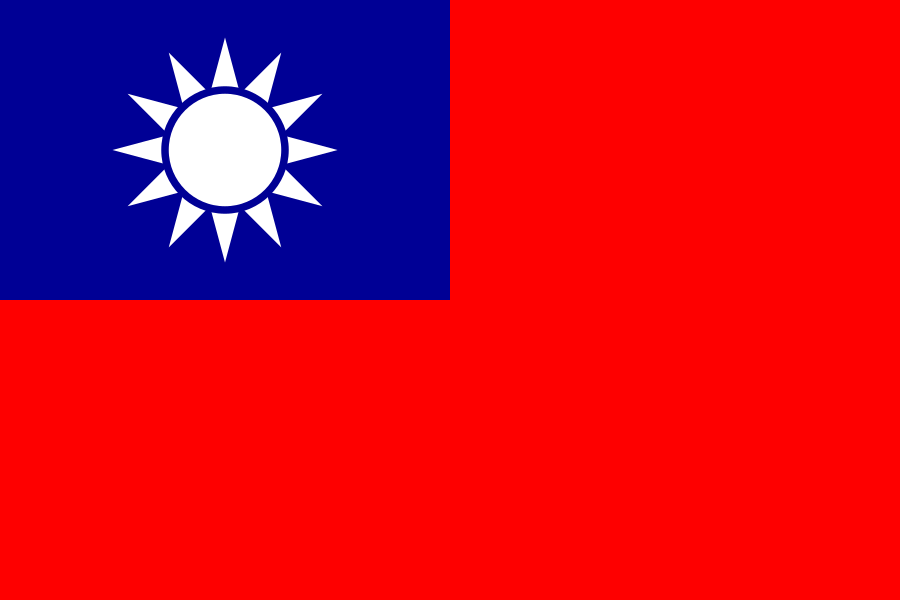 Taiwan
International Relations
Taiwan
International Relations
Taiwan
International Relations
Taiwan protests South Korea's e-arrival card listing it as 'China (Taiwan),' sparking diplomatic discontent. Seoul reviews the designation amid broader China-Ja
Taiwan Objects to South Korea's 'China (Taiwan)' Label on Tourist Forms
Taipei has voiced strong objections after South Korea's online registration system for arriving tourists began listing Taiwan as "China (Taiwan)". This designation, recently discovered by Taiwanese travelers using Seoul's e-arrival card, has ignited a diplomatic spat, particularly sensitive amid broader regional tensions involving Beijing and Tokyo.
Taipei's Firm Response to the Designation
Taiwan's foreign ministry formally protested the move, describing the label as "unfriendly" and "factually incorrect". They cited numerous reports from their citizens and urged Seoul to rectify the listing immediately. The ministry expressed profound disappointment and dissatisfaction, noting that despite repeated serious concerns being lodged with the South Korean government, no positive response had been received.
According to the foreign ministry, this "unfriendly listing" has not only caused "unnecessary confusion" and inconvenience for Taiwanese visitors but has also deeply "hurt public sentiment" on the island. The fields for "previous departure place" and "next destination" on South Korea's electronic arrival form, which is gradually replacing paper cards by year-end, both present Taiwan as "China (Taiwan)" in their drop-down menus.
South Korea's Position and Broader Geopolitical Context
The underlying political context is Beijing's longstanding claim over Taiwan as part of its territory, asserting its right to reunification, even by force if deemed necessary. While most nations, including key allies like the United States and Japan, do not officially recognize Taiwan as an independent state, Washington strongly opposes any forceful seizure and continues to supply defensive weaponry to the self-governed island.
In response to Taiwan's protest, the Korean foreign ministry informed Taiwan's Central News Agency that Seoul would consider various factors and consult with relevant authorities regarding the designation. They reiterated Seoul's consistent policy of fostering ongoing, non-official, and substantive cooperation with Taiwan. Beijing's foreign ministry has remained silent on this particular issue.
Regional Tensions: China-Japan Diplomatic Row
This controversy unfolds amidst an escalating diplomatic dispute between China and Japan. The row was triggered by Japanese Prime Minister Sanae Takaichi's remarks on November 7, suggesting that a hypothetical People's Liberation Army attack on Taiwan could provoke a military response from Tokyo. Beijing views such statements as crossing its "red line" on the highly sensitive Taiwan issue.
China has reacted sharply to Japan's stance, implementing retaliatory measures such as suspending Japanese seafood imports, issuing travel and study warnings, and repeatedly raising the matter at the United Nations. Amidst these heightened regional tensions, South Korean President Lee Jae Myung offered Seoul's potential mediating role "where possible" on Wednesday, stressing that taking sides would only exacerbate the conflict.
Tourism Impact and Shifting Travel Patterns
The broader impact of these diplomatic shifts is also being felt in the tourism sector. China's travel warnings have severely impacted Japan's tourism industry, leading to widespread flight, hotel, and tour cancellations. Mainland China typically provides a significant portion of foreign tourists to Japan, with 7.48 million trips recorded in the first nine months of the year alone.
Consequently, Chinese tourists are now seeking alternative destinations, with heightened interest observed in South Korea, Thailand, and even European nations like Russia. In a parallel move, Russian President Vladimir Putin recently signed a decree granting visa-free access for up to 30 days to many categories of Chinese citizens, mirroring a similar policy Beijing implemented in September. These developments underscore the intricate web of politics, diplomacy, and their tangible effects on international relations and global travel.
By news
9 months ago
No cameras found for this country.