Hong Kong's Wang Fuk Court Inferno: A City Grapples with Grief, Loss, and Systemic Failures After Deadly Blaze
Dec 6, 2025
 China
Disaster & Public Safety
China
Disaster & Public Safety
China
Disaster & Public Safety
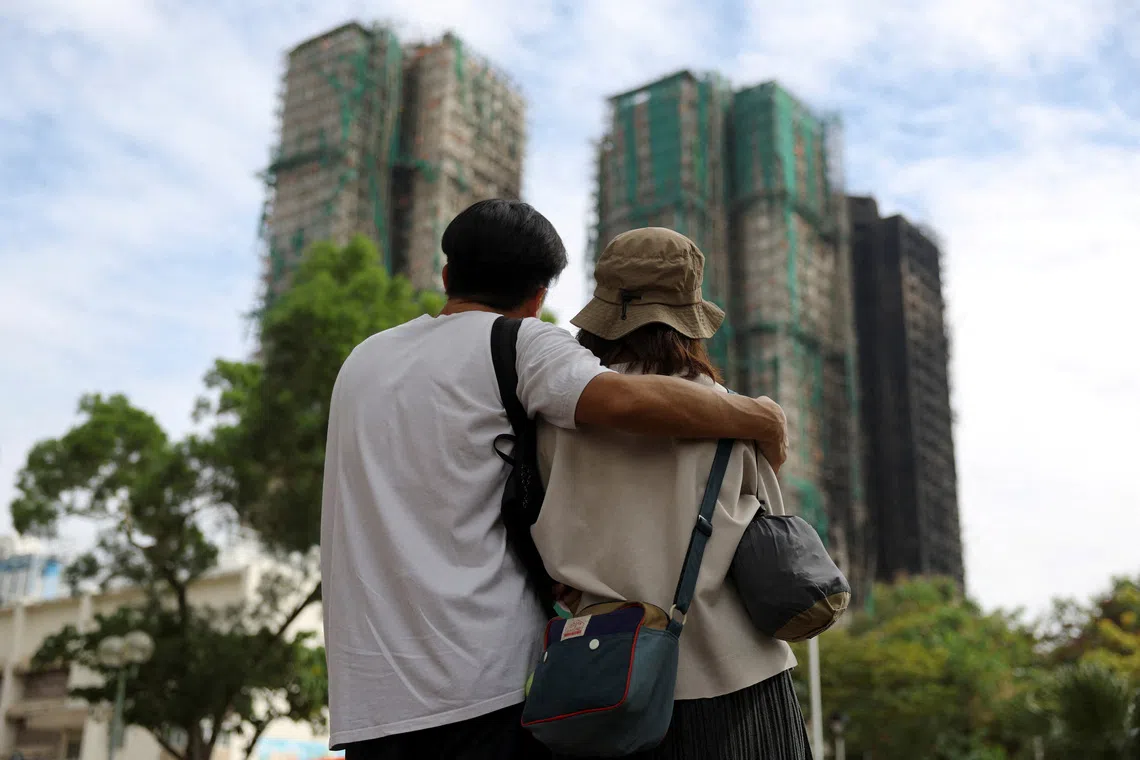
Hong Kong's Wang Fuk Court fire killed 159, devastating seven high-rises. Investigations into the blaze, fanned by renovations and failing alarms, are ongoing.
Hong Kong's Wang Fuk Court Inferno: A City Grapples with Grief, Loss, and Systemic Failures
The tragic blaze at Hong Kong's Wang Fuk Court estate has left an indelible scar on the city, claiming at least 159 lives and exposing deep societal fissures. Over a week after the inferno ravaged seven high-rise towers in the Tai Po district, extinguishing it took nearly two days, making it the deadliest apartment complex fire in recent memory, surpassing even London's Grenfell Tower disaster. The city remains shrouded in a collective pall of grief, desperately seeking answers amidst the charred remains.
The Scene of Devastation and Unanswered Questions
Thousands of the estate's 4,600 residents, many still reeling from the unimaginable shock and loss, gravitated towards the disaster site. Parks, squares, and community centers became impromptu gathering points for the displaced, while a tide of volunteers offered aid and mourners converged to honor the deceased. The precise cause of the fire, which erupted on November 26, remains a mystery. Authorities have indicated that ongoing renovations, particularly scaffolding mesh enveloping the buildings, may have inadvertently fanned the flames, enabling the blaze to ascend rapidly and leap from tower to tower. Compounding the tragedy, many fire alarms were reportedly non-functional, trapping residents on higher floors amidst suffocating smoke and intense heat.
Personal Stories of Loss and Resilience
Amidst the widespread devastation, personal stories emerge, painting a vivid picture of the human cost. Mr. and Mrs. Leung, septuagenarians who had called the estate home for decades and raised their daughters there, returned to witness their cherished dwelling consumed by fire. Mrs. Leung, 71, recounted the terrifying helplessness: "I stood there watching as one block after another went up in flames, my legs felt so weak I could hardly stand." Despite their immense loss, they count themselves fortunate to be alive, yet mourn their airy two-bedroom flat that once overlooked tranquil hills.
Nearby, the small park adjacent to the estate transformed into a poignant memorial, adorned with thousands of handwritten condolences and floral tributes. Here, 75-year-old Mr. David Ho grappled with the grim reality that his son, 39-year-old Ho Wing-cheung, a keen runner, and his ex-wife, both residents of the 16th floor where the fire began, were among the 31 still missing. The image of his athletic son, captured mid-race in Japan, now serves as a haunting reminder of a life abruptly curtailed.
Mr. J Wong, whose 71-year-old retired mother is also among the missing, has been tirelessly navigating the aftermath, including the distressing task of obtaining her dental records for potential identification. He and his father revisit the disaster zone daily, seeking solace and information at community centers where photos of victims are displayed. "40 years of memories here," the younger Wong reflected, "from the day he (my father) got married. At that time, Tai Po was still a farm." His message to fellow victims is one of enduring hope: "Don't give up."
Community United, Systemic Concerns Highlighted
The tragedy has galvanized Hong Kong residents, spurring an outpouring of support. An open plaza near the memorial park quickly became a hub for donations, with university student Crystal Ho, 22, among those compelled to volunteer. "That pain...no matter how much we do, it feels like we can never truly carry their suffering," she expressed, echoing a widespread sentiment.
The fire also cast a stark light on Hong Kong's demographics and social structures. Many elderly residents, often cared for by foreign domestic helpers from the Philippines and Indonesia, were among those affected. The crisis underscored the indispensable, yet often overlooked, role of these hundreds of thousands of helpers, who navigate cramped living conditions and modest wages in one of the world's priciest cities.
Calls for Accountability Amidst Tumultuous Times
This disaster unfolds against a backdrop of a tumultuous period for Hong Kong, marked by mass pro-democracy protests in 2019 and a subsequent national security crackdown. Police have initiated a criminal investigation, arresting 21 individuals, while the city's leader has pledged a judge-led review into renovation oversight. Yet, amidst official reassurances, an undercurrent of public frustration and a demand for greater transparency persists. Authorities have reportedly detained activists seeking government accountability, wary of public anger spiraling.
A message among the countless tributes articulates this deeper concern: "This is not an ordinary disaster, this is a systemic disaster." The Leungs, like many others, fervently hope for justice, asserting that the government "must pay attention so disasters like this never happen again, leaving people like us with no one to turn to." Their plea encapsulates the city's collective yearning for answers, accountability, and a future where such profound loss can be prevented.
By news
9 months ago
No cameras found for this country.