
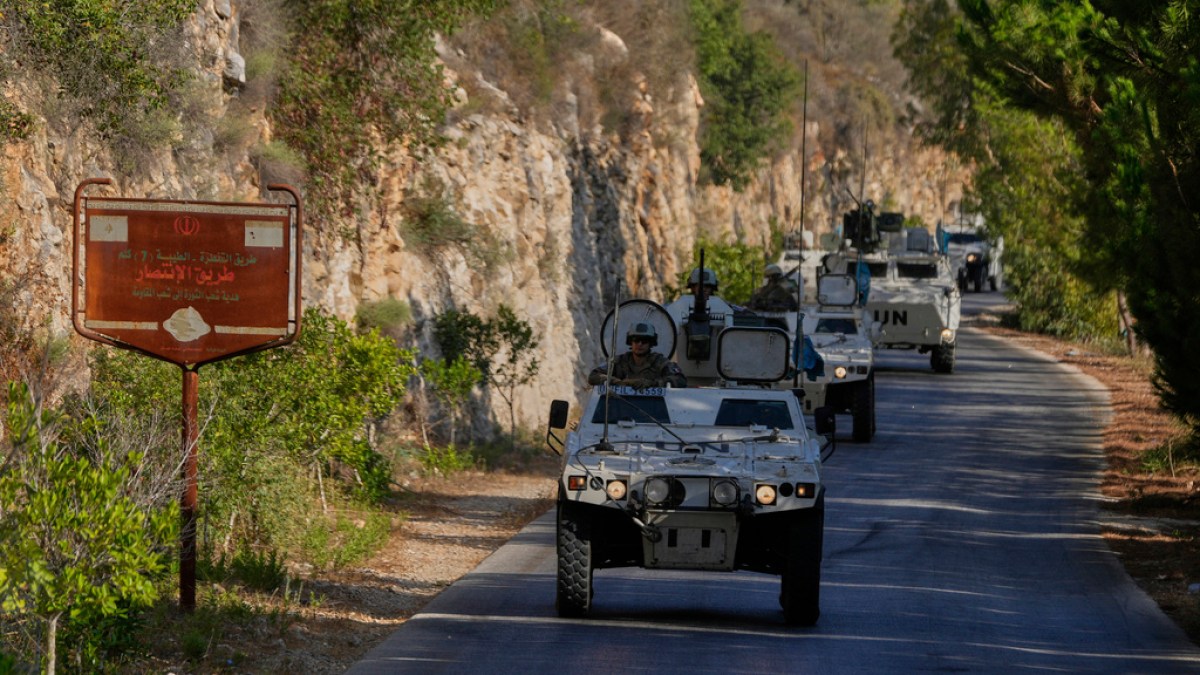
Lebanese Army Apprehends Six Following Attack on UN Peacekeepers
The Lebanese Armed Forces have apprehended six individuals following a recent assault on United Nations peacekeepers operating in the southern region of the country. The arrests come at a critical juncture, coinciding with a planned visit by a United Nations Security Council (UNSC) delegation to assess the volatile situation on the ground.
Attack Details and Swift Response
According to a statement released by the army on Saturday, its intelligence directorate successfully detained six Lebanese suspects in connection with Thursday's incident. The attack involved six men, reportedly riding three mopeds, who opened fire on a UN peacekeepers' patrol vehicle. Fortunately, no injuries were reported among the peacekeepers. The Lebanese army unequivocally stated its zero-tolerance policy towards any assaults on the UN Interim Force in Lebanon (UNIFIL), emphasizing the crucial role the force plays in maintaining regional stability.
UNSC Delegation's Mission Amidst Heightened Tensions
The arrests were made shortly after Lebanese President Joseph Aoun engaged in discussions with the visiting UNSC delegation on Friday. The delegation's tour of southern Lebanon is aimed at gaining firsthand insight into the "real picture of what is happening there." These discussions also encompassed the escalating tensions with Israel and the ongoing efforts by the Lebanese army to disarm the armed group Hezbollah.
A History of Volatility and UNIFIL's Role
For nearly five decades, UNIFIL peacekeepers have served as a vital buffer zone between Israel and Lebanon. Their mandate also includes monitoring a ceasefire established in November of last year between Israel and Hezbollah. However, the path to peace remains fraught with challenges. The truce was intended to facilitate the withdrawal of Israeli forces from Lebanon and the disarmament of Hezbollah. Contrary to this, Israeli forces reportedly continue to occupy at least five positions within Lebanese territory and have conducted frequent attacks across Lebanon, leading to over 300 fatalities, according to UN reports.
While Israel maintains that its operations target Hezbollah members and infrastructure to prevent the group from rebuilding its military capabilities, these actions have tragically resulted in the deaths of dozens of civilians and the destruction of residential areas and critical infrastructure. UNIFIL itself has recently voiced concerns over Israeli forces firing at or near its peacekeepers.
Tentative Steps Towards Engagement and Internal Division
The UNSC's visit to Lebanon unfolds amidst cautious optimism regarding potential deeper engagement between Lebanon and Israel. The two nations held direct discussions on Wednesday, facilitated by a ceasefire monitoring mechanism. President Aoun informed the UNSC delegates on Friday that Lebanon has "adopted the option of negotiations with Israel" and declared "there is no going back."
However, these unprecedented signs of engagement in decades have been met with strong disapproval from Hezbollah. The armed group criticized Lebanon, asserting that it had offered Israel a "free concession" that would not deter further attacks. This internal division underscores the complex political landscape and the delicate balance of power in the region as Lebanon navigates its future security and diplomatic relations.