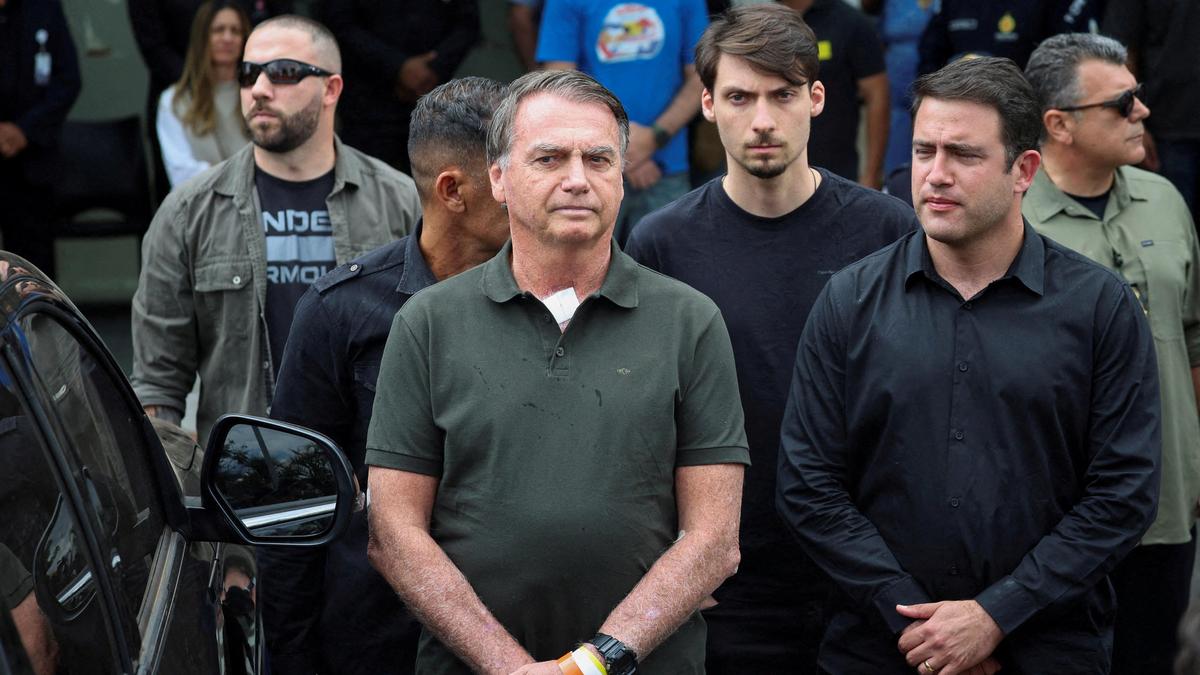
The political landscape in Brazil is undergoing a significant transformation following the incarceration of former President Jair Bolsonaro. His 27-year prison sentence for attempting to overturn the 2022 election has left the nation's far-right in a state of deep disarray, struggling to find direction and maintain relevance.
Bolsonaro's Absence and the Right-Wing's Disarray
Despite Bolsonaro's high profile, his imprisonment has surprisingly failed to ignite a unified resurgence of support among his base. Instead, his absence has highlighted a severe leadership vacuum, exacerbated by a visible and increasingly bitter succession battle within his own family. This internal strife further fragments the movement, preventing any cohesive rally around the 'Bolsonaro brand' and diminishing its collective power.
Shifting Sands: Market and International Opinion
The former President's declining influence is also evident in how both financial markets and international actors, particularly officials in the United States, are re-evaluating their stance. There's a clear signal of waning confidence in the 'Bolsonaro brand,' indicating that his political capital has diminished significantly since his conviction. This shift suggests a broader move away from the controversial figure and his associated policies, as stakeholders seek stability and new alignments.
Trump's Unexpected Pivot to Lula
Adding another layer of complexity to the shifting political currents, former U.S. President Donald Trump, once a vocal ideological ally of Bolsonaro, appears to be pivoting his attention towards current Brazilian President Lula da Silva. This unexpected diplomatic shift from a figure synonymous with the global far-right to a prominent left-wing leader underscores the rapidly changing dynamics and potential realignments in international political relationships.
A Turbulent Path Ahead for Brazil's Far-Right
Facing severe legal challenges, declining public backing, and deep internal divisions, the far-right movement in Brazil is navigating an exceptionally turbulent period. The future of this political faction remains uncertain as it grapples with its identity and leadership in the post-Bolsonaro era, suggesting a challenging path ahead for its aspirations and influence.