Actor Cho Jin-woong's retirement sparks debate over lasting impact of juvenile records
Dec 8, 2025
General
In an era where a digital paper trail rarely fades, the sudden retirement of Cho Jin-woong, one of Korea’s most recognizable and respected actors,...
Political divide deepens as PPP lawmakers call for disclosure of public officials' past crimes

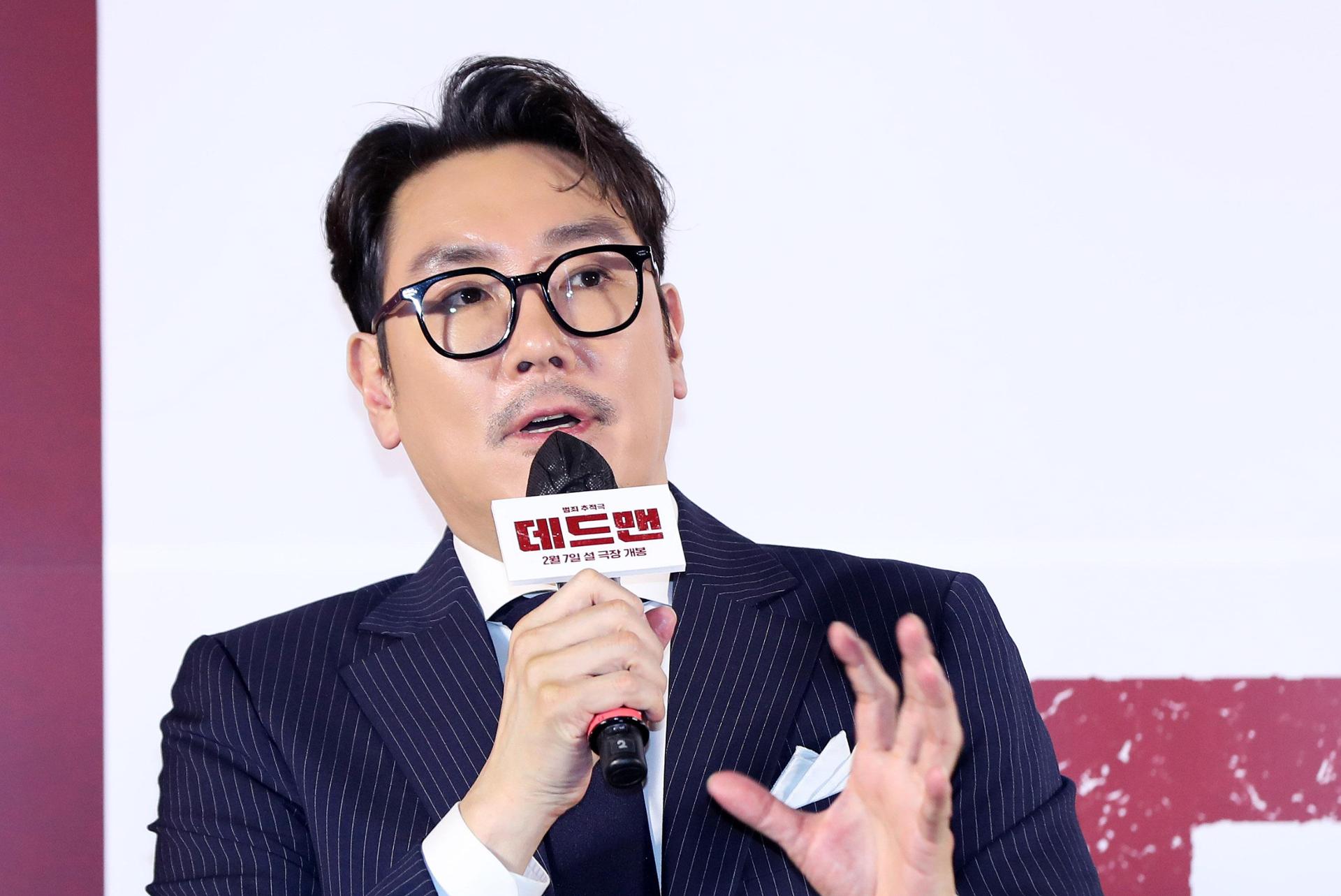
Actor Cho Jin-woong speaks at the production briefing for the film “Dead Man,” Jan. 19, 2024. Newsis
In an era where a digital paper trail rarely fades, the sudden retirement of Cho Jin-woong, one of Korea’s most recognizable and respected actors, has forced a painful national reckoning over the limits of forgiveness and the long shadow of juvenile crime.
The controversy, which saw the 49-year-old star abruptly step away from his career after a decades-old offense came to light, pits the progressive principles of juvenile rehabilitation against the modern demand for absolute accountability.
The dramatic exit came swiftly after a local entertainment news outlet, Dispatch, published a report detailing a serious crime committed by the actor when he was a teenager, before he adopted his stage name.
In Korea, a court-issued juvenile protection measure applies to youths ages 10 to 19 who commit crimes or delinquent acts, prioritizing protection, reform and education over criminal punishment to help them reintegrate into society. The records are kept confidential for the same reason.
Cho, best known internationally for the drama “Signal,” acknowledged wrongdoing as a minor while denying involvement in a sexual assault case. He also apologized for offenses committed as an adult, including a fine for assault and the cancellation of his driver’s license for drunk driving, and announced that he would retire from acting.
Former Korean Institute of Criminology and Justice chief and Seoul National University law professor Han In-sup argued that the core of Korea’s juvenile justice system is to punish youth crime while maximizing the chance for education and reform so minors do not stay on a criminal path.
Han said Cho’s life story should be seen as a rare case of successful social rehabilitation rather than a reason for “social burial,” and stressed that a teenager who received legal sanctions and then spent decades rebuilding his life to earn broad public recognition “deserves praise.” He called the actor’s decision to halt all activities “a very wrong solution” and urgde the actor not to yield to criticisms.
Meanwhile, Park Kyung-shin, a law professor at Korea University, offered a sharply contrasting view. He argued that journalists had simply disclosed facts they believed citizens needed to know in order to judge the people around them.
“When people evaluate others, must they exclude any matters that have already gone through judicial proceedings?” he said, adding that Han’s view “disregards their rights to make their own choices.”
The scandal has carried particular political weight because Cho, in recent years, has cultivated a prominent public image as an actor closely aligned with Korea’s recent historical reckoning and liberal civic causes.

President Lee Jae Myung, second from left, talks with Cho Jin-woong, second from right, before the 80th Liberation Day celebration at Sejong Center in Seoul, Aug. 15. Courtesy of the presidential office
He served in 2021 as a national special envoy during the Moon Jae-in administration to repatriate the remains of independence activist Gen. Hong Beom-do from Kazakhstan and openly voiced support of former President Yoon Suk Yeol’s impeachment during street rallies following the martial law chaos. He was also selected as one of 80 citizens to join President Lee Jae Myung’s “people’s appointment ceremony” on Liberation Day, where he recited the Korean pledge of allegiance on stage.
Within the ruling camp, Democratic Party of Korea (DPK) lawmaker Kim Won-yi voiced support for the actor on Facebook, asking, “To what extent, in what way and until when should people be held responsible for mistakes made in their youth?”
DPK Rep. Park Beom-kye added that the public profile Cho had built over years of work should not be so readily dismissed, questioning whether his present is “utterly incompatible” with a long-forgotten past.
Conservative politicians, in contrast, cast the controversy in terms of victims’ pain and what they described as Cho’s hypocrisy.
Rep. Joo Jin-woo of the main opposition People Power Party (PPP) denounced the narrative praising Cho as a model for youth, accusing liberal critics of “certifying a leftist crime cartel.”
PPP Rep. Na Kyung-won announced she would introduce a bill to require the state to check and disclose serious juvenile crimes committed by presidents, lawmakers and senior officials, arguing it is unfair for such records to remain in a “blind spot.”
By news
3 hours ago
No cameras found for this country.