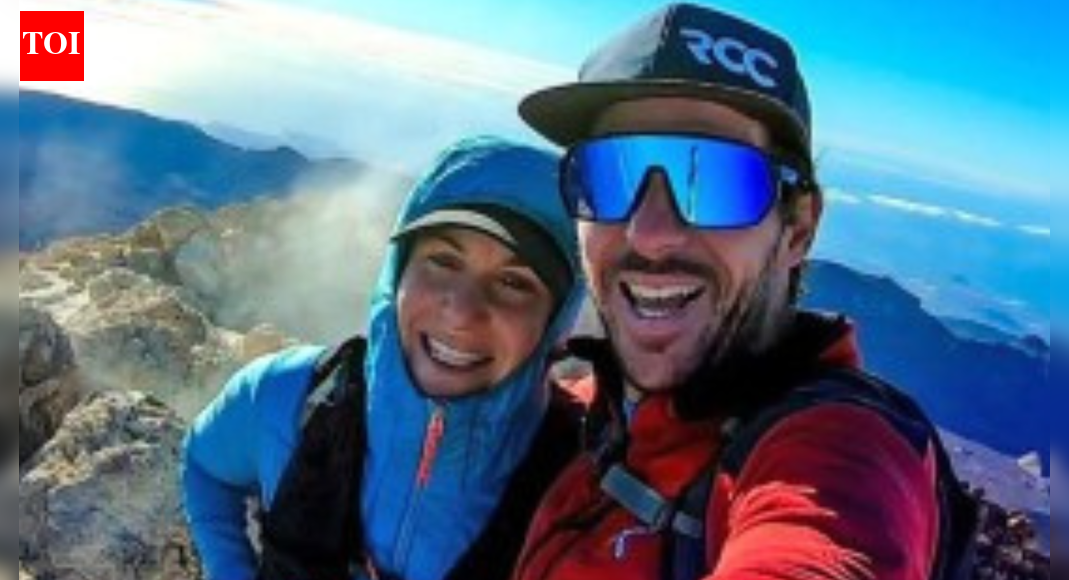
Austrian mountaineer Thomas Plamberger, 36, is at the center of a tragic legal battle, facing charges in the death of his girlfriend, Kerstin Gartner, 33, who froze to death on the Grossglockner, Austria’s highest mountain, in January. Plamberger maintains his innocence, arguing that the dire situation left him no choice but to seek help alone, a decision he claims was jointly made after rescue efforts proved futile.
Plamberger's Account of a "Hopeless" Ordeal
According to statements provided via his lawyer, Plamberger recounts the fateful climb on January 18. He asserts that Gartner, an inexperienced winter high-altitude climber, began exhibiting severe signs of exhaustion early on. He states he made an initial emergency call to police around 12:35 a.m., requesting a helicopter rescue. However, he claims he was informed that a helicopter could not be dispatched at that time.
With no immediate aerial rescue possible, Plamberger said they attempted to continue moving to generate warmth. Unfortunately, Gartner’s condition rapidly deteriorated, rendering her too weak to walk or climb independently. Describing the situation as utterly "hopeless" and a descent impossible, Plamberger claims they mutually decided he should leave to summon aid. He says he placed a second call to police around 3:30 a.m. to notify them of his departure for help and reiterated his request for a helicopter. Tragically, rescue teams discovered Gartner's frozen body near the summit at approximately 10 a.m., hours after Plamberger first sought assistance.
Prosecution Presents a Contradictory Narrative
Prosecutors offer a starkly different timeline and sequence of events. They contend that the couple encountered difficulties before 9 p.m. on the night of the incident, asserting that Plamberger's first emergency call was not made until 1:35 a.m. Authorities allege that Plamberger abandoned Gartner approximately 160 feet below the summit, where temperatures plummeted to a life-threatening minus 17 degrees Fahrenheit. They describe Gartner as exhausted, hypothermic, and disoriented when left alone.
Furthermore, the prosecution suggests a police helicopter conducted a search over the area around 10:30 p.m., utilizing search lights. Crucially, they state no distress signals were observed from Plamberger or Gartner at that time. Plamberger vehemently denies this, maintaining there was no emergency requiring such signals at that hour.
Legal Ramifications and Upcoming Trial
Investigators emphasize Plamberger's responsibility as an experienced mountaineer who had planned the climb, contrasting this with Gartner's lack of experience in such challenging winter conditions. His lawyer has characterized Gartner’s death as a "tragic accident." Plamberger is scheduled to stand trial in February at the Innsbruck Regional Court. If convicted of the charges, he faces a potential prison sentence of up to three years.