US, Japan defence ministers say China harming regional peace
Dec 12, 2025
General
TOKYO — Beijing's actions are "not conducive to regional peace", Japan's defense minister and U.S. counterpart Pete Hegseth agreed during a call af...

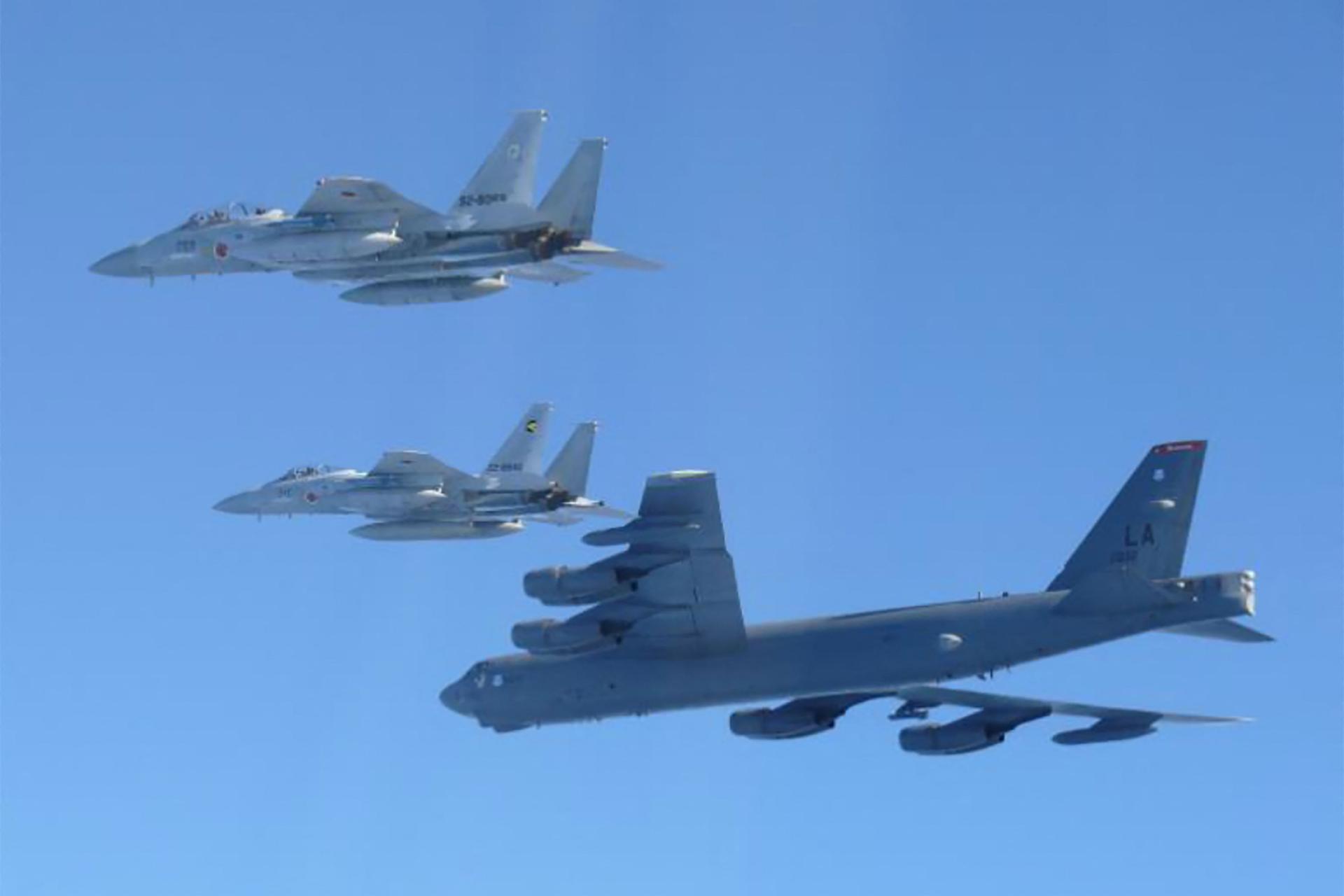
A U.S. Air Force B-52 strategic bomber, bottom, and two Japan Air Self-Defense Force F-15 fighter jets conduct a joint exercise over the Sea of Japan, Dec. 10. NATO chief Mark Rutte and Japan's defense minister shared their "grave concerns" about recent joint patrols by Chinese and Russian aircraft, Tokyo said. AFP-Yonhap
TOKYO — Beijing's actions are "not conducive to regional peace", Japan's defense minister and U.S. counterpart Pete Hegseth agreed during a call after Chinese aircraft locked radar on Japanese jets near Taiwan, Tokyo said Friday.
The radar incident was followed this week by Chinese-Russian air patrols around Japan, and came after comments by Prime Minister Sanae Takaichi on Taiwan that infuriated China.
Hegseth and Japan's Shinjiro Koizumi "exchanged candid views on the increasingly severe security situation in the Indo-Pacific region, including the radar incident", the Japanese defence ministry said after the call.
They "expressed serious concern over any actions to increase regional tensions, as China's actions are not conducive to regional peace and stability", the statement added.
Koizumi said on X that the two men "expressed grave concern over the behaviours that heighten tensions in the region".
He said he had also told Hegseth that China was "disseminating information that is completely contrary to the facts" about the radar incident.
"However, Japan has made clear that it does not seek escalation and that we are responding calmly while making necessary rebuttals, and we are keeping the door open for dialogue," Koizumi added.
There was no immediate statement about the call from the United States.
Takaichi had suggested on Nov. 7 that Japan would intervene with military force in any Chinese attack on Taiwan, which Beijing claims as its own and has not ruled out seizing by force.
Last week, J-15 jets from China's Liaoning aircraft carrier twice locked radar on Japanese aircraft that had scrambled in international waters near Okinawa, according to Japan.
Fighter jets use their radar for fire control to identify targets as well as for search and rescue operations.
China's foreign ministry on Wednesday accused Japan of sending the jets "to intrude into the Chinese training area without authorisation, conduct close-range reconnaissance and harassment, create tense situations, and... maliciously hype up the situation".
On Tuesday two Russian Tu-95 nuclear-capable bombers flew from the Sea of Japan to rendezvous with two Chinese H-6 bombers in the East China Sea, then conducted a joint flight around the country, Japan said.
Japan said that it scrambled fighter jets in response.
Japan and the United States air forces on Wednesday conducted their own joint air drills in a show of force, Tokyo said.
The "tactical exercises" over the Sea of Japan involved two U.S. B52 bombers, three Japanese F-35 fighter jets and three Japanese F-15s, Tokyo said.
South Korea said Tuesday that Russian and Chinese warplanes also entered its air defence zone, with Seoul also deploying fighter jets that same day.
Beijing confirmed on Tuesday that it had organised drills with Russia's military according to "annual cooperation plans."
Moscow also described it as a routine exercise, saying it lasted eight hours and that some foreign fighter jets followed the Russian and Chinese aircraft.
By news
14 hours ago
No cameras found for this country.