Will Trump's Ultimatum to Iran Risk Leaving Him Red-Faced?
Mar 22, 2026
 United States
International News, Middle East News, US-Iran Relations
United States
International News, Middle East News, US-Iran Relations
United States
International News, Middle East News, US-Iran Relations
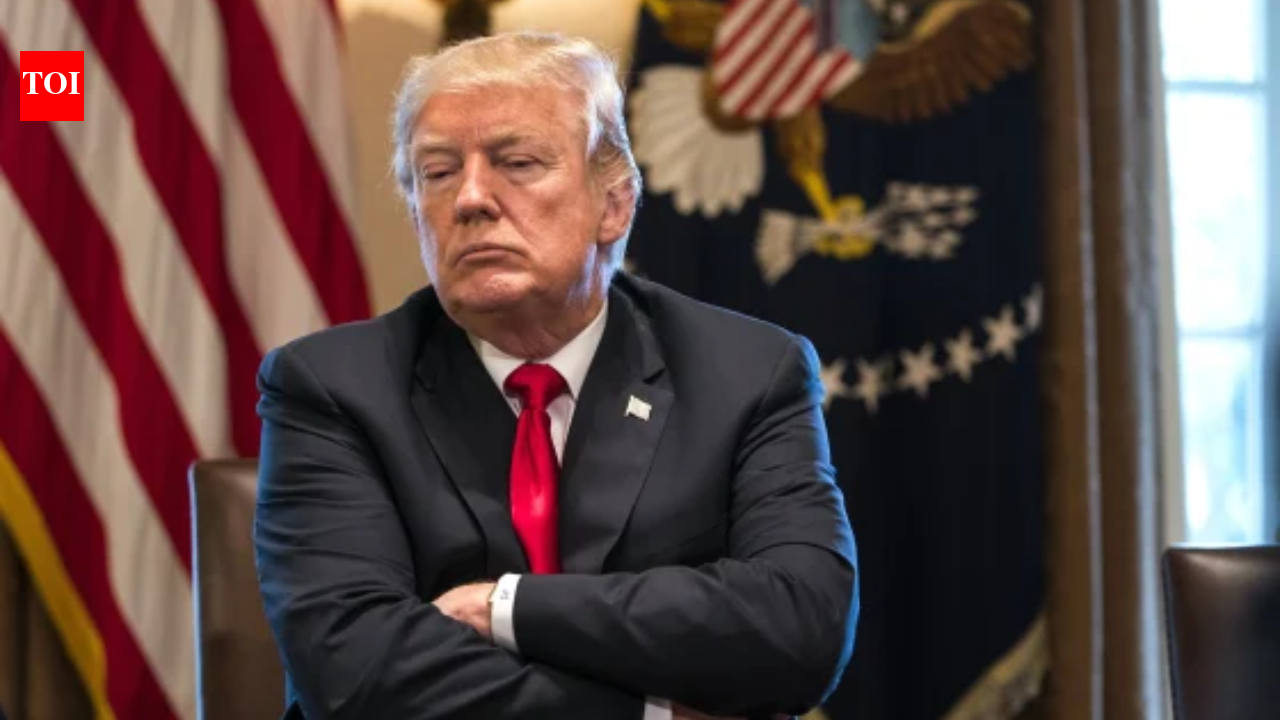
President Donald Trump's 48-hour ultimatum to Iran over the Strait of Hormuz has led Tehran to threaten retaliatory actions, increasing tensions in the region.
Will Trump's Ultimatum to Iran Risk Leaving Him Red-Faced?
As Donald Trump's 48-hour deadline to Iran looms, Tehran has responded with its own threats, showing no signs of backing down. The Revolutionary Guards have warned that energy facilities in countries hosting US bases will be targeted if Trump follows through on his threat.
Trump's Warning
Writing on Truth Social, Trump warned he would 'hit and obliterate' Iranian power plants 'starting with the biggest one first' unless Tehran fully reopen the Strait of Hormuz by 23:44 GMT on Monday. Around 20% of the world's oil passes through the narrow waterway, which has been effectively blocked since the US and Israel launched attacks in February.
Iran's Retaliatory Threats
Iran's Revolutionary Guards have declared that energy facilities in countries hosting US bases will be 'lawful targets' if Trump follows through. Parliament speaker Mohammad Bagher Ghalibaf threatened to destroy critical infrastructure across the region irreversibly.
The Escalating Conflict
The war, now in its fourth week, has already spread beyond Iran's borders. Iran targeted a joint UK-US base in the Indian Ocean on Saturday, while nuclear sites in both Iran and Israel were struck. The death toll has risen to more than 1,500 in Iran, over 1,000 in Lebanon, 15 in Israel and 13 US military members, with millions displaced across the region.
Trump's Administration Actions
Despite de-escalation messaging, the Trump administration has deployed three more amphibious assault ships and roughly 2,500 additional Marines to the region. The US attacked Iran's Natanz nuclear facility again, even as Tehran had clearly warned against any strikes on its energy infrastructure.
Economic Pressures
Gas prices have risen 93 cents per gallon and US crude oil is up more than 70% since the start of the year. The Trump administration has quietly begun easing restrictions on Iranian crude, allowing allies to buy the very oil that funds Tehran – the resource it is simultaneously trying to cut off.
Iran's Diplomatic Demands
Iran's top diplomat has made clear what any path to peace would require: 'guarantees' that the US and Israel won't attack the Islamic Republic again, and assurances that its 'sovereignty and national security won't be violated.' The comments came in a phone call with EAM Jaishankar on Saturday.
By news
6 months ago