Mexico City Launches Latin America's Largest Exhumation Project to Identify 6,600 Disappeared Persons Amidst National Crisis
Nov 21, 2025
 Mexico
Human Rights
Mexico
Human Rights
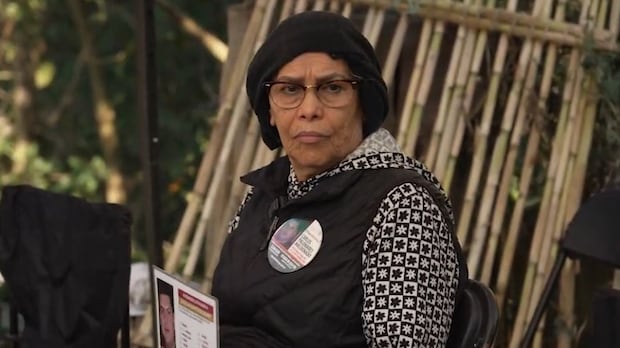
Mexico City begins Latin America's largest exhumation project to identify 6,600 disappeared individuals from common graves. Families share harrowing stories ami
Mexico City has initiated an unprecedented forensic project this week, aiming to exhume and identify thousands of human remains from common graves within a municipal cemetery. This monumental undertaking is part of a broader multi-agency strategy to address the city's rapidly growing registry of disappeared individuals, a crisis that grips not only the capital but the entire nation.
A Project of Unmatched Scale
Described as the largest initiative of its kind ever attempted in Latin America, the project targets the Panteon Civil de Dolores cemetery, situated in the city's western district. Gerardo Cervantes Arroniz, director of the Institute of Expert Services and Forensic Sciences (ISPCF), emphasized the long-term nature of this endeavor during a recent press conference. The plan involves the exhumation of approximately 6,600 bodies from 75 burial sites, spanning roughly 200 square meters in a secluded, wooded section of the cemetery. These sites have been used for unclaimed and unidentified bodies, buried in layers, since the 1960s.
The genesis of this seven-month-long project stems from a comprehensive study that cross-referenced cemetery records with missing persons cases. This meticulous review yielded potentially hundreds of matches, identified through similarities in names, fingerprints, and other vital details, according to Luis Gómez Negrete, who leads the city’s commission for the search of missing persons.
Personal Tragedies Fuel the Search
Behind every number is a story of profound loss and an enduring search. Sofia Lara Alfonso, 45, recounted the agonizing discovery that her brother, Carlos Daniel Lara Alfonso, was buried in one of the excavation areas. Despite filing a missing persons report in 2009, her family was never notified of his death in 2012, at age 36, from severe pneumonia at a hospital. He was subsequently interred in the common grave. Lara Alfonso highlighted the systemic oversight where unhoused individuals are often disconnected from their families in official records. She now hopes to give her brother a dignified reburial in Veracruz, alongside their mother, remembering him as her "best friend" and "confidant."
Ana María Maldonado, 75, has spent 15 agonizing years searching for her son, Carlos Palomares Maldonado, who vanished in Mexico City on September 22, 2010, at age 32. He had gone to meet someone online to trade Star Wars figurines for a used car. Officials have indicated that her son might be among those buried in the common gravesites at Panteón Civil de Dolores. "I have great hope that I can find my son here, even like this, without life. But I want to know what happened to my son," Maldonado expressed, underscoring the desperate need for answers.
Mexico's National Crisis of the Disappeared
The Mexico City initiative unfolds against the backdrop of a staggering national crisis. Over the past two decades, tens of thousands have disappeared across Mexico, victims of cartel violence and state-fuelled conflicts. The national registry currently lists over 130,000 missing and disappeared persons, a figure tragically comparable to war-torn nations like Syria and Colombia.
Mexico City itself is among the top ten jurisdictions with the highest numbers, reporting over 7,000 vanished individuals. Intense pressure from families of the disappeared led the city administration to establish a dedicated cabinet committee this year. The city has also pioneered two massive grid searches in remote northern and southern areas, the first of their kind in the country, looking for common traits in missing persons files.
President Claudia Sheinbaum recently raised concerns about the accuracy of the national registry, noting instances where data is incomplete, lacking crucial contact information for family members. She announced that her government plans to unveil changes to the registry later this year.
The Unyielding Search Continues
Carlos Ramírez, whose brother Ángel Gerardo Ramírez Chaufón disappeared in 2018 at age 20, along with two friends, after an altercation linked to organized crime, attended the project's launch. While unsure if his brother's remains would be found, he emphasized the importance of collective action. "The most important thing is that those found in this common grave are identified and that there be results," he stated, representing the collective, Until We Find Them Mexico City.
Aryel Arvayo Beltrán, from Sonora, also came to show support, still searching for his father, Artemio Arvayo Canizales, a rancher who disappeared with nine others, including members of the Yaqui Indigenous nation, in July 2021. They were intercepted by a suspected organized crime group while transporting cattle. Subsequent searches have only recovered the burned remains of seven of the ten. "It breaks my heart until this day," Arvayo said, vowing to continue his search.
This exhumation project represents a critical, albeit painful, step towards accountability and closure for countless families grappling with the agonizing uncertainty of their loved ones' fates.
By news
11 months ago


