
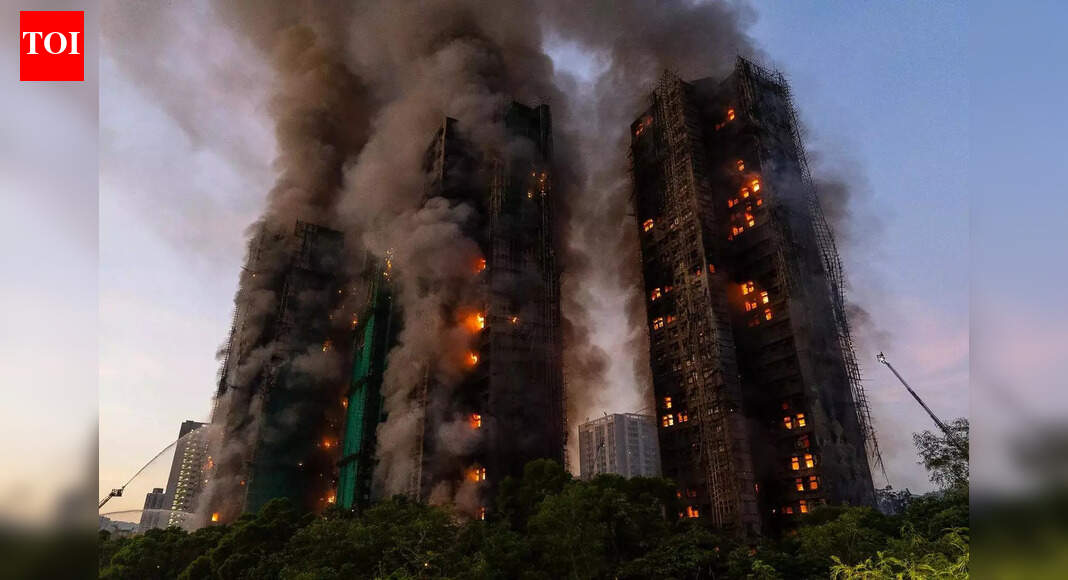
Hong Kong is grappling with the devastating aftermath of one of its worst fire disasters in decades, an inferno that ripped through the Wang Fuk Court housing estate, claiming at least 128 lives and leaving an estimated 200 residents missing. The tragic event, which also injured 79 people including 12 firefighters, has ignited a fierce debate and a widening investigation into allegations of negligence and corruption – particularly concerning crucial warnings that appear to have been ignored long before the flames erupted.
Unheeded Alarms and Fatal Consequences
More than a year prior to Wednesday’s catastrophic blaze, concerned residents had formally alerted the Hong Kong Labour Department about the dangerous use of flammable construction materials during extensive renovation works at the ageing complex. Emails reveal that authorities initially dismissed these grave concerns, first stating a lack of specific regulations for flame-retardant scaffolding netting, then later assuring residents that the materials met safety standards based on contractor-provided certificates.
The fire, believed to have originated on bamboo scaffolding and protective netting, spread with terrifying speed across seven of the complex’s eight high-rise towers. Investigators now confirm that highly flammable polystyrene boards and foam panels, installed around windows, acted as accelerators, transforming the renovation materials into a deadly fuel source. Compounding the disaster, fire alarms in all eight buildings were found to be non-functional, leaving hundreds of residents trapped without warning as their homes were engulfed.
Mounting Investigations and Arrests
The scale of the devastation has prompted swift and extensive law enforcement action. Security Secretary Chris Tang acknowledged that the blaze generated extreme temperatures, causing structural collapses that blocked vital exits and severely hindered rescue efforts.
Within days of the incident, three individuals associated with the renovation project – including directors and a consultant of the construction company – were arrested on suspicion of manslaughter and gross negligence. The Independent Commission Against Corruption (ICAC) subsequently intensified the crackdown, arresting eight more people. These include engineering consultants, scaffolding subcontractors, and an intermediary, all facing allegations of corruption linked to the project. Investigators are scrutinizing whether substandard materials were knowingly used and if fraudulent practices were involved in obtaining safety certifications.
A City in Mourning, A Call for Accountability
As Hong Kong enters a three-day official mourning period, marked by flags flying at half-mast and a moment of silence led by Chief Executive John Lee, grief-stricken families endure an agonizing wait, searching hospitals and victim identification centres for their missing loved ones. Nearly 900 displaced residents are housed in relief centres, while rescue teams continue their grim search through charred units, with officials warning that the death toll is likely to climb further.
This tragedy, the deadliest in Hong Kong since 1948, has unequivocally highlighted the urgent need for rigorous safety oversight, especially concerning renovation projects in older public housing estates. Nationwide inspections of scaffolding and construction materials are now underway. The haunting question remains for a grieving city: why were clear warnings brushed aside, and could this catastrophic loss of life have been prevented?