Sabah State Election: GRS Takes Early Lead, DAP Struggles, Boosting PM Anwar's Unity Government
Nov 29, 2025
 Malaysia
Politics
Malaysia
Politics
Malaysia
Politics
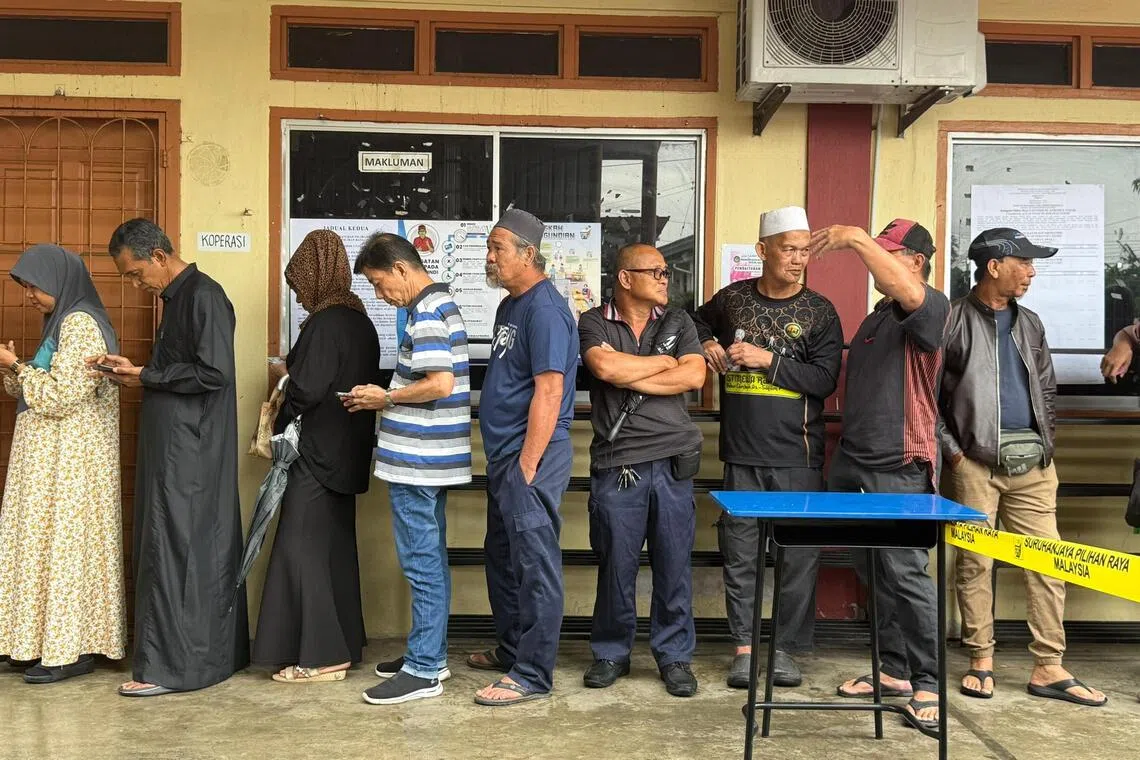
Incumbent Gabungan Rakyat Sabah (GRS) leads the Sabah state election early count. DAP faced significant losses. The outcome could boost PM Anwar's government.
Sabah State Election: GRS Takes Early Lead Amidst Shifting Political Landscape
The political stage in Sabah is experiencing a notable transformation following its keenly contested state election on November 29. Initial results indicate a robust performance by the incumbent Gabungan Rakyat Sabah (GRS) coalition, which appears to be establishing a significant lead. This development is widely interpreted as a potential boost for Prime Minister Anwar Ibrahim's federal unity government, given its reliance on support from key allies within the state.
Counting Underway in Kota Kinabalu
As election officials meticulously tally ballots at the central counting facility in Kota Kinabalu, Sabah's vibrant capital, political analysts are closely monitoring the unfolding scenario. The ultimate outcome of this election is paramount, as it will shape the trajectory of Sabah's next government and redefine its relationship with the federal administration. Unofficial reports suggest GRS is leading, with Barisan Nasional (BN) and the opposition Warisan coalition following behind. To secure a simple majority, a party or coalition requires 37 of the 73 contested seats, while a more commanding two-thirds majority would necessitate 49 seats.
The 17th Sabah state election witnessed an unprecedented level of competition, with a record-breaking 596 candidates vying for 73 state seats. The electoral field was a diverse tapestry, featuring a mix of national coalitions, indigenous Sabah-based parties, and independent contenders.
DAP Faces Significant Reversal
A particularly striking aspect of this election is the challenging outcome for the Democratic Action Party (DAP). As a crucial component of Prime Minister Anwar's Pakatan Harapan (PH) bloc, DAP endured one of its most difficult showings in Sabah's electoral history. The party failed to secure victory in any of the eight seats it contested, a stark contrast to its impressive performance in the 2020 state election, where it clinched six out of seven seats. DAP secretary-general Anthony Loke addressed the party's performance via Facebook, acknowledging the voters' verdict and accepting full responsibility for the party's shortcomings and its inability to win a single seat.
Incumbents Defend Seats
Despite the broader shifts, several prominent political figures successfully defended their mandates:
- Incumbent Sabah Chief Minister Hajiji Noor of GRS retained his Sulaman seat.
- Warisan president, Datuk Seri Mohd Shafie Apdal, successfully defended his Senallang seat, while his younger brother Yusof Yacob secured a win in Silam.
- BN Sabah chairman Datuk Seri Bung Moktar Radin held onto his Lamag seat.
- Datuk Ewon Benedick, president of the United Progressive Kinabalu Organisation (UPKO), won Kadamaian.
- Parti Solidariti Tanah Airku (STAR) president Jeffrey Kitingan retained Tambunan.
Infrastructure and Autonomy: Core Voter Issues
Throughout the intense campaign period, two critical issues consistently resonated with voters: Sabah's long-standing infrastructure challenges and the fervent demand for greater autonomy. Residents voiced profound frustration over a persistent development gap, emphasizing a decades-long aspiration for improved basic infrastructure and the self-governance that has largely remained elusive.
With 1.78 million eligible voters and 882 polling stations operational across the state, voter turnout was significant. By 4 PM on election day, approximately one million voters, or 60.9 percent of the electorate, had cast their ballots. Many citizens, like 31-year-old draftsman Mr. Noah Jason Raj, expressed a strong preference and hope for local Sabah parties such as UPKO or STAR. Raj conveyed his hope for "strong, honest leaders who fight for our rights and prioritise Sabah’s rakyat (ordinary people)," underscoring his belief that indigenous parties are better positioned to genuinely represent Sabahans' interests, free from external manipulation by national political entities. He specifically articulated hopes for a "Warisan-led party or, at best, a coalition of local parties to consolidate a Sabah-focused leadership."
By news
8 months ago
No cameras found for this country.