Global Airlines Rush to Fix Airbus A320 Software Glitch After JetBlue Incident Causes Flight Disruptions Worldwide
Nov 29, 2025
 United States
Aviation
United States
Aviation
United States
Aviation
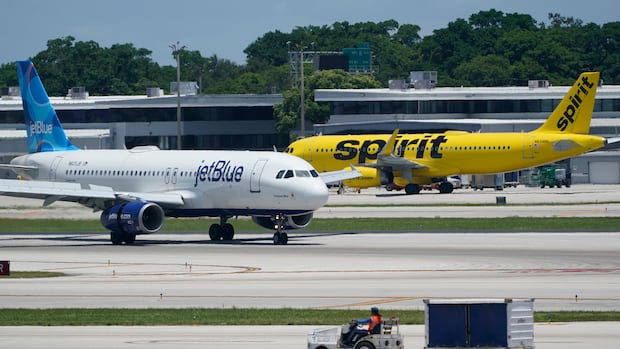
Global airlines experienced disruptions patching a critical Airbus A320 software glitch, linked to a JetBlue altitude drop. The fix, mandated by FAA and EASA, a
Global Airlines Tackle Airbus A320 Software Glitch Amidst Worldwide Disruptions
Aviation worldwide faced significant, albeit temporary, disruptions over the past weekend as airlines scrambled to implement a vital software patch for the highly prevalent Airbus A320 aircraft family. This urgent update was triggered by an in-depth investigation into a JetBlue flight last month, which experienced a sudden and alarming drop in altitude.
Solar Radiation Identified as Potential Cause of Data Corruption
Analysis of the incident revealed a critical flaw: intense solar radiation could potentially corrupt data essential for the flight controls of A320 family aircraft. This vulnerability was reportedly introduced by a recent software update to the plane's onboard computers, necessitating immediate action from manufacturers and regulators alike.
Regulatory Mandate and Airbus's Response
Both the U.S. Federal Aviation Administration (FAA) and the European Union Aviation Safety Agency (EASA) swiftly mandated airlines globally to address the issue by installing the new software update. Airbus CEO Guillaume Faury publicly apologized to customers for the "significant logistical challenges and delays" that arose from the required fix. He reassured the public that Airbus teams were working tirelessly around the clock to support operators, ensuring the updates were deployed as rapidly as possible to safely return aircraft to normal service.
Global Travel Impact and Rapid Recovery Efforts
The global impact varied, particularly affecting travel during the bustling U.S. Thanksgiving holiday weekend. American Airlines, operating 209 affected A320 family planes, largely completed its updates by Friday, anticipating no further operational issues. Delta expected only a minor impact on fewer than 50 of its A321neo aircraft, while United reported minor disruptions to a few flights involving six affected planes. Hawaiian Airlines stated it was unaffected.
Internationally, Japan's All Nippon Airways cancelled 65 domestic flights on Saturday, with further cancellations possible on Sunday. In India, Air India's engineers worked diligently, completing resets on over 40 percent of their required aircraft without any reported cancellations. European operations quickly stabilized; France's Transport Minister Philippe Tabarot announced an "almost complete return to normal" in French airports due to swift software installations. The UK saw minimal disruption, with British Airways needing updates for only three aircraft and EasyJet informing passengers of potential schedule changes. Germany's Lufthansa and Scandinavia's SAS reported most updates finished overnight, with minor delays anticipated but no cancellations.
Expert Insight and Incident Details
Aerospace expert Mike Stengel of AeroDynamic Advisory acknowledged the timing was "definitely not ideal" for such an issue to arise on a ubiquitous aircraft during a busy holiday. However, he offered a "silver lining," noting the fix typically took only a few hours and could be performed between flights or during overnight checks. The original JetBlue incident on October 30, which led to the discovery of the software vulnerability, saw at least 15 passengers injured after the flight from Cancun, Mexico, to Newark, New Jersey, was diverted to Tampa, Florida.
The Ubiquitous Airbus A320
The Airbus A320 family, the world's bestselling single-aisle aircraft, serves as the primary competitor to Boeing's 737. Newer variants, updated in the mid-2010s, are known as the A320neo.
By news
8 months ago