Trump's Controversial Pardon: A Look at the Headline Amidst Venezuela's 'Drug War'
It is important to note from the outset that the original news article content could not be retrieved, encountering a 403 Client Error. Consequently, the following analysis is derived exclusively from the provided headline: "Trump Pardons Convicted Cocaine Trafficker Amid "Drug War" On Venezuela." This headline alone presents a complex and potentially contentious convergence of domestic presidential power, the criminal justice system, and volatile international dynamics.
The Act of a Presidential Pardon
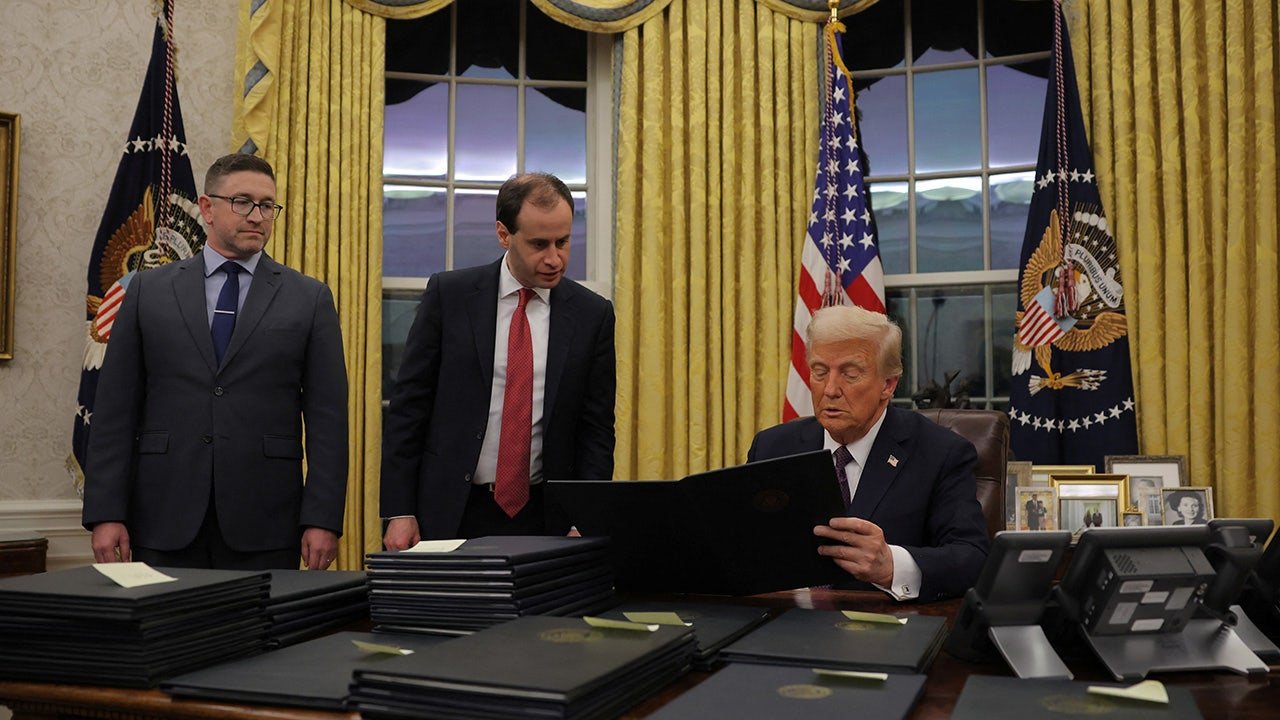
The core of the headline points to former President Donald Trump's decision to issue a pardon to an individual found guilty of cocaine trafficking. Presidential pardons are a powerful executive prerogative, often sparking considerable public and political discussion. While a president may grant pardons for diverse reasons—ranging from addressing perceived miscarriages of justice to acknowledging an individual's rehabilitation or even for broader political considerations—such actions, particularly in cases of severe offenses like drug trafficking, inevitably prompt scrutiny regarding principles of accountability and equitable justice.
Context: The 'Drug War' on Venezuela
The timing and context surrounding this pardon significantly amplify its potentially controversial nature. The headline explicitly places this event "Amid 'Drug War' On Venezuela." Historically, the United States, across various administrations including Trump's, has employed the term "drug war" to describe its multifaceted efforts against international drug cartels and specific foreign governments. Venezuela, in particular, has been a frequent target of US anti-narcotics rhetoric, accompanied by sanctions and allegations of high-level governmental involvement in drug-related activities.
Unanswered Questions and Implications
The juxtaposition of a presidential pardon for a convicted cocaine trafficker with an ongoing "drug war" targeting Venezuela immediately raises a series of critical questions:
- What underlying message does such a pardon convey, especially when the US is simultaneously engaged in significant anti-drug campaigns against nations accused of facilitating drug operations?
- Does this executive action potentially undermine the credibility or consistency of US foreign policy objectives in its global anti-drug initiatives?
- Could this move be interpreted as contradictory, or might it signify a more nuanced, perhaps strategic, shift in approach?
Given the absence of the complete article, the specific details pertaining to the pardon—such as the identity of the pardoned individual, the official justifications provided for the pardon, and its precise chronological relationship to US actions concerning Venezuela—remain undisclosed. This lack of detailed information necessitates that any further interpretation or commentary on this compelling headline remains largely speculative.