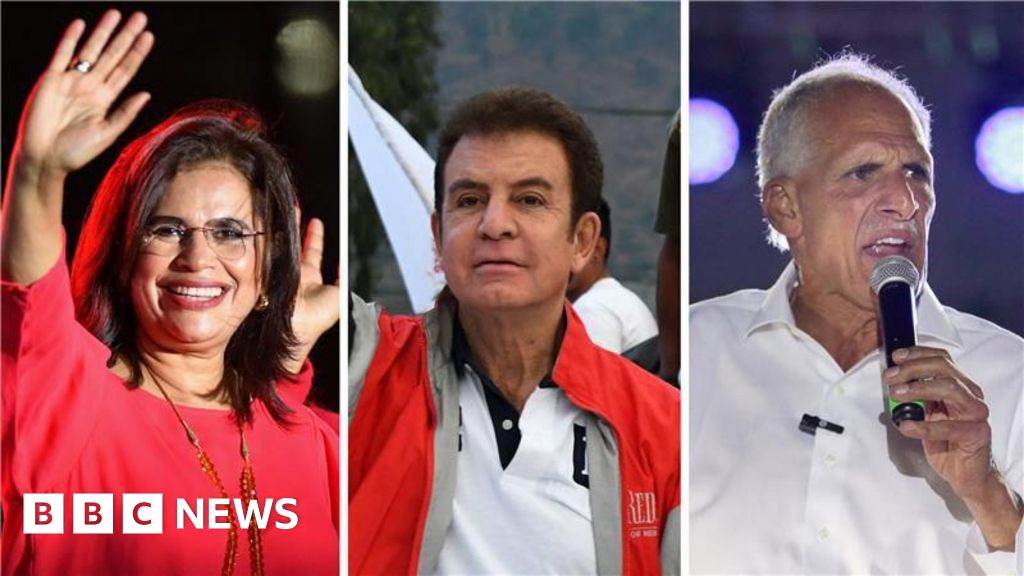
The recent general election in Honduras has unfolded into a dramatic contest, with preliminary results showing right-wing National Party leader Nasry Asfura securing a razor-thin lead. As ballots continue to be tallied, particularly from remote communities, the outcome remains uncertain in what has been described as a "knife-edge" race.
A Close Contest for the Presidency
With over 40% of the votes counted, Asfura has edged slightly ahead of his closest challenger, Salvador Nasralla, a former TV host and Vice-President. The National Electoral Council (CNE) highlighted the provisional nature of these early figures, indicating the lead could shift as more votes are processed. Asfura currently holds 40.5% of the vote, narrowly surpassing Nasralla's 39%. Rixi Moncada, the candidate for the ruling left-wing Libre party, trails in third place with approximately 20%. While five presidential candidates are on the ballot, the election is largely viewed as a three-way battle.
Trump's Influence and Controversial Threats
Adding a significant international dimension to the election, then-US President Donald Trump openly endorsed Asfura. Trump went further, publicly threatening to reduce financial aid to the Central American nation if his preferred candidate did not win. In a statement on Truth Social, Trump declared the US would be "very supportive" if Asfura triumphed but warned against "throwing good money after bad" if an unfavorable leader took office, implying "catastrophic results." This stance drew strong criticism from Moncada, who labeled Trump's endorsement as "totally interventionist" and accused him of meddling in Honduras's democratic process.
US aid to Honduras has been substantial, with over $193 million provided in the last fiscal year and over $102 million this year, despite reported cuts. The Trump administration had already reportedly earmarked $167 million in economic and governance aid for 2024 and 2025 that was later cut. Trump also linked his support for Asfura, former mayor of Tegucigalpa, to a shared goal of combating "Narcocommunists" and drug trafficking.
Candidate Pledges and Party Challenges
Asfura has utilized social media to outline his vision, promising "development and opportunities for everyone," increased foreign and domestic investment, and job creation. However, his National Party faces an uphill battle to restore its public image, which has been tarnished by a string of corruption scandals. Notably, former party leader and ex-president Juan Orlando Hernández was sentenced to 45 years in a US prison last year on drug smuggling and weapons charges – a verdict Trump controversially stated he intends to overturn. Asfura has diligently attempted to distance himself from Hernández, affirming he has "no ties" with the ex-president and that the party bears no responsibility for his individual actions.
On the other side, Libre party candidate Rixi Moncada, a 60-year-old lawyer, has pledged to protect Honduras's "natural wealth" from "21st Century filibusters who want to privatise everything" and vowed to combat corruption "in all its forms." She has the backing of the incumbent president, Xiomara Castro, who, as Honduras's first female president elected in 2021, was ineligible to run for a consecutive term.
Election Integrity Concerns Emerge
While voting generally proceeded smoothly, with extensions in some areas due to long queues, concerns about election integrity have surfaced. All major parties initially committed to respecting the final outcome. However, the Libre party has since stated it will only accept results based on the final count of paper ballots, not preliminary figures. The coming days will be crucial as Honduras awaits the definitive outcome of this pivotal election.