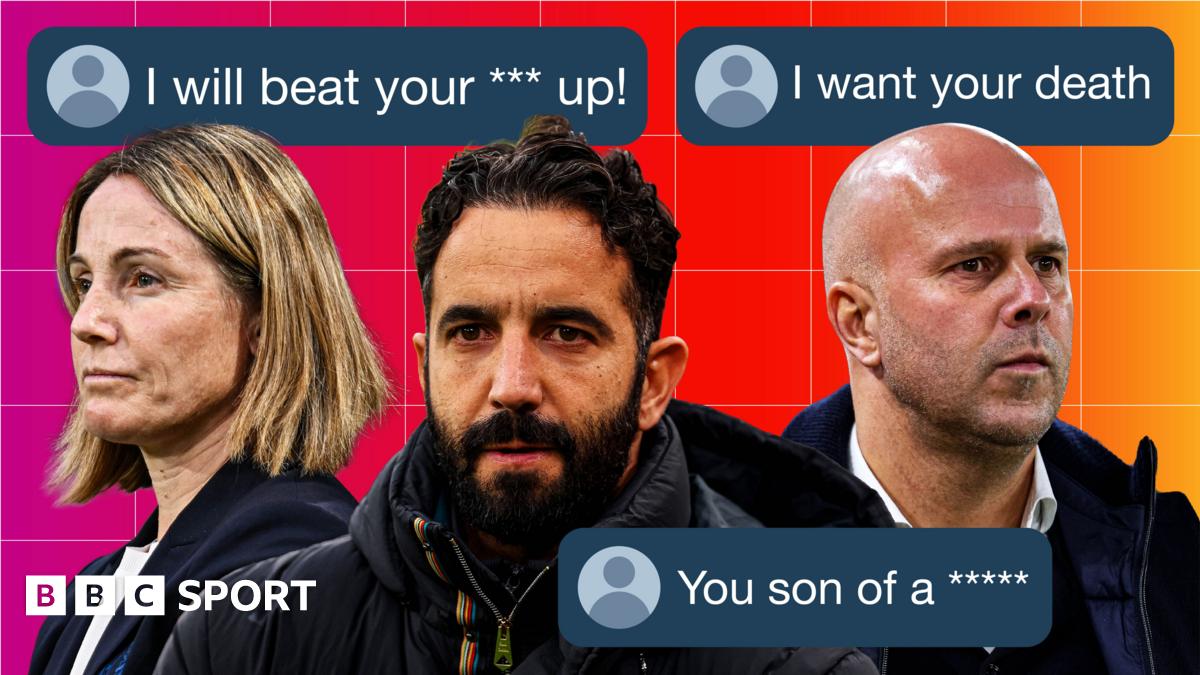
Football's Online Abuse Crisis: A Weekend of Threats and Harassment
A recent BBC investigation, in collaboration with data science firm Signify, has starkly revealed the alarming scale of online abuse directed at football professionals. In a single weekend in early November, during just 10 Premier League and six Women's Super League (WSL) matches, over 2,000 "extremely abusive" social media posts—encompassing death threats, rape threats, racist slurs, homophobia, and calls for violence—targeted managers and players.
Managers Bear the Brunt of Online Vitriol
The analysis, which scrutinised more than 500,000 posts across X (formerly Twitter), Instagram, Facebook, and TikTok, found that managers are disproportionately targeted. A staggering 82% of the abuse on X was aimed at coaching staff. Among the men's top flight, Premier League bosses Ruben Amorim, Arne Slot (Liverpool), and Eddie Howe (Newcastle) were frequent targets. In the WSL, Chelsea and their manager Sonia Bompastor faced a distressing 50% of all recorded abuse. Worryingly, 61% of these hateful messages originated from accounts in the UK and the Republic of Ireland, and the overall volume of abuse appears to be escalating.
The Mechanism of Detection and Disturbing Trends
Signify employs an advanced artificial intelligence system, Threat Matrix, to scan social media for offensive content. During the study weekend, this AI flagged nearly 22,400 potentially abusive messages. To ensure accuracy, these flags undergo a rigorous two-stage human verification process, filtering out false positives (such as "Dan Burn" being flagged due to his surname). This meticulous review confirmed that 2,015 posts met the threshold for extreme abuse, violating platform guidelines and potentially constituting hate speech or threats to life.
Jonathan Hirshler, Signify's chief executive, reported a concerning 25% year-on-year increase in detected abuse levels. He argues that while free speech is vital, the severity of some threats—including "really nasty death threats and really horrible, violent content"—demands action, challenging "free speech absolutists" to confront the grim reality of these messages.
Real-World Consequences and Platform Inaction
Thirty-nine of the most egregious posts, including racist monkey emojis and rape threats, were deemed serious enough for further investigation. This involved reporting to clubs for potential fan identification and even referral to law enforcement. However, outcomes have been limited: one post reported to the police did not meet their threshold for action, and Meta (owners of Facebook and Instagram) removed only one flagged post, with others remaining under investigation. While X did remove some flagged content, others merely had their reach suppressed.
Maheta Molango, chief executive of the Professional Footballers' Association, highlighted the double standard: "If this happened on the street, this would have criminal consequences... Why is it that online people have got this sense of impunity? We need to put an end to this."
The Human Toll and Calls for Accountability
Liverpool's Arne Slot, while acknowledging criticism is normal, expressed his dismay at online vitriol, stating, "Abuse is never a good thing." Newcastle's Eddie Howe, resigned to its presence, advises sheltering from it, but admits people will invariably show it to you.
The impact on individuals is profound. Sonia Bompastor candidly shared her concerns: "It's scary – I want to raise my voice against that. I have a family, including kids. They don't want to see those comments online." She also highlighted the heightened security vulnerability in the women's game compared to the men's, and the severe mental health toll abuse takes on players. Bompastor unequivocally lays blame on the platforms: "The social media companies are not doing their job, not taking the responsibility or accountability."
Legislative Efforts and Proactive Club Measures
The UK's Online Safety Act, enacted in October 2023, now places a statutory duty of care on social media platforms, obliging them to proactively identify and remove illegal content. Ofcom is tasked with enforcing compliance. However, platforms often cite free speech principles as a reason for their reluctance to censor.
Frustrated by perceived platform inaction, football clubs are increasingly taking matters into their own hands. Arsenal, for instance, has partnered with Signify for three years, achieving a remarkable 90% reduction in abuse from affiliated fans through education and banning offenders from the Emirates Stadium. Chelsea Women are following suit, and Tottenham is investigating season-ticket holders for abusive content. Premier League director Tim Cooper noted that abuse spikes around match incidents like goals or penalties, urging platforms to "do more by changing their algorithms."
The investigation serves as a stark reminder of the urgent need for a concerted effort from social media companies, legislators, and football organizations to combat the escalating crisis of online abuse, protecting those who dedicate their lives to the sport.