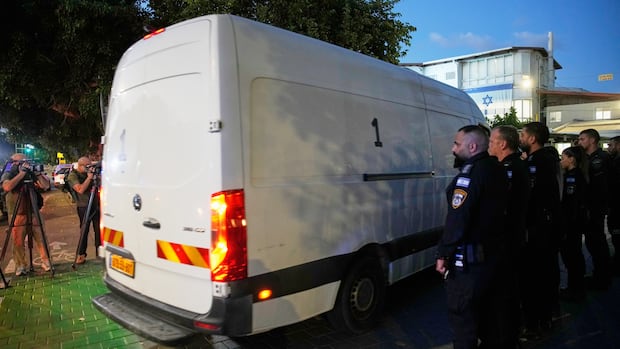
Israel has confirmed the reception of a body on Wednesday, which Hamas claims belongs to one of the final two deceased hostages held in the Gaza Strip. This development comes as Israel reiterates its condition for opening Gaza's crucial gateway to Egypt – the Rafah crossing – stating it will only do so once all remaining hostages are returned.
The Red Cross facilitated the transfer of the body to the Israeli military, where it will undergo forensic identification. This follows a previous handover by Hamas on Tuesday, which Israeli Prime Minister Benjamin Netanyahu's office later confirmed did not belong to any hostage.
The complete return of the last two deceased hostages is a pivotal condition within the initial phase of a U.S. President Donald Trump-backed plan aimed at concluding the two-year Gaza conflict. This plan also stipulates the dual-direction opening of the Rafah border crossing between Gaza and Egypt.
Rafah Crossing: A Key Condition for Peace
Since the ceasefire's implementation in October, Israel has kept the crossing closed, asserting that Hamas must uphold its agreement to return all hostages, both living and deceased. "The crossing will be opened both ways when all of our hostages have been returned," stated Israeli government spokesperson Shosh Bedrosian.
Under the terms of the fragile truce, Hamas has so far released all 20 living hostages and 26 bodies. In exchange, approximately 2,000 Palestinian detainees and convicted prisoners have been freed. However, two deceased captives — identified as Israeli police officer Ran Gvili and Thai agricultural worker Sudthisak Rinthalak, both abducted during Hamas' October 7, 2023 attack — are reportedly still within Gaza.
The Al Quds Brigades, the armed faction of the Hamas-allied Palestinian Islamic Jihad movement, reported locating a hostage body following a search in northern Gaza, conducted in collaboration with a Red Cross team. Hamas and Islamic Jihad later confirmed transferring the body to the Red Cross on Wednesday afternoon, though they did not specify which of the two remaining deceased hostages they believed it to be.
International Oversight and Egyptian Stance
COGAT, the Israeli military unit responsible for humanitarian affairs, indicated that the reopening of the Rafah crossing would be coordinated with Egypt and overseen by a European Union mission, mirroring a mechanism used during a prior Gaza ceasefire in January 2025. However, Egyptian state-affiliated Al Qahera News TV, citing Egypt's State Information Service, reported no current coordination between Egypt and Israel for an imminent reopening.
Historically, the Rafah crossing served as the primary direct exit for most Palestinians in Gaza to the outside world and a vital entry point for aid. It has remained largely closed throughout the conflict. The United Nations estimates that at least 16,500 patients in Gaza urgently require medical care beyond the enclave, though some Gazans have managed to receive treatment abroad via Israel.
Ongoing Tensions and Casualties
Since the October 10 ceasefire, Israel has continued military strikes and demolitions targeting what it identifies as Hamas infrastructure, while both Hamas and Israel have accused each other of violating the U.S.-backed agreement. Health officials at Al-Ahli Hospital in Gaza reported on Wednesday that two Palestinians were killed by Israeli gunfire in Gaza City's Zeitoun suburb, a claim the Israeli military stated it was investigating.
Tragically, over 350 Palestinians have been killed since the ceasefire began, according to Gaza health authorities. During the same period, Palestinian militants have killed three Israeli soldiers, Israeli authorities confirm. The broader conflict commenced following Hamas-led militants' attack on southern Israel on October 7, 2023, which resulted in 1,200 deaths, mostly civilians, and 251 hostages taken. The Gaza Health Ministry recently updated its figures, reporting over 70,000 confirmed deaths in Israel's offensive within the Gaza Strip, predominantly civilians.