Pentagon Faults Defense Secretary Hegseth for Sharing Yemen Strike Details via Signal App; Case Closed
Dec 4, 2025
 United States
National Security
United States
National Security
United States
National Security
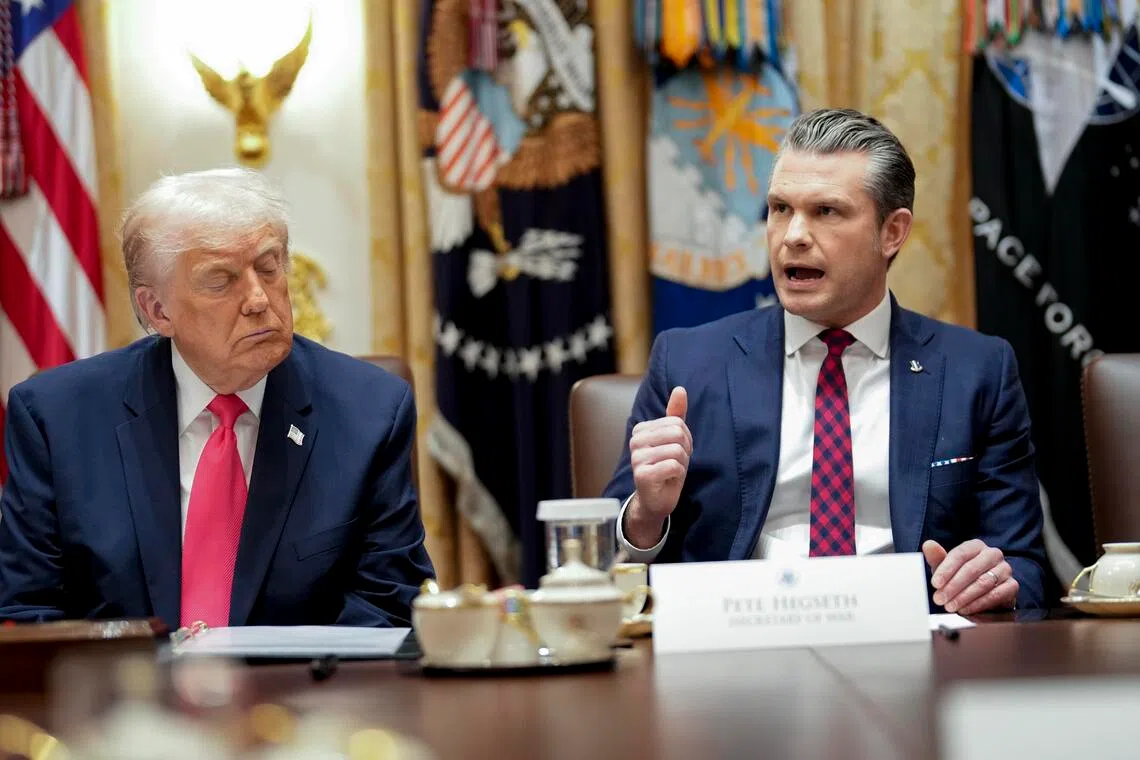
A Pentagon probe faulted Defense Secretary Pete Hegseth for using Signal to share sensitive Yemen strike plans, risking troops. Despite the fault, the case is o
Pentagon Investigation Finds Defense Secretary Hegseth at Fault for Signal Use in Yemen Strikes, Declares Case Closed
The Pentagon has concluded an investigation into Defense Secretary Pete Hegseth, finding him at fault for sharing sensitive details about impending US military strikes in Yemen through the encrypted messaging app Signal on his personal device. This action, according to two sources familiar with the report, potentially jeopardized US troops if the communications had been intercepted.
Concerns Over Classified Information and Operational Risk
Critically, the report by the Pentagon's independent Inspector General focused on Hegseth's use of an insecure channel for transmitting information that had been classified by the military before it reached him. Experts and former officials have voiced strong concerns, highlighting that specifics regarding timing and targeting are among the most highly protected information preceding a military campaign. Such premature disclosures could allow adversaries, like Yemen's Iran-aligned Houthi fighters, to evade planned strikes or relocate to densely populated civilian areas, thereby complicating operations and escalating the risk of innocent casualties.
However, the Inspector General's report did not definitively state whether the information Hegseth posted remained classified at the precise moment he transmitted it. This nuance stems from the fact that, as the head of the Pentagon, Hegseth possesses the inherent authority to declassify information as he deems appropriate.
"Case Closed" Despite Finding of Fault
Despite the clear finding of fault, the Pentagon has publicly declared the matter "resolved" and the "case closed," stating that the review ultimately "exonorated" Hegseth. Pentagon spokesman Sean Parnell confirmed this resolution, indicating the administration's intention to move past the controversy.
Hegseth's Defense and the Role of The Atlantic Screenshots
Hegseth, a prominent former Fox News host, had consistently denied texting war plans or sharing any classified information. He opted not to be interviewed by the Inspector General's office, instead providing a written statement. In his defense, he asserted his prerogative to declassify information and maintained that he only shared details he believed posed no operational risk. Furthermore, he suggested the investigation itself was politically motivated, a claim made despite the inquiry being initiated by lawmakers from both Republican and Democratic parties.
Interestingly, the investigation's reliance on screenshots of conversations published by The Atlantic magazine proved significant. Hegseth reportedly provided only a limited number of his own Signal messages for review, forcing investigators to lean on the publicly available evidence. These screenshots notably depicted Hegseth discussing specific plans to neutralize a Houthi militant leader in Yemen just two hours before a secret military operation was scheduled to commence. While this raised significant alarms, the report also observed that the messages did not appear to contain explicit names, precise geographical locations of targets, or information that could directly compromise US troops actively conducting the operation.
Broader Scrutiny of Hegseth's Leadership
This renewed scrutiny of Secretary Hegseth unfolds during a challenging period for his leadership, as he is also facing separate examinations regarding controversial US strikes against suspected drug vessels in the Caribbean, which have generated their own set of legal questions and ethical debates.
By news
9 months ago