Korea competes with Thailand, Russia as Chinese tourists reroute from Japan
Dec 4, 2025
General
With rising tensions between China and Japan disrupting travel plans, Chinese tourists are actively seeking alternative destinations for their wint...
K-shopping attracts Chinese travelers, but strict visa rules favor only organized tours

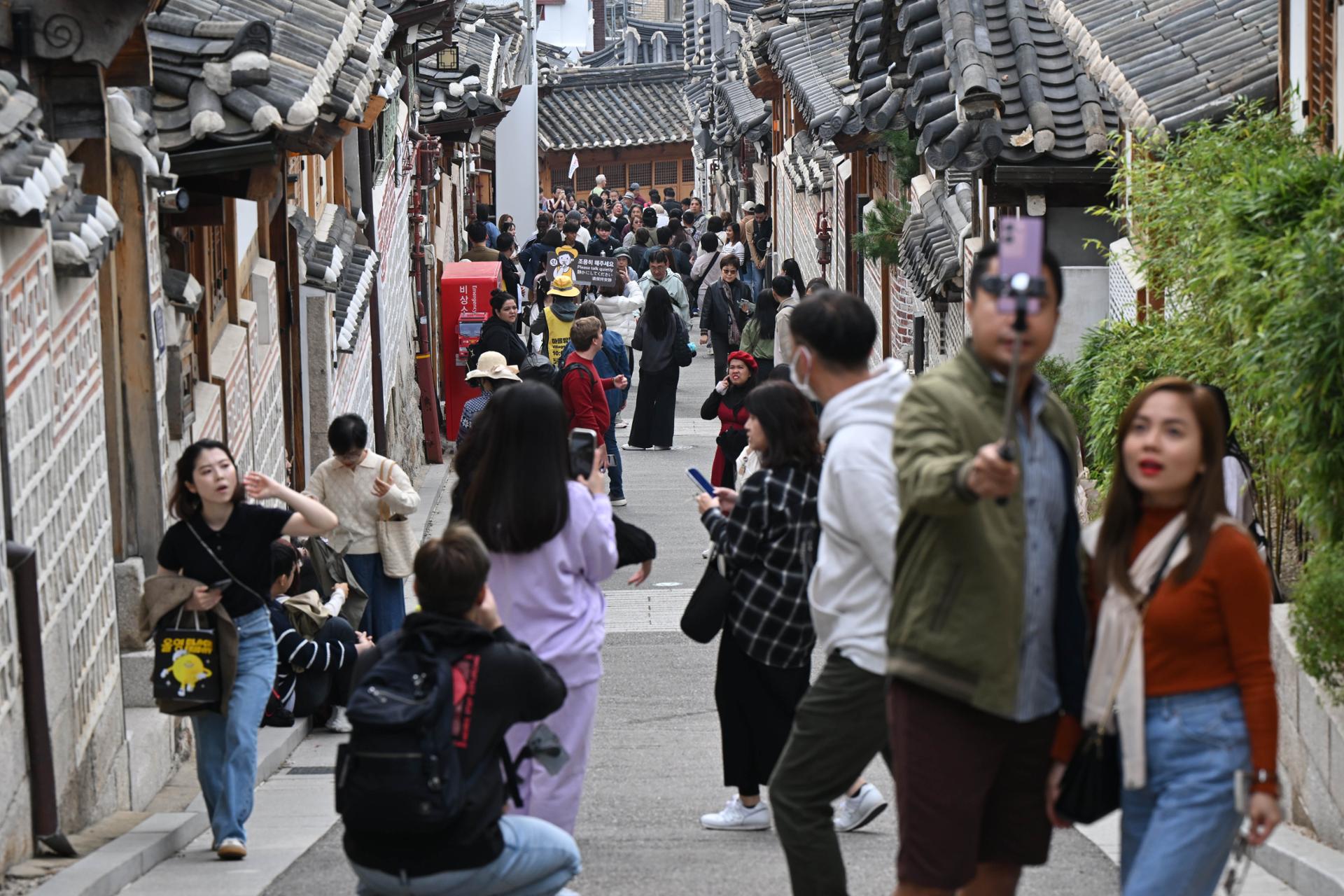
An alley crowded with tourists in central Seoul's Bukchon Hanok Village. Korea Times photo by Park Si-mon
With rising tensions between China and Japan disrupting travel plans, Chinese tourists are actively seeking alternative destinations for their winter getaways. While South Korea hopes to capitalize on this diverted tourist flow, it faces fierce competition from popular hotspots like Thailand, Russia and other destinations, according to travel industry officials.
The diplomatic spat began when Japanese Prime Minister Sanae Takaichi suggested potential military intervention in the Taiwan Strait, prompting Beijing to issue a travel warning on Nov. 14.
Chinese airlines were instructed to offer refunds on Japan-bound flights through the end of the year, leaving hundreds of thousands of Chinese travelers scrambling to adjust their plans.
The timing aligns with Korean airlines’ efforts to expand routes to China, which are more profitable than routes to Japan. Korean Air Lines increased its Incheon-Fuzhou route from three weekly flights to four last month, and Asiana Airlines is set to operate 165 weekly flights to China by March, reflecting a 20 percent increase in capacity.
Chinese cruise operators are also scrambling to bypass Japanese ports, opting instead to extend their stays at destinations such as Jeju Island.
Data from Chinese travel platform Qunar revealed that for the weekend of Nov. 15, Korea emerged as the most popular overseas destination for Chinese tourists, overtaking Japan, which previously held the top spot. It also ranked first in flight ticket payments and search volume, followed by Thailand, Hong Kong, Malaysia, Singapore, Vietnam and Indonesia.
According to data from the Korea Tourism Organization, 4.7 million Chinese tourists visited Korea between January and October this year, exceeding the total number of visitors for last year. But even as Korea hopes to benefit from the lingering tensions between China and Japan, several travel agencies told The Korea Times that Chinese tourists have an abundance of alternative travel destinations, even as interest in visiting Korea continues to grow.

Chinese tourists visit Sensoji temple in the Asakusa district of Tokyo, Thursday, Nov. 20, 2025. The recent China-Japan tensions disrupted many Chinese tourists' plans to visit Japan. Yonhap-AP
Some Chinese travelers are increasingly opting for destinations that are visa-free, such as Thailand, Malaysia, Singapore, Georgia and Egypt, according to Li Xiaoya, a travel agent with a Beijing-based agency.
“Most group tours’ flight tickets to Japan have been canceled, and we’re now instead promoting packages for other countries and regions, such as Thailand, Semporna (in Malaysia), South Korea and others,” she said.
According to data released by Tongcheng Travel on Monday, hotel bookings by Chinese tourists for trips to Korea in the last two weeks of November surged by over 240 percent year-on-year. Hotel bookings for Southeast Asian destinations such as Vietnam and Indonesia also saw year-on-year growth exceeding 100 percent, while bookings for Germany and Spain showed an impressive year-on-year increase of more than 300 percent.
Russia is also favored by Chinese tourists this week, thanks to the implementation of visa-free policies for up to 30 days starting this month. Chinese media reported that searches and bookings for trips to Russia surged following the announcement of the visa waiver.
Data released by Qunar last week revealed that Thailand has become the top destination for Chinese outbound tourists during the winter vacation period (Jan. 15 to Feb. 10, 2026). Meanwhile, Russia has experienced a significant surge in popularity, with flight bookings increasing 1.5 times year-on-year.
A staff member at a travel agency catering to Chinese tourists in Korea noted a slight uptick in winter bookings following the China-Japan tensions. However, the increase has been modest, likely because January and February are not peak travel months for Korea, he said.
“There are numerous options for Chinese tourists looking to experience winter landscapes, including domestic destinations like Harbin or international locations such as Russia and various European countries. South Korea is facing stiff competition in this area,” the staff member said.

Lit ice sculptures in Ordzhonikidze Square during the Winter Begins in Yakutia Festival in Novosibirsk, Russia. Chinese visitors now have visa-free access to Russia starting this month, driving a surge in searches and bookings for trips to the country. Yonhap-TASS
A sales representative from a Shanghai-based Chinese airline revealed that the carrier initially planned to reduce flight capacity to Thailand in November and December. However, due to the ongoing tensions with Japan, they decided to increase capacity instead.
“Destinations like Sanya (in Hainan province) and Thailand usually experience some year-on-year growth among Chinese tourists during the winter season,” the representative added.
Meanwhile, Korea remains an appealing destination for travelers from cities like Shanghai.
Willow Zhao, a 27-year-old doctoral student in Shanghai who recently canceled her trip to Japan, said she is actively considering Korea due to its convenient location and the allure of duty-free shopping.
However, Korea’s visa policy may deter individual tourists adjusting to sudden travel plan changes. Currently, only group tours qualify for visa-free access. Xie Lumei, an accountant from Fujian province, shared that she initially wanted to visit Seoul but decided against it, unwilling to deal with the hassle of a visa application.
Alyssa Chen is a reporter with the South China Morning Post. She is currently based in Seoul, writing for both The Korea Times and the South China Morning Post under an exchange program.
By news
9 months ago
No cameras found for this country.